Hello fellow damp-browed heatwavers.
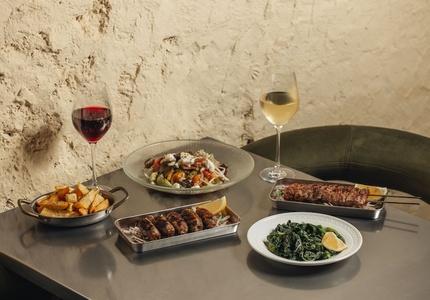
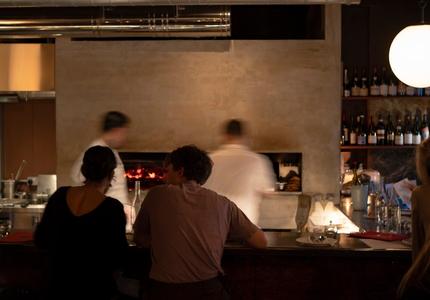
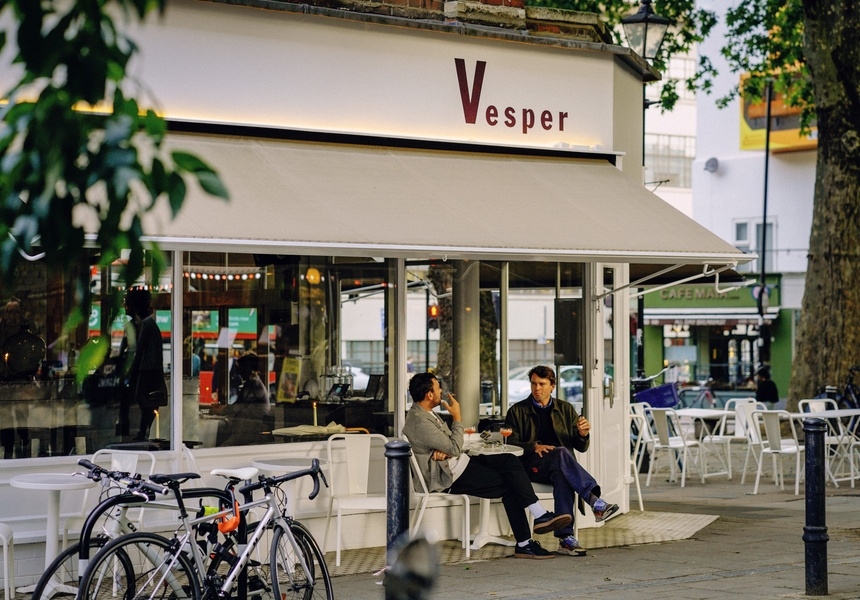
I think it was the arrival of the burger that sealed it. Throughout a recent Friday lunch at Vesper – Jackson Boxer’s luminous new restaurant on the shoulder of Exmouth Market – I had, between gulps of tuna spring onion pancake and duck fat fries hauled through glossy madeira sauce, been puzzling over exactly what it was that the unusual megamix of dishes reminded me of. Was it just an especially elastic brand of “modern European”? A relocated re-run of the inventive Manhattan-style comfort of its Notting Hill predecessor, Dove? A kind of grown-up Hackney small plates establishment for wealthy gallerists and reformer Pilates devotees? Slender candles flickered in the ethereal whitewashed and zinc-panelled space. Seething pans of crab fat rice were plonked beside chicken with bread sauce. And the particular category or genre of dining that this place occupied stayed just out of reach.
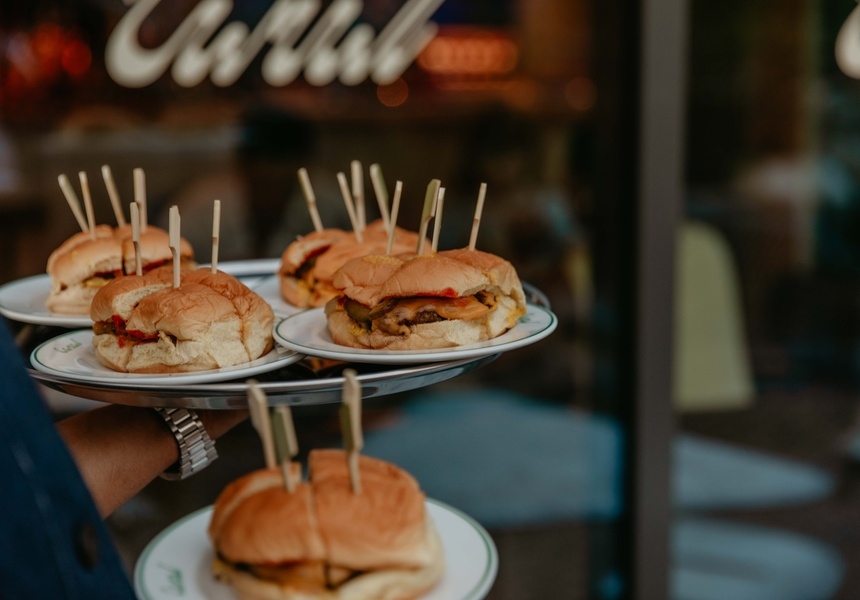
Then, the off-menu house burger descended onto our table – glossy-bunned, gorgonzola-laced, almost comically satisfying and, to the undoubted consternation of false scarcity truthers, limited to just 10 servings a day – and it all fell into place. Intricate culture-splicing snacks and sashimi-coded raw plates. A primi course of fresh pasta seemingly beamed in direct from a Milanese osteria. A hype-magnet “table burger” or sharing sandwich. Large-format cuts of characterfully garnished meat and seafood indebted to both Basque asadores and Victorian chophouses. What Vesper locks into, I realised, is a form of New London Continental: a genre-fluid, escapist and culturally promiscuous mode of eating that is unapologetically snacky, deeply pleasure-forward and decidedly rule-averse.
Think the transition from purple sprouting broccoli ajo blanco and Portland crab linguine to a quartered cheeseburger at Canal; the sturdy frites-stuffed merguez baguette that shares table real estate with onion rings and raw asparagus at The Shaston Arms; Quality Wines’s restless brocade of Anatolian, Iberian and Sicilian references. We can debate whether Vesper’s certifiably buzzy riff on this style represents an outlier or a harbinger of a wider trend. But I think that New London Continental’s reemergence, at this particular moment in the city’s dining history, feels significant for a couple of fascinating reasons.
The first is that Vesper (named for the Latin term for the evening star) sort of runs counter to current conventional wisdom about London restaurants. More than halfway through 2026, one of the prevailing narratives of the city’s dining landscape is this: tightly defined, old-fashioned hospitality is back, baby. Osterie. British bistros. Wood-panelled grill rooms. From the throwback likes of Tiella and Martino’s to Cafe Clement and the ocean-going grandeur of Simpson’s in the Strand, the prevailing wisdom is that Covid and prolonged economic strain have sent us scurrying towards the culinary equivalent of comfortable slippers. Fiddly, culturally polyglot small plates spots – the kind of place that Marco Pierre White witheringly described in a recent interview as “like going to a canapé party” – are out. Three courses, timeless road-tested concepts and the constraints of a brasserie or trattoria are, particularly in high-trafficked central London sites, very much in.
All of this is fair. (And the arrival of, say, a revivalist grand cafe like Savile Row newcomer Dorothy’s, only further supports the theory.) However, I think the dominance of historical accuracy and regional specificity in London’s restaurants has perhaps presented some chefs and restaurateurs with another inadvertent issue. Namely: pointed simplicity and nostalgia through the prism of a barnacled old restaurant concept can soon become, well, a little creatively inhibiting and boring. Yes, new wave trattorias, tavernas, chophouses and Italian American red sauce joints give customers and operators an assured sense of familiarity. Yes, lots of terrific, classically constructed establishments use seasonality and ingenuity to keep an old school approach fresh and surprising (I am thinking here, just to name one, of recently anointed National Restaurant of the Year Bouchon Racine). But structure can quickly become a straitjacket; chefs tend to be fidgety, restless souls, and the category-wide growth in pre-starters and snack sections at restaurants shows us that lots of London diners still crave the sort of texturally riotous, intricately wrought flavour collisions typically associated with small plates spots. So how do you balance an urge for glamorous throwback dining environments with an attention-economy era yearning for unexpected, exotic flavours?
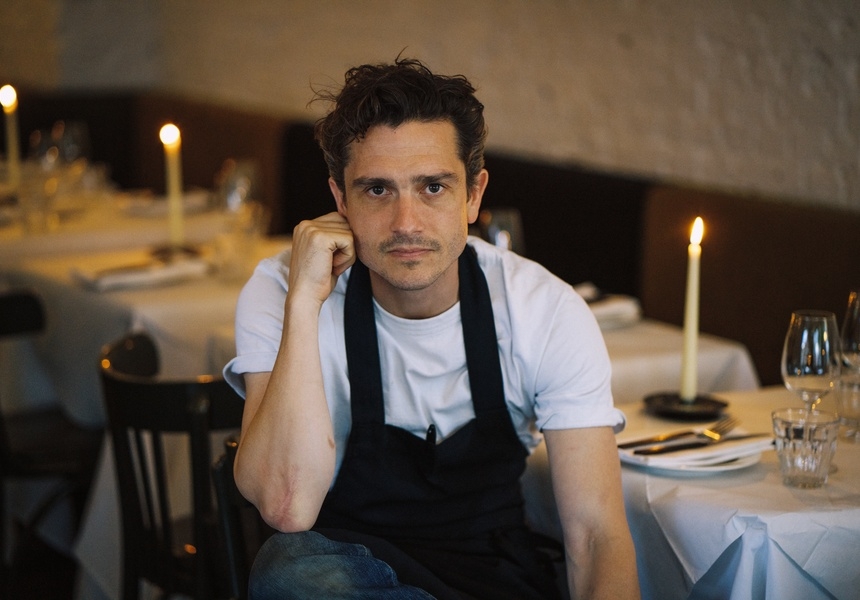
Vesper feels, among many other things, like a timely response to this particularly modern conundrum. That spring onion pancake, layered with raw tuna and Cantabrian anchovy, adds an unexpected Chinese element to the thrilling efficiency of a gilda. The toothsome little bon-bons of agnolotti sit in a madeira and chicken liver sauce that’s like a kind of glossy avian caramel. The meal ends, if you’re doing it properly, with a lush Guinness and champagne cake, winking at the ferrous effervescence of a tankard of black velvet. Throughout, there is gastronomic seriousness in service of a kind of forceful frivolity. “Modern brasseries and trattorias are all good, but we need new things and new approaches,” said Boxer with a smile as I said goodbye. Vesper might just light the way for a fascinating culinary vibe shift.
The Counter is Jimi Famurewa's weekly Broadsheet column. Get it first in your inbox by signing up here.