The Counter is a weekly column from award-winning restaurant writer and broadcaster Jimi Famurewa. Sign up to get The Counter first, sent to your inbox every Wednesday.
Hello again.
One of the stranger realities of writing about restaurants is that it is often about identifying and analysing wildly different demographic tribes. Sometimes it is quarter-zip wearing financiers gulping Guinness, or the leather-trousered denizens of Mayfair, picking at tuna tartare with trembling dachshunds in their laps; sometimes it is frazzled new parents, or moustachioed graphic designers in Arcteryx with birria taco juice running down their fingers. On some occasions, when a restaurant is especially hyped or on-target, it will be a thrilling, jumbled mega-mix of all of these groups at once.
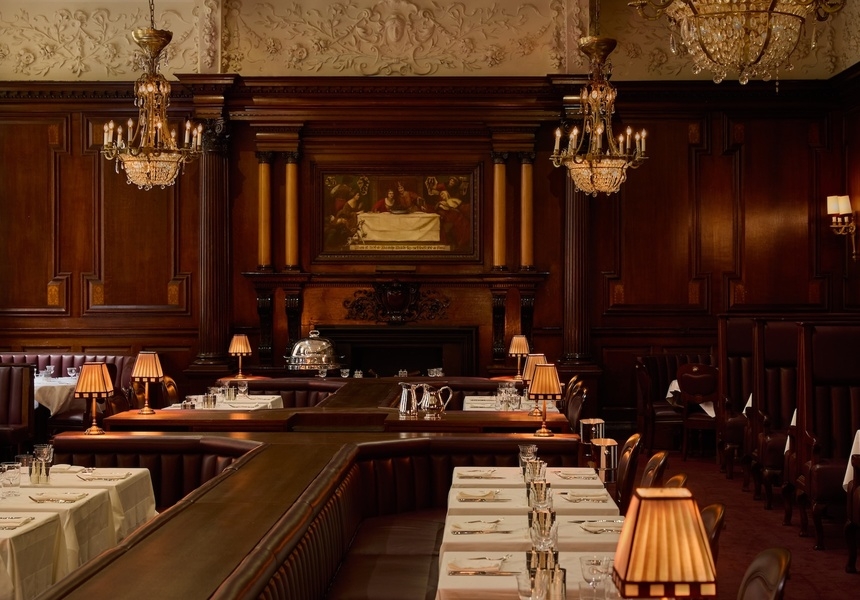
However, more recently, I have started to notice something of a persistent social pattern in London’s big-ticket restaurants. At the upstairs bar at Simpson’s in the Strand it was twinkly retirees getting enjoyably loose in the mid-afternoon; at Osteria Vibrato, it was a cohort of mischievous, Martini-necking Gen Xers, tearing into £28 plates of risotto bianco; at Teal, in Hackney – which, notably, had a clientele that was faintly suggestive of a direct access tunnel from the Fulham Road – I heard one of the room’s multiple glamorously attired, apparent over-60s jokingly tell their server they were “too old to have dietary requirements”.
On the one hand, this phenomenon is not all that surprising. It is, instead, a natural consequence of a point in time when lots of restaurants have become so expensive that vast swathes of young people with limited disposable income have been priced out of experiencing them. Or rather, as restaurant writer Tim Hayward put it recently, in a typically sharp Substack essay on the subject: “If young people can barely afford to rent, let alone buy flats, it’s hard to imagine they’re going to be as keen to stump up for a posh night out with quite the enthusiasm that their parents are spaffing the inheritance.”
Still, to solely focus on establishments that are suddenly full of free-spending older diners is to ignore the fascinating corollary to this; which is to say, the related emergence of buzzy new places that appear to be exclusively filled with under-35s. Crisp at The Marlborough with its boomer-repelling seven-week wait for a table. Lagana in Shoreditch with its, salted caramel cheesecake slices and decidedly kidult, complimentary scribbling crayons. Ellie’s and Bone in east London which, respectively, have turned £8 Martinis and short rib with unlimited fries, into a kind of medical grade zillennial-catnip. On more than one occasion recently, I have stumbled into some inadvertently segregationist new wave pizzeria or throwback Martini bar and felt, depending on the venue, either unaccountably young or comparatively decrepit. So is there a widening age divide emerging in London’s restaurant scene? And, if there is, why would it matter?
“No restaurant can be interesting if it’s only inhabited by one tribe,” says Jeremy King, the man behind Arlington, The Park and, of course, the revival of Simpson's in the Strand that has seemingly struck such a resonant chord with patrons of a particular vintage. “If there is only one type of person, be it through financial qualification or age, then it’s a boring restaurant. My first golden rule is that you give people the opportunity to spend but you don’t make it mandatory. And the reason for that is that a lot of the most interesting people in the room are actually the least affluent, and by the same token, they’re often young.”
This logic is what gave us Romano's; the affordable upstairs dining room within Simpson’s where the bargainous prices (three courses for £24.75) are generally more attainable irrespective of age and tax bracket. All the same, King admits that the age-based gulf between who can stretch to the most premium, blockbuster dining experiences, and who can’t, currently feels “a bit more pronounced”. Why might that be? Well, naturally, a lot of this is just simple economics and geography. The sluggishness of wage growth – coupled with the fact restaurants in prime, high rent locations need to further protect their evaporating margins – has intensified social herding trends that have always existed.
“To a degree, the cost of things just makes your clientele self-selecting,” says Joe Warwick, head of hospitality at Public House Group and vibe-setter at spiritually youthful Notting Hill pub and restaurant The Fat Badger. “Maybe it’s worse now but that has always been the case. That’s why we’ve tried to make it so that anyone, old or young, should be able to afford a pint and snack at the bar on a regular basis, or save up for a special night out.” This chimes with King’s attitude and approach – not to mention the proliferation of price-slashed set menus. And the tension between a restaurant’s generational coding and the sensibilities of its customers has always existed (I still remember the late Russell Norman having to repeatedly explain Brutto’s loud music and Manhattanite gloom to diners who arrived expecting something gentler and quieter).
Yet, to my mind, the age gap evident in some of London’s dining rooms has been widened and emphasised by a broader return to grand, classical modes of hospitality. Wood-panelled trattorias. Trolley-laden chophouses. New wave bouchons and brasseries. Previously, some of the buzzier openings in central London could be ramshackle burger joints, barbecues or pub pop-ups with limited lumbar support, paper napkins and palpable millennial edge. Whereas now? Well, eating out has become such an occasional expense that diners of all ages demand the kind of grandeur, nostalgia and professionalism that, generally, happens to play especially well with an older crowd. “We’re getting a large number of younger people coming to Simpson’s because they want to experience old-style hospitality,” says King.
So maybe what looks like a yawning age gap is, in fact, just a bit of fragmentation and realignment. Yes, the median age of a lot of centrally located dining rooms is probably higher than ever. Yes, more and more young restaurateurs are launching multifaceted business specifically targeted at customers their age (see the likes of Eight Hours, a late-night sandwich and board game bar in Battersea, from the founders of Bone). But the businesses that are still connecting most – Simpson’s, Dover Street Counter, somewhere like Impala – really do tend to have a distinct, cross-generational appeal. You’d hope that chefs and owners would look at that, and think hard about how they can bring in as many contrasting groups as possible. Homogeneity of any kind is never fun. And age, when it comes to what makes a dining room feel particularly interesting, alluring or electric, really should be just a number.
For Jimi Famurewa’s dish of the week, sign up to get The Counter first, sent to your inbox every Wednesday.
Got a question about London's dining scene that you'd like Jimi to answer, or a hot tip about a great place to eat or drink in London? Email jimi@broadsheet.com.