The Counter is a weekly column from award-winning restaurant writer and broadcaster Jimi Famurewa. Sign up to get The Counter first, sent to your inbox every Wednesday.
Hello again.
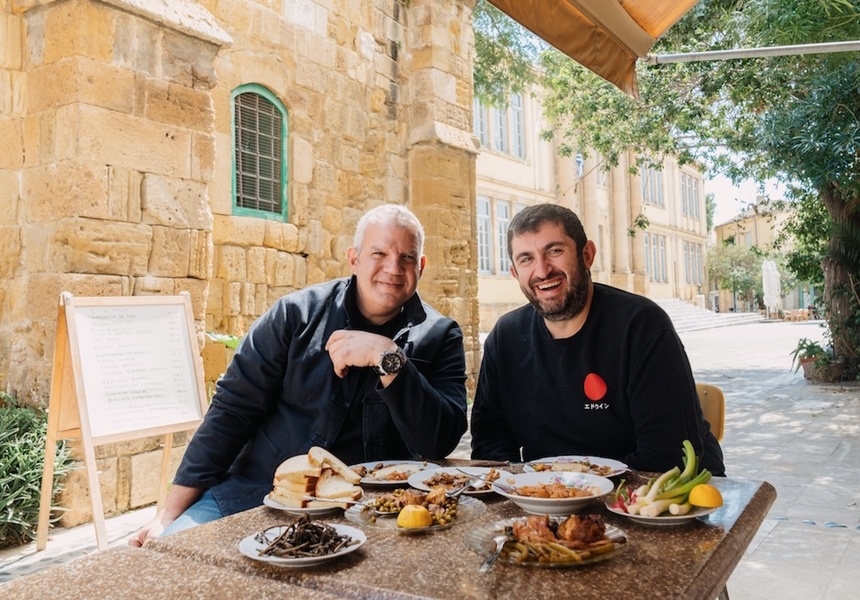
It could be that the best way to understand the complications of Zylia – a standalone, Greek-inspired restaurant tethered to the new Covent Garden branch of upscale food hall Arcade – is through what we might call “the oregano incident”. “Very early on, somebody on the team had mistakenly written that oregano was part of our sheftalia dish,” explains Nick Molyviatis, Greece-born chef (ex-Kiln, Oma and co-owner of Singburi), and founder of Zylia alongside Cypriot heritage business partner Barry Karacosta. “Anyway, it passed through lots of menu edits without anybody catching it, and it ended up in a press release that we sent out, and people saw it online and completely crucified us,” he chuckles. “‘How dare they! You cannot put oregano in sheftalia. What is this!?’ And I was just like, ‘Guys, it’s a typo. It’s not going to have oregano in it.’”
The fact that sheftalia, a bulbous, caul fat-wrapped pork parcel and Greek-Cypriot souvla staple, was both a menu item at a big ticket central London opening and the source of such frothing invective tells you something about the current state of Hellenic dining in London. What was once a ragged, underappreciated landscape of old school, ouzo-drenched Cypriot tavernes or glitzy, loosely Greco-Mediterranean money pits has, more recently, given way to something more varied, regionally specific and abundant. Clio, Maza and Myrtos; Pyro, Fenix and Lagana; Taverna Ermou, Nammos, Oma and Agora. Alongside all the dusted down “Greece is the word” headlines, the past few years have seen a rising Aegean wave of openings that encompass everything from 1980s Athenian taverna-core and experimental live fire spots to bottle-popping Cycladic pleasure palaces. Even Impala, pretty much unanimously regarded as the restaurant launch of the year, features detectable Greek-Cypriot gracenotes like sheftalia (again) and a mic-drop of an oxtail pasta dish that recalls the traditional Greek giouvetsi (beef stew with orzo pasta).
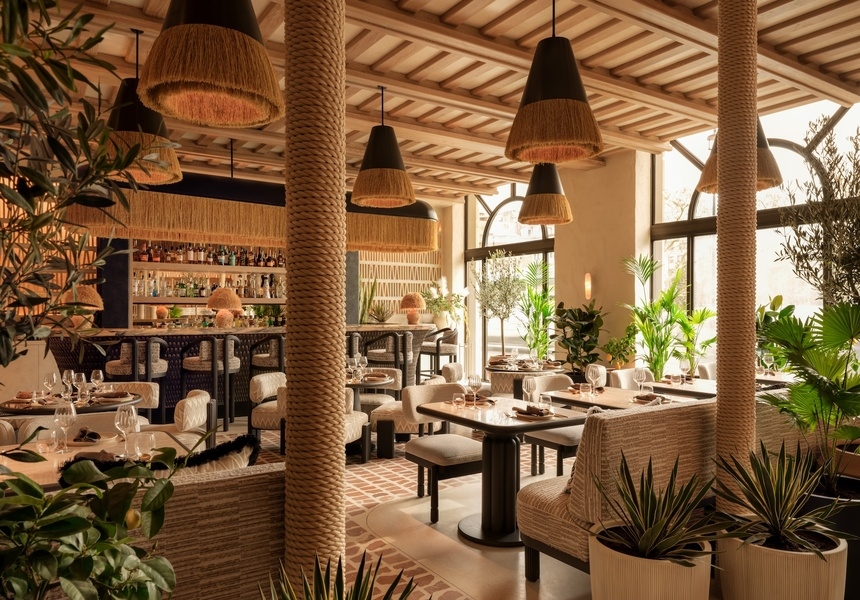
So is Greek-inspired cuisine really “back”? What’s sparking the spike in interest and prominence? And what does the arrival of a restaurant like Zylia, with its crochet-curtained old school decor, abundant platters of seething souvlaki, and unusual melding of mainland Greek and Cypriot references, tell us about where the London Greek restaurant currently finds itself?
It’s important, first of all, to track the migratory history that has led us to this point. Though there were Greek-accented restaurants in London before the ’60s and ’70s (Jimmy’s, an affordable, subterranean taverna, had apparently been plying Soho with moussaka and dolmades since 1948), it was in these decades that conflict and unrest in Cyprus swelled Britain’s Greek-Cypriot population. This and the ’80s gave London the historic ersatz tavernes, the Halepis, Aphrodites and Santorinis, that formed its Hellenic bedrock. By the ’90s, there was dispersal beyond the suburban rim of the M25 from north London strongholds like Palmers Green (aka “Palmers Greek”) and a market that still demanded Barbie-pink taramasalata and a package holiday version of Greek cuisine; by the late ’00s, the Greek debt crisis occasioned a new migratory wave from the mainland that further complicated things. The upshot of all this, up until fairly recently, was a very mixed, contradictory and decidedly Cypriocentric picture.
“Greek cuisine is arguably the most misunderstood cuisine in the UK, relative to its ubiquitousness and geographic proximity,” says Alex Mylonas, writer, creator and founder of the influential Instagram account Souvlakination. “Not only in terms of what Greek dishes and Greek ingredients actually are, but in terms of [Greek food’s] dependence on good, nutritious, local and flavourful produce that can make a salad the best thing you’ve tasted all year.”
This isn’t to say that there are not restaurants doing an impressive job of translating eastern Mediterranean freshness or island simplicity to a rainy northern European metropolis (here we turn to the likes of Tsiakkos in Maida Vale and, with a more Athenian bent, the terrific Evi’s). Or even that elevated fusion endeavours – like the scantly Greek Oma or the decidedly progressive Pyro – are not valid expressions of Hellenic gastronomy. It is more that Greek food’s peasant roots and innate, produce-forward fundamentals have been perhaps drowned out by voguish flourishes and the financial opportunities that come from a more loosely Mediterranean or Aegean approach. “A lot of people try to elevate [Greek cuisine] too much,” says Karacosta, the other half of Zylia. “And when they do that, they’re adding Asian, Italian, Spanish and French influences, dulling those flavour profiles that are original and very nostalgic. You don’t need to confuse it.”
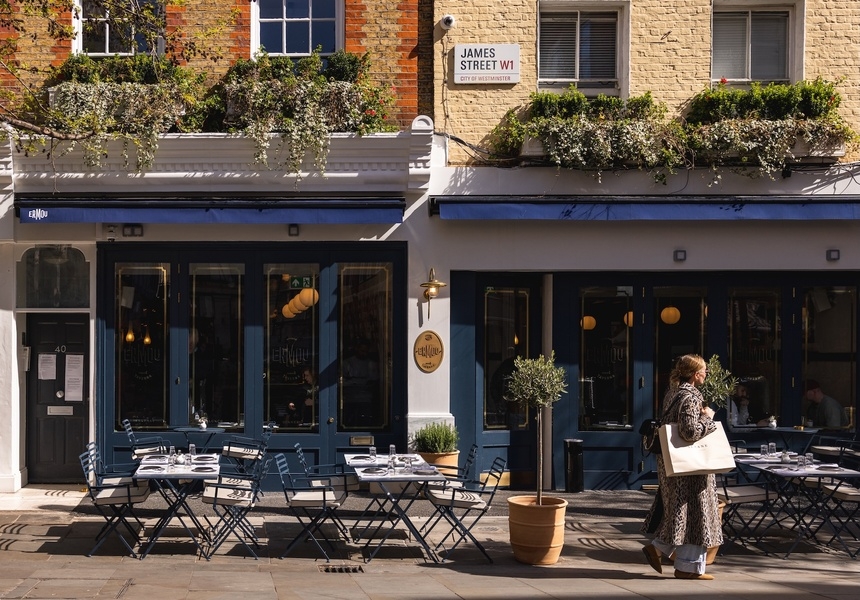
Mylonas broadly echoes this sentiment (“Premiumised Greek cuisine is basically an oxymoron”) but also feels that this is an unprecedented moment for truly Greek gastronomy in London. “2026 has been the best year for Greek food in London that I think we’ve had because of openings like Maza, Taverna Ermou and Zylia,” he says. So what has shifted? Well, the continued flow of both immigrants and businesses from non-Cypriot parts of Greece (notably, the sharply nostalgic Marylebone opening Ermou was originally founded in Athens) has had a doubly positive effect. On one hand it has brought a new set of culinary and cultural influences to London's longstanding Hellenic diaspora. On another, it has imported some of the swaggering confidence and thrusting complexity of Greece’s wider culinary resurgence – felt in the electricity of Athens’s contemporary restaurants and the country’s world-conquering new wine scene – to the capital’s Anglo-Cypriot milieu.
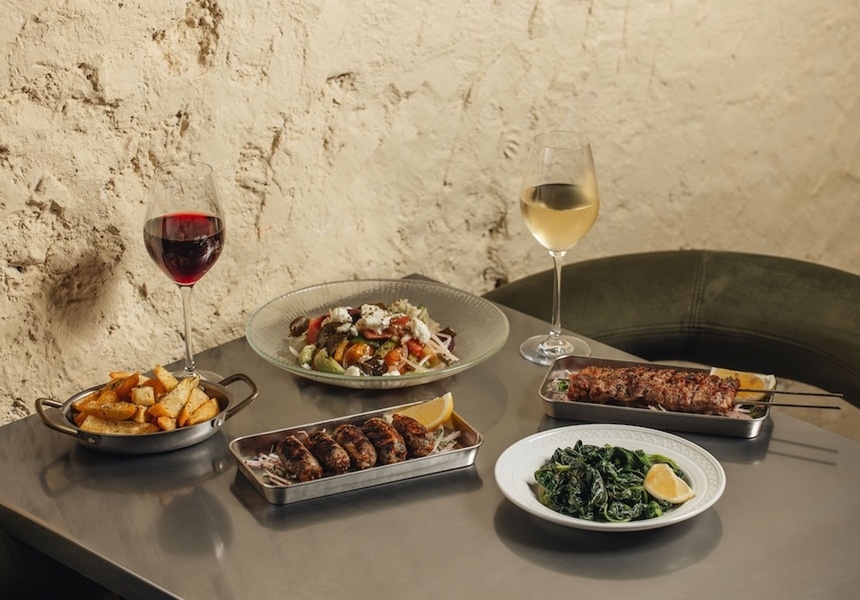
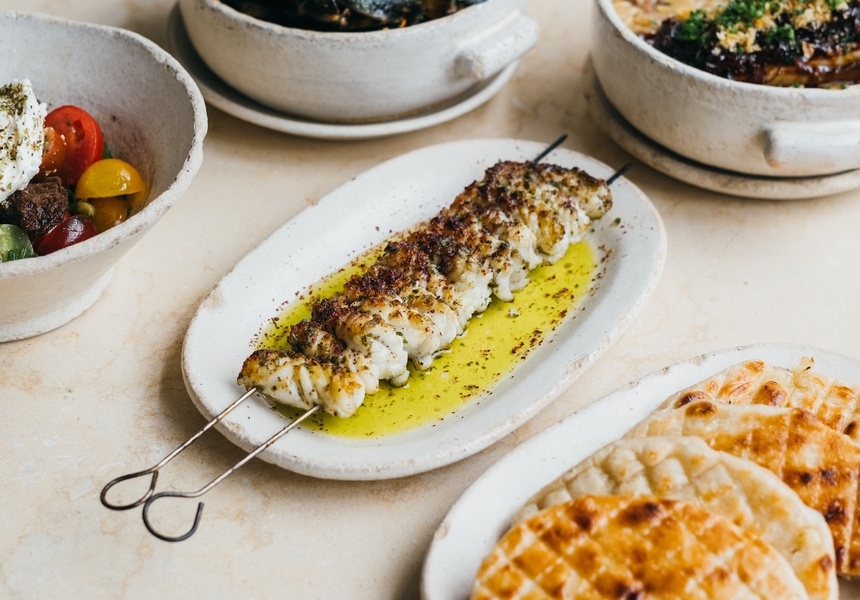
As I experienced firsthand recently – over the course of a long, table-crowding lunch of dips, bread baskets, hissing grilled meats and bottles of Keo beer – few restaurants embody this exciting confluence, this multifaceted and uncompromising blend of Greek and Cypriot cultures, like Zylia. The smoky sheftalia are plump, violently charred, correctly oregano-less (flecked with parsley and a little cinnamon) and thrillingly succulent. The glossy tzatziki is spiked with Cypriot-style dried mint (rather than the dill you’d get on the mainland). The gushing souvlakia arrive aboard a bed of sumac-flecked onions, ready to be devoured to a soundtrack of gleeful, roaring voices and raucous Greek pop. There are plans to install a ’90s-era TV that will play recordings of old Greek football matches. Even plate smashing, it transpires, is not fully off the table. “I’m telling you, once a month we’re going to do it,” says Karacosta with a grin. Zylia, alongside spots like Maza and Ermou, typifies this new mode of establishment. Confidently contradictory; unapologetically nostalgic. And redolent, not necessarily of Athens, or Limassol or Mykonos, but of a Greek London that is able to be more than one exhilarating thing at once.
For Jimi Famurewa’s dish of the week, sign up to get The Counter first, sent to your inbox every Wednesday.
Got a question about London's dining scene that you'd like Jimi to answer, or a hot tip about a great place to eat or drink in London? Email jimi@broadsheet.com.