London’s restaurants have never been better; the demand for them never greater. Discoveries and bookings are digitised and democratised at a previously unfathomable scale. But that culinary silver lining comes with some more practical clouds. For one, try and get a short-notice table at any of the places on your list – in a city that conspires against it at the best of times, spontaneity can feel all but dead. And secondly, it can leave those restaurateurs who had hoped to cultivate a crowd of returning regulars with a satisfied but transient, hype-chasing audience.
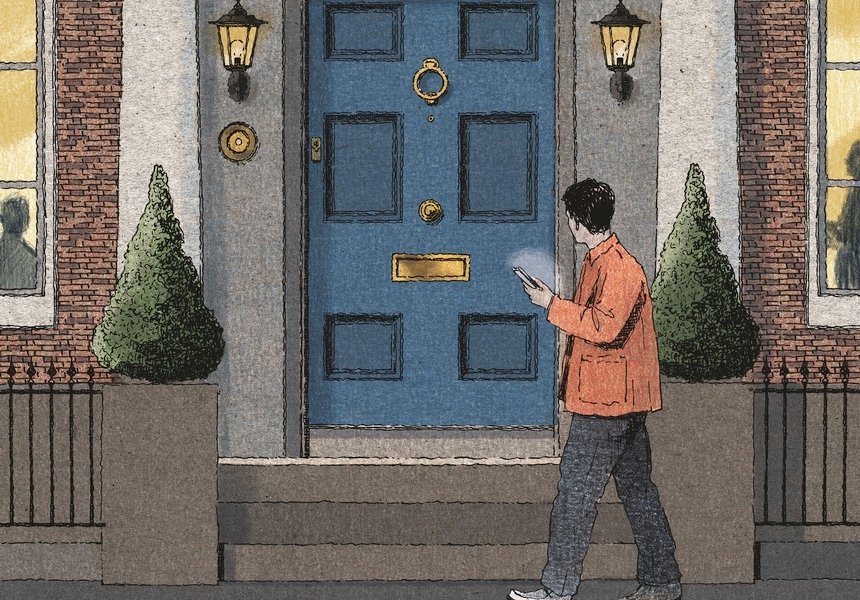
So we’re seeing the start of some course-correction – establishments implementing more locals-first measures that reflect a peculiar new atmosphere in the city’s hospitality offering broadly. For better or worse, we’ve entered an era where hot-ticket tables at sceney restaurants get allocated by Whatsapp; where carefree club nights are invitation-only; and where the most successful openings shun traditional publicity in favour of word-of-mouth murmurings, friendly committees and the social circles of charismatic front-people. It can feel like London is, in many ways, becoming a village of closed doors. Not simply because private members clubs are everywhere now. But because everywhere is borrowing from the private members club playbook, or so it seems.
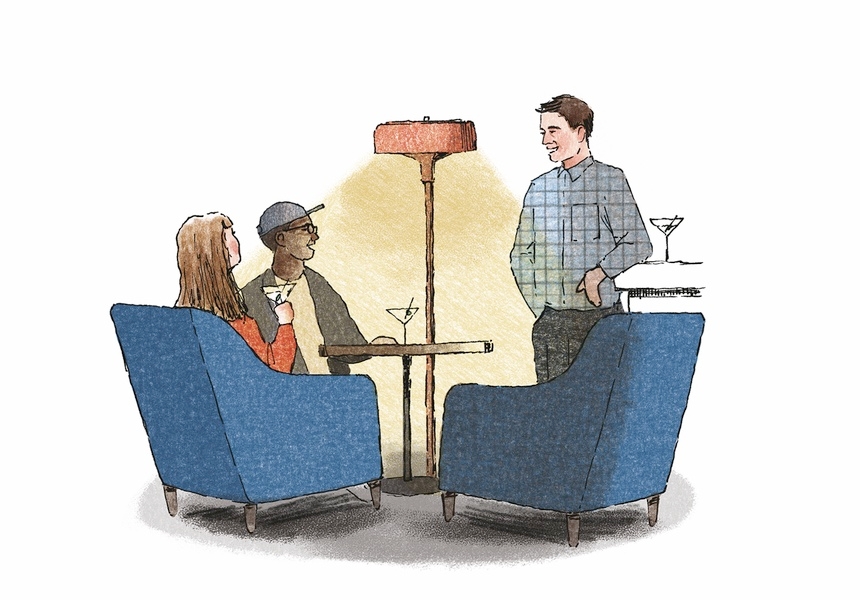
If such clubbish filters can sound undemocratic (and they can be), there are at least those with pure intentions. Benjy Leibowitz runs the Knave of Clubs in Shoreditch (one of the best London pub openings in recent years) with the lovely, but forever-booked, One Club Row above it – named, in a quirk of kismet, after the street it sits on. The convivial atmosphere of this room can be explained, he thinks, by a mantra he borrowed from New York restaurateur Gabe Stulman: “Look after your locals like celebrities and celebrities like locals.”
It's the neighbourhood regulars, Leibowitz says, who really conjure an enduring mood in a restaurant. “For us, it's almost like a self-nominating club,” he says. “If you come in and have a really good time and you mention that to a member of our team, we'll go out of our way to give you contact information to make it easier for you to come back. There’s something validating all-round about that.”
These people, he says, are the ones that bring clubby familiarity to a place long after the A-listers, hype-chasers and big-spenders have departed – waving over tables to friends and other regulars. “And so, for us, as we move away from the buzz of year one, I think what's needed is that we become a place that’s really part of people's ongoing roster.”
“That sense of curated connection – as opposed to just saying ‘we’re a community’ – is going to be the real differentiator now,” says Nadine Choe, who worked in real-estate private equity before starting the Stanza, a newsletter about the inner workings of the hospitality business.
Of course, much has been made of the city’s actual members club boom. At the time of writing, there are about 135 private members offerings in London, with at least a dozen more slated for opening this year. News arrives of clubs where clubs never thought to exist. Heralded Haggerston restaurant Planque has one. The revamped Ministry of Sound has one. Selfridges has one. Momentary PM Liz Truss is about to open one (it’ll cost 700 founder members £500,000 each, according to the Financial Times, and the salad is expected to be extra fresh).
Indeed, even the French seem to be prizing fraternité over égalité; a new club called 16 Charles is about to open in a grand townhouse on Charles Street under the ownership of the Loulou Groupe, best known for Le Flandrin and Le Grand Café in Paris. And then there’s the rush of those opening in the wellness space. Tramp, the subterranean den of excess, is opening a sister entity underneath the Chancery Rosewood called Tramp Health – once a contradiction in terms.
“More clubs have opened in the past four years than in the three decades following the 1985 opening of The Groucho Club,” reads Knight Frank’s 2024 report into the phenomenon.
Maybe these are simply the lengths we’re willing to go to so we can guarantee a late drink in the West End, but then the British have always been fond of organising themselves into useful boxes. “The impulse is that people want to be surrounded by people they really like, and to find places that they really identify with,” says Will Woodhams, a consultant to The Pembroke, the Belgravia superclub that will become London’s largest when it opens this autumn.
And so, like much in the culture, we hark back fondly to pre-millennial offline moments. Over at At Sloane, the slinky Chelsea hotel that opened with winning understatement in 2023, the most coveted evenings of the year are its Late Nights – special late-license events that take the form, essentially, of ritzy basement house parties.
For the first one, held in March 2025, hotel staff invited 15 of their most interesting friends along and told them to invite about 10 people each. No tickets or velvet ropes or minimum spends or bottle service. It’s all charmingly impromptu. The events aren’t planned too far in advance, and there’s no strict schedule for when these nights might occur across the year. A source at the hotel tells me that this, effectively, is how things were done in the ’80s and ’90s – a time when the great bars, hotels and clubs of London were mostly owner-led, meaning the owner would be in residence most nights, subtly finessing the crowd and the mood.
That charismatic central figure can be key, says Woodhams. “It’s how restaurants used to work. Peter Langan, when he ran Langan’s back in the day, was essentially running a club for people he knew and liked.” Maison Francois’s power-breakfast appeal stems from François himself. Graydon Carter still oversees the table plan at the Waverly Inn in New York each night. “This is something that chains and private equity-backed places just can’t do,” says Choe.
One thinks of Oisín Rogers, the capital’s favourite landlord, whose inner-sanctum Green Room at The Devonshire is reserved for friends and those he finds interesting. Or of Martin Kuczmarski of The Dover, Dover Street Counter and Martino’s, whose personal taste and bonhomie vibrate off those burlwood walls.
Kuczmarski was the chief operating officer of Soho House group before he struck out on his own. “When I left, everyone said, ‘Are you going to do a members club?’” he says. “And I said, ‘No way. Not now.’”
Instead, he says, he has simply been careful to “patiently curate the people in the room”. Which means “we want to hold tables for people who are kind to fellow guests, kind to members of staff. People who have style in how they dress, but also in their personal behaviour.”
As the definition of a club is blurring, the boundaries of clubland itself are changing too. “It’s no secret that there has been an exodus of ultra-high-net-worths from central London,” says Jamie Caring, the private club consultant who last year helped launch Lighthouse Social, a new members club installed on the banks of the Thames in Fulham. “Which means there’s been a subtle shift to local neighbourhood clubs instead.” (Or at least to the neighbourhoods where those same UHNWIs live anyway; this is not a trend extending beyond postcodes with a W.)
Beyond Lighthouse Social and The Roof Gardens, the west London club offering expands this spring with Celeste, the Notting Hill outpost of Maison Estelle, and Maslow’s in Kensington. Until recently, the received wisdom was that members clubs, by their hub-like definition, needed centrality to really work – a critical mass of members and buzz that could only happen in the thick of things. But no longer.
“Psychologically, perhaps that started in the pandemic,” Caring says, “when people really started to celebrate where they lived more.” Notting Hill, perhaps unsurprisingly, has seen the biggest transformation in this way, with The Fat Badger, above Canteen on the Golborne Road, an interesting case in point.
The venue is not a members club, but its operations are marked by a certain clubby discretion: an inconspicuous side-street entrance beneath a subtle, wordless sign; an entry protocol initially based on a coveted Whatsapp number distributed to friends of the team during its soft launch. The result of this approach is striking – a mood that careens between private party, jolly speakeasy, attic pub and rollicking jazz bar depending on when you happen to drop in. But it also spurs demand. Though not calculated or cynical, there’s a useful scarcity value at play.
Such Whatsapp accounts bridge the gap between the modern moment and the late 20th century. Prized private booking numbers are now used for many high-profile restaurants – like Dorian, also in Notting Hill – often with the caveat that, unless you’re a saved or known number yourself, you may be unlikely to find a booking or even get a response. If Patrick Bateman was hunting an 8.30pm “res” today, he’d do it via Whatsapp. Certain restaurateurs even hand out physical black cards to guests they wish to have the number. The posting of these on social media has become something of a subtle status play.
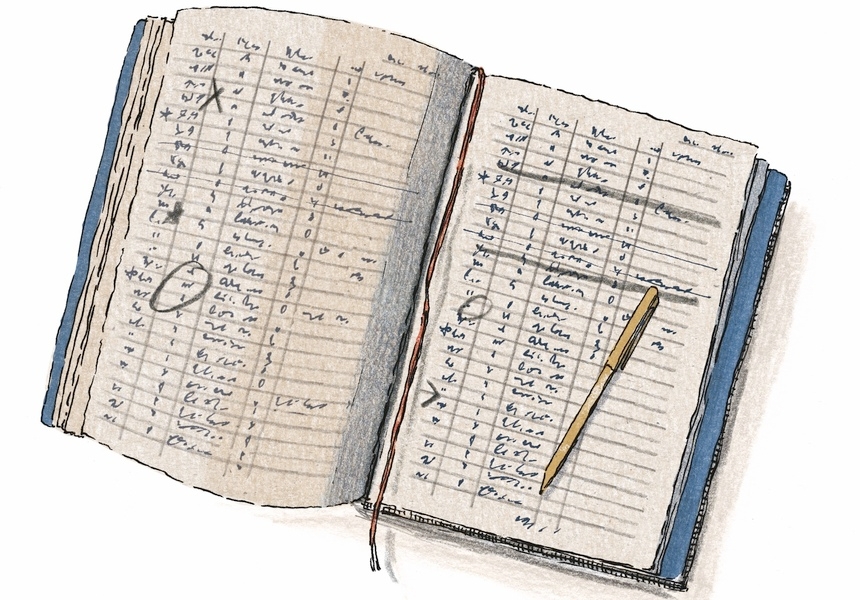
But Kuczmarski makes a good case for fostering a sense of familiarity. His launches are deliberately executed without active PR or gimmicks. He just opens, quietly, and then tells a few people about it. There is a handwritten reservations book. There “may or may not be” a secret Whatsapp number, he jokes. His first days at Martino’s were filled with friends and old colleagues. The Dover was a word-of-mouth hit with the whispered hype of a secret society. You might walk past Dover Street Counter without even noticing it. But the atmosphere inside is as clubbable as it gets. Jay Rayner praised its “delicious, thrumming vibe”. Grace Dent purred over Martino’s “conviviality” and its “pure, glamorous, fragrant escapism”.
“Nice people,” Kuczmarski concludes. “That’s the secret ingredient that really makes you feel good.”
This article first appeared in the third issue of Broadsheet London's magazine. Here's where to find a copy.