The Counter is a weekly column from award-winning restaurant writer and broadcaster Jimi Famurewa. Sign up to get The Counter first, sent to your inbox every Tuesday.
My end-of-year totaliser shows that I’ve eaten at three Michelin-starred restaurants in the past 12 months – a trio of gently ridiculous meals that, through the fog of time and abundant wine pairings, live on as a series of flickering images and vivid sensations. There was the ambrosial softness of girolle mushrooms, Spenwood cheese and black truffle omelette at Mountain in Soho; the rich sparkle of trout roe and kipper sauce at Behind in London Fields; and an impossibly buttery, tallow-enriched bone marrow and egg yolk tartlet at Shoreditch’s Cycene.
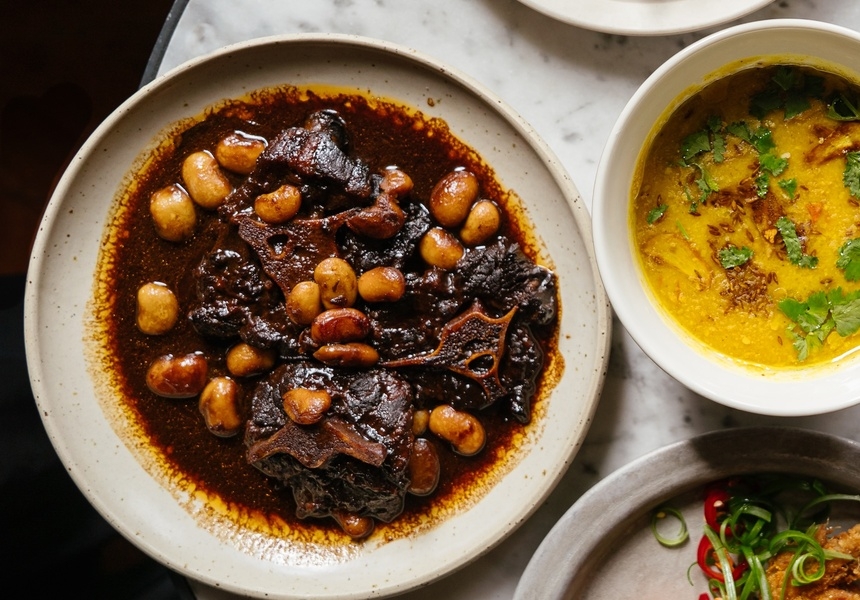
All were pretty momentous. But I don’t know if any of them were quite as unforgettable as a first, springtime encounter in Elephant and Castle with the Kaieteur Kitchen pepperpot: chef Faye Gomes’s famous Guyanese stew of melting oxtail and cow foot pieces, complex currents of sweet, spice-warmed cassava root, and the kind of brooding, molasses-dark surface sheen you can practically do your hair in. This dish (from a restaurant currently lacking a permanent home) easily matched the quality and skill of the dishes I experienced in fine-dining establishments ordained by venerated lists, august guidebooks and erstwhile tyre companies.
So what would it take for a dish like Kaieteur Kitchen's pepperpot to get the Michelin seal of approval? And what would that recognition mean for wider understanding and appreciation of Caribbean cuisine?
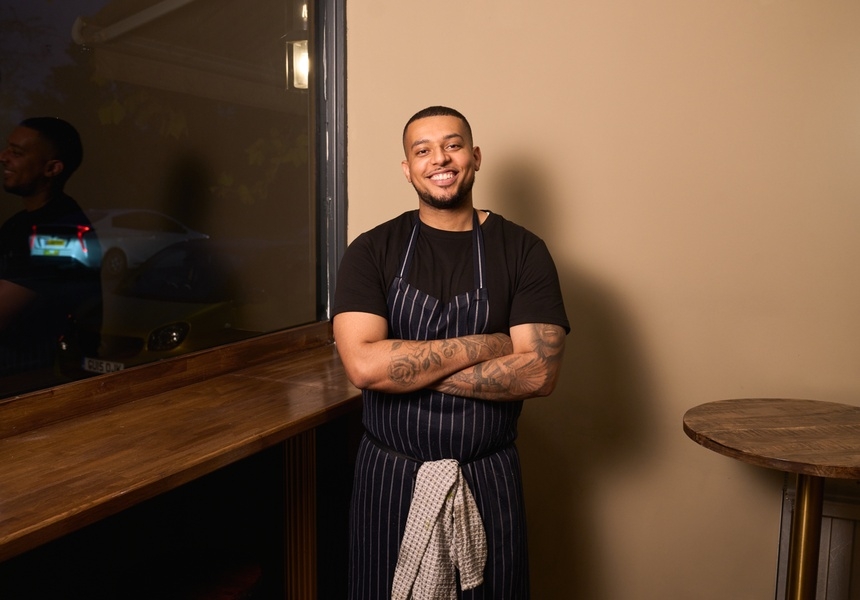
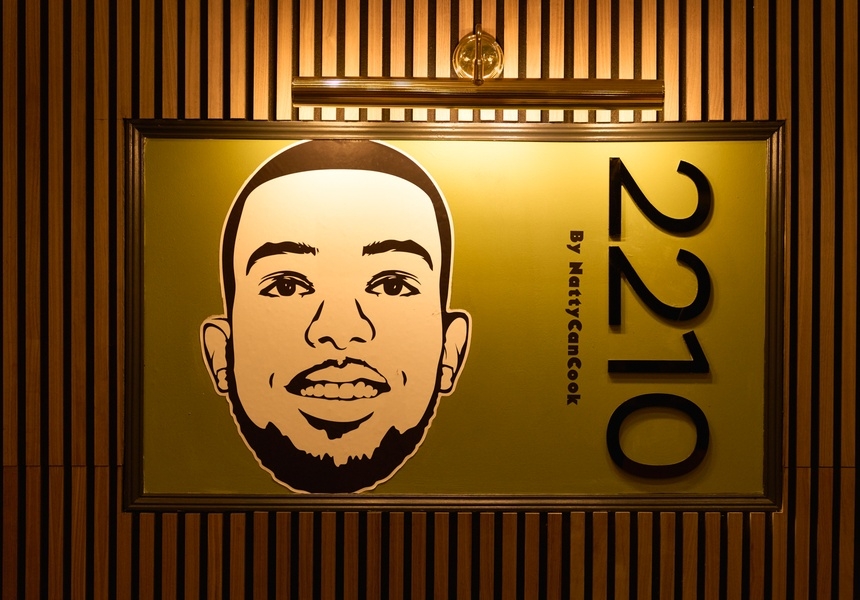
I've been particularly contemplating these questions during the recent emergence of Nathaniel Mortley, aka Natty Can Cook, the force behind 2210; a recently opened, instantly mobbed Herne Hill restaurant that is best known for both the journalistic catnip of its chef founder’s redemptive backstory – Mortley is a former inmate of HMP Brixton and alumnus of its in-house cooking charity The Clink – and the bullish specificity of its pre-launch ambition. “I want to be the person [who] takes Caribbean food and gets it its first Michelin star,” is how the Guyanese, Bajan and German heritage chef put it to an interviewer in 2024, following his hugely successful residency at Peckham pub The Greyhound.
Meanwhile, other immensely talented British Caribbean chefs – Dom Taylor of former Langham pop-up The Good Front Room; Great British Menu competitor and Hélène Darroze protege Jason Howard – are agitating for the same forehead-kiss from Bibendum, either explicitly or implicitly.
So it is worth following this concerted effort towards its logical conclusion. Does Caribbean food in London really need a Michelin star? And why haven’t chefs working in this broad culinary area been anointed yet?
To answer these questions we should probably first look at why chefs like Mortley feel like now is the right time to push for this form of recognition. Partly it is the sheer breadth and quality of the UK’s Caribbean food scene; the strides made by award-winning chefs and food writers such as Keshia Sakarah, Marie Mitchell, Melissa Thompson, Riaz Phillips and Andi Oliver, plus the effort to expand knowledge of island cuisine beyond a stereotypical, Jamaica-centric default towards an embrace of the multicultural flavours of Barbados, Antigua, Haiti, Trinidad and beyond. But, perhaps more significantly, there is the matter of contemporary West African food’s recent elevation to exalted prominence. In 2024 both Adejoké Bakare’s Chishuru and Aji Akokomi’s Akoko won their first Michelin stars; Ikoyi – no longer directly inspired by the Lagos neighbourhood it’s named after but still boasting detectably Nigerian inflections all over its tasting menus – has two stars.
As Mortley and others have understandably noted: if one form of Black British diaspora food can do it, then why can’t another? It’s a completely justified argument. Yet, I’d point out that the context behind some of those recent, West Africa-infused success stories helps explain why mainstream recognition from bodies like Michelin has proven hard to come by for certain cuisines. Chishuru’s star coincided with a move from a cramped Brixton unit with a shared public toilet to a chic, multi-floored space in the West End; Akoko’s came after a concerted (and not remotely cheap) five-year effort to emulate the luxurious aesthetics and cultural storytelling of other fine dining establishments in the post-Noma era. London’s Michelin stars are clustered north of the river and in either gilded, Zone 1 dining neighbourhoods or the kind of high-traffic areas where commercial landlords want tried-and-trusted concepts. It is not a surprise that cuisines inspired by Caribbean and African foodways – which are prone to economic precarity and, for better or worse, are associated with casual, community-focused operations or takeaways – have traditionally been overlooked by mainstream arbiters of gastronomic quality.
It is heartening, then, to see Caribbean heritage chefs turning one of the scene’s perceived weaknesses into a strength. Namely, bending the landscape to their will and creating food spaces that balance serious culinary rigour with the warm, aunty-coded existing atmosphere of patty shops, jerk spots or catering businesses. Mauby refracts gentle Bajan-British fusion through a softly lit Brockley wine bar; Dom Taylor is currently reviving The Good Front Room as a 12-day festive supper club in Dalston; Keshia Sakarah most recently took up residence at budget boutique hotel The Pilgrm in Paddington. These businesses encapsulate resourcefulness, authentic storytelling and a steady build; progression that is less about sanding off cultural edges so much as finding a way to deliver the requisite levels of high craft and consistency with a pronounced Caribbean accent. What Caribbean cooking needs, rather than a star, is the kind of varied, profitable and creative ecosystem that makes one possible.
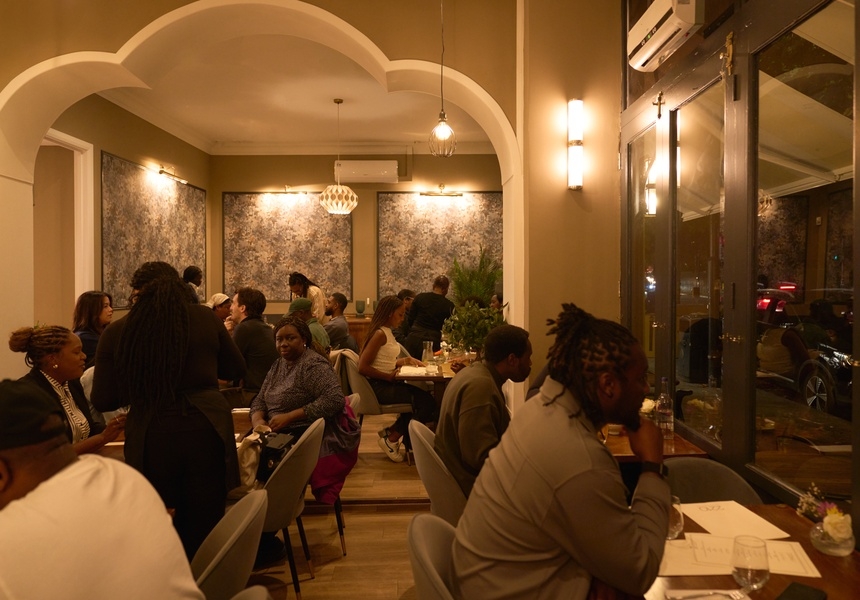
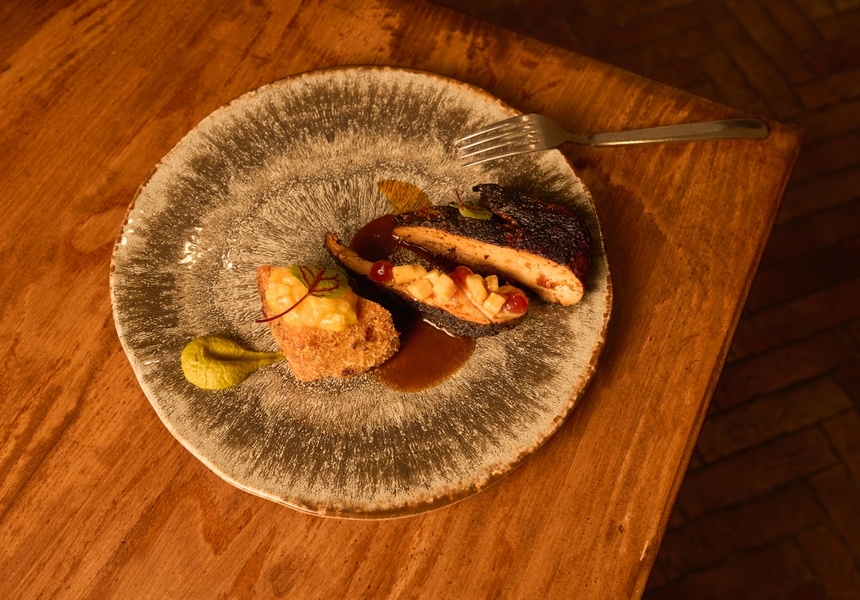
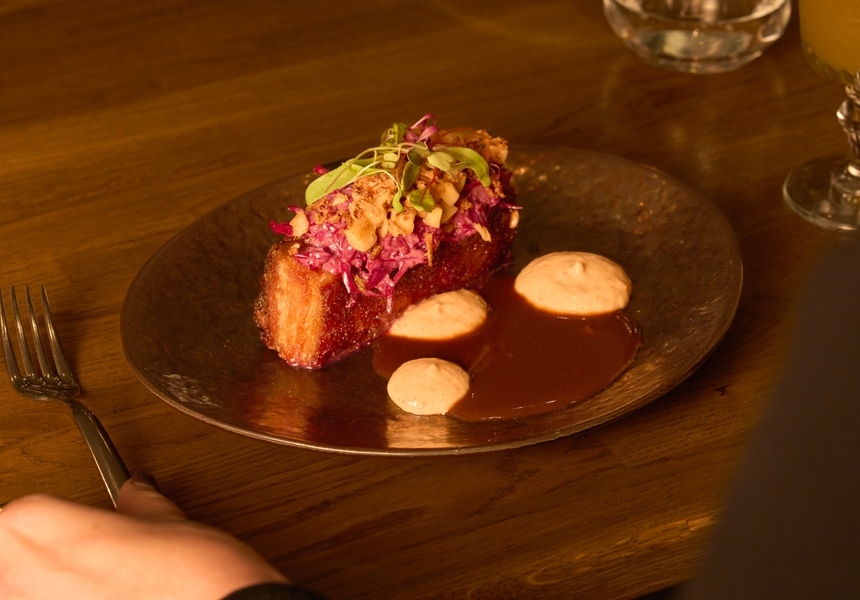
And, well, if you want to know what the new London Caribbean order looks like, then you could do worse than head to 2210. By 7pm last Wednesday, the big, light-flooded space at the edge of Brockwell Park was already a fizzing, packed-out scene: R’n’B drifted from the sound system, glamorous, oud-splashed south Londoners clinked scotch bonnet Margaritas, and there was the thoroughly modern hazard of at least one ring light-toting influencer. Mortley worked the room a little exhaustedly (“We’ve been so busy that I literally slept here two nights last week,” he said, with a grin) but there was nothing sluggish about the elegant, exuberant food on a recently revised menu. Chicken curry nuggets supercharged by splats of beetroot ketchup. Show-stoppingly tender wiri wiri pepper lamb rump beside swoops of excellent Jerusalem artichoke puree. An unassuming pumpkin and plantain soup, that delivered a surging tide of sweet, enveloping warmth.
“When you go to Notting Hill Carnival, people are always banging on about jerk chicken,” said Mortley to Broadsheet London, back in October. “So how can we take it from being something you order in a takeaway and push it into something that can be a lot more refined, a lot more sexy?” We can’t know what plaudits are coming 2210’s way but, right now, it feels like Mortley has hit at least one of his self-imposed targets. He has given people that love Caribbean flavours a new kind of context to enjoy them in; he has created something that isn’t starchy or self-serious but freewheeling, fun and likably imperfect. He has, in other words, expanded our idea of what a Caribbean restaurant can look like. And, perhaps, what it can yet achieve.
For Jimi Famurewa’s dish of the week, sign up to get The Counter first, sent to your inbox every Tuesday.