For years now, trendy young things in London have had a uniform. Stomping down Broadway Market, they can be spotted in a mix of noughties signifiers: baggy cargo pants, oversized belts, chunky shoulder bags, rhinestone-encrusted caps and, whatever the weather, The Matrix-style shades. But this spring/summer 26, a vibe shift has occurred: the Y2K revival has gone back to its ’90s roots.
If the past few seasons were defined by the flashier side of Y2K – think Paris Hilton in Juicy Couture, snapping her Motorola Razr – this summer, the look is considerably more understated. “It’s over,” says the brains behind the satirical Instagram account Socks House Meeting, referring to the noughties end of the revival. “It went from reflecting what people actually wore in the 2000s to a Jaded London shopping app category.”
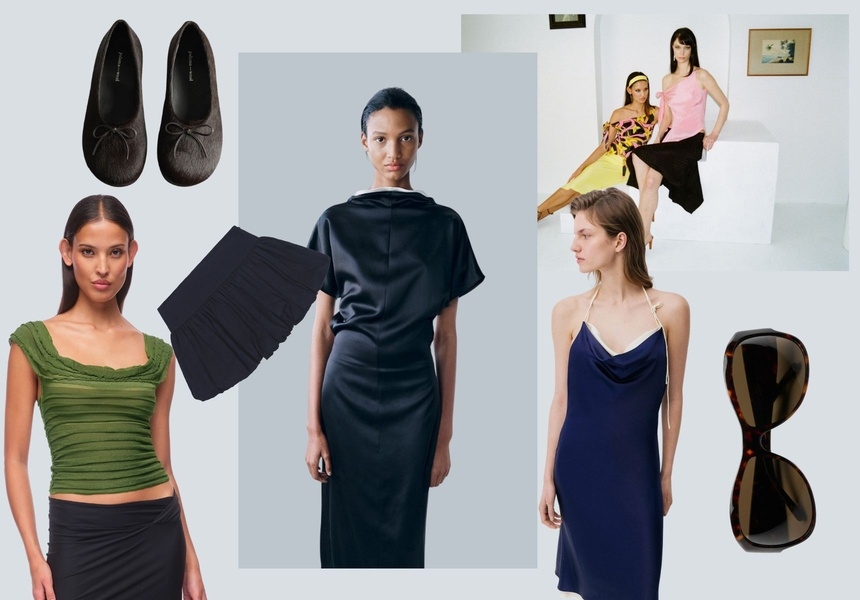
Indeed, on the streets Socks forensically documents, velour tracksuits have given way to subtler nods to the period: cropped camis, slouchy jerseys, flip flops and Paloma Wool’s ballet flats. Y2K remains an undercurrent, but the focus has shifted to fit and elevated basics.
Spanning 1997 to 2004, Y2K’s earliest years were some of its most influential. Fendi debuted its iconic Baguette bag in 1997, while the clean silhouettes of Helmut Lang, Jil Sander and Calvin Klein defined the look of the period’s biggest style icons: Gwyneth Paltrow, Kate Moss, and Carolyn Bessette-Kennedy, whose life (and wardrobe) was the subject of this year’s hit television show, Love Story.
“The cleaner side of the late ’90s has become much more influential than the louder part of the early 2000s,” agrees Rose Canham, the designer behind London’s slow-design label Of Planet Earth. Her latest collection tapped the trend with off-the-shoulder tops and bias-cut silk skirts with asymmetric hems. “They’re not nostalgia for nostalgia’s sake,” she says. “There’s a renewed appreciation for simplicity, beautiful fabrics and silhouette rather than decoration.”
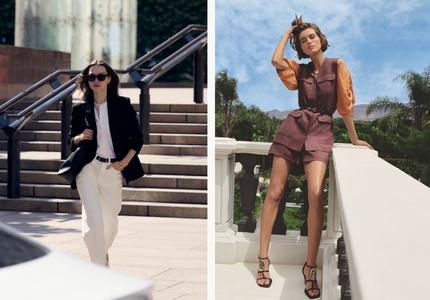
This switch has played out on the runway, too. For spring/summer 26, Marc Jacobs looked back to his own shows from autumn 1995 and spring 1998. Models walked the runway in touchstone ’90s ‘fits: midi skirts, cropped button downs and coat dresses. Meanwhile, at Calvin Klein, Veronica Leoni paid homage to the house’s minimalist codes with square-necked sheaths and racerback gowns.
For Holly Wright, co-founder of ’90s-inspired London-based womenswear brand Tove Studio, the key word for this season is restraint. “Rather than recreating Y2K literally, it’s now been distilled, one nostalgic reference, styled with clarity and intention. It’s clean lines, and neutral palettes,” she tells Broadsheet. For shoppers wanting to tap into the trend, Wright recommends looking for bias-cut dresses, relaxed tailoring, simple tanks and well-cut trousers. “It’s about pieces that skim the body rather than cling, and fabrics that move beautifully.”
Even The Matrix-esque sunglasses that were once so ubiquitous have evolved. This summer, cult-favourite Scandi eyewear brand Chimi’s bestseller has been the Lilah: a close-fitting pair of shades that updates the wraparound silhouette with the sleek oval shape we associate with the period’s minimalism.
Of course, it’s significant that this bifurcation is occurring now: 2026 has been, well, bleak. The ongoing climate emergency has brought devastating heatwaves to our doorsteps, the cost-of-living crisis continues, and there’s the ever-looming threat of AI. It’s only natural that we’re yearning for a simpler time, and this sliver of history between 1997 and 2000 delivers; it was pre-9/11, pre-social media, wages were rising alongside inflation and, let’s not forget, Sex and the City aired in 1998.
For Gen Z and Alpha, who are keen proponents of the revival, it’s all too easy to romanticise. “It represents a slower, more optimistic moment before everything became algorithmic,” Canham says. “People are increasingly searching for individuality. Looking backwards allows you to build a style that feels less dictated by what’s going on now.”
While countless articles have warned of the revival’s oversaturation and predicted its demise, for industry insiders like stylist Magda Kaczmarska, it’s here to stay. We’ve had McBling, and the late ’90s may be trending now, but she predicts that its “mall grunge” aesthetic will take hold next, with all of its religious paraphernalia, studs, pearls and layered chains. “Y2K is surely timeless now,” she says. “Some people may think it has been overdone, but for me, it is a core style structure, and a great foundation for anyone wanting to dress fashionably without breaking the bank. There’s just so many different references to pull from. It’s always fresh.”