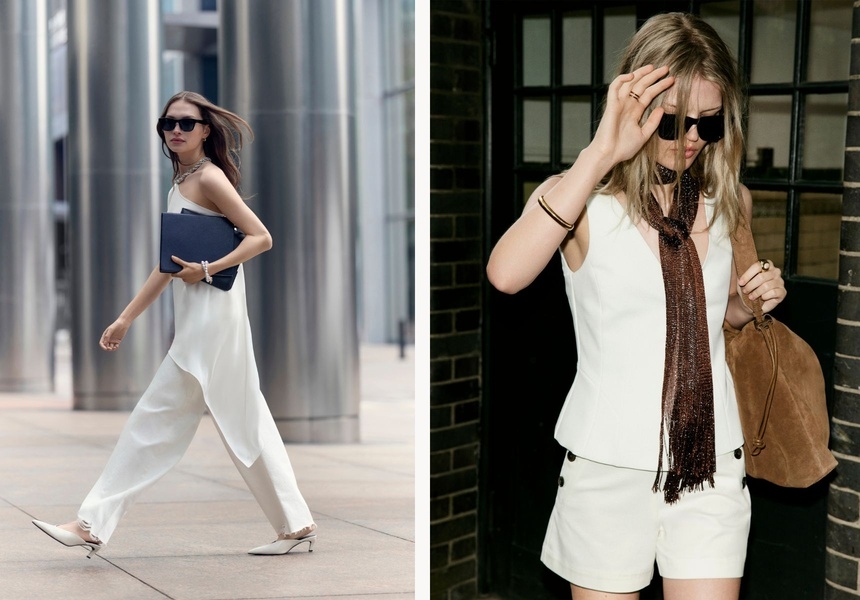
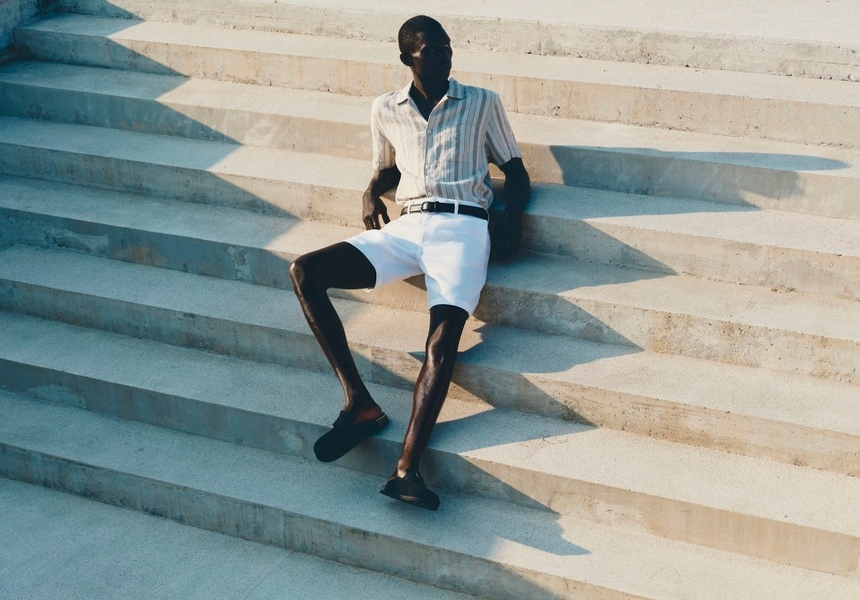
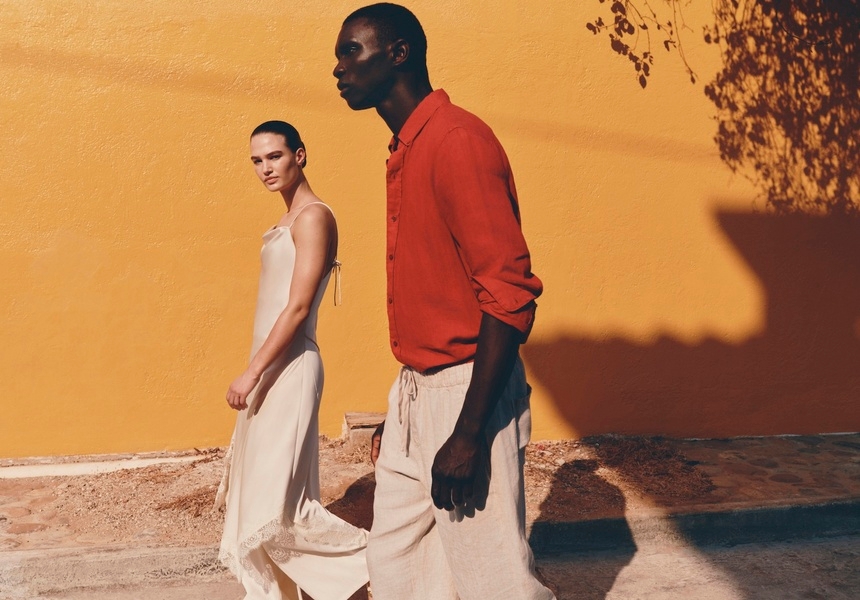
Along with Paddington, Pret and pints in pubs, British retailer Marks & Spencer, founded in 1884, has become something of a national treasure. A much-loved shopping destination known for everything from great cashmere to Colin the Caterpillar, M&S has never been a brand associated with high fashion … until now. Come September, the British retailer will join the London Fashion Week schedule for the first time, with a no-doubt buzzy catwalk show attended by editors, buyers and influencers.
Does a £30 polyester skirt belong on the runways alongside Britain’s brightest and best design talents? Well, it depends how you look at it. For British Fashion Council CEO Laura Weir, who was appointed in January 2025 with the specific mandate of breathing new life into London Fashion Week (which had been losing talent and audiences to Milan and Paris for a decade), enlisting the cultural and financial clout of M&S is a no-brainer.
“As one of the great icons of the British high street, and a valued patron of the British Fashion Council, M&S has played an important role in the nation’s retail and cultural story for generations,” Weir tells Broadsheet. “Its debut shoppable collection at London Fashion Week is a significant moment, demonstrating how heritage, innovation and accessibility can come together to connect exceptional British design with consumers in new and relevant ways. It is a powerful example of how fashion can inspire, engage and reach audiences far beyond the runway.” Along with M&S, Weir has also succeeded in enticing British brands Alexander McQueen and Mulberry back onto the schedule for spring/summer 27.
The M&S catwalk in September will showcase menswear and womenswear collections and the range will then be available to customers to purchase online and in stores nationwide. It’s not the only high street behemoth on the schedule. H&M first debuted at London Fashion Week in 2024 with a Charli XCX gig and returns with a runway show in September. Where Milan has Gucci and Versace, and Paris has Chanel and Louis Vuitton, London Fashion Week is looking to the mass market as well as high fashion.
The London show will not in fact be M&S’s first runway event of the year. In May, the brand presented its Love That summer collection for men and women on a catwalk constructed atop a swimming pool overlooking a picturesque cove in Ibiza. The show received a warm reception from the roster of heavy-hitting influencers and editors that the brand flew out as guests – and the livestream was watched by an impressive 26 million globally. In June, M&S also made motorsport history at the 2026 Formula 1 British Grand Prix (the sport attracting a growing female audience thanks to shows like Drive to Survive) by staging the first-ever fashion show in the Silverstone pit lane – a cast of 50 models strutting through working garages, wearing the Dress to Thrill late summer collection.
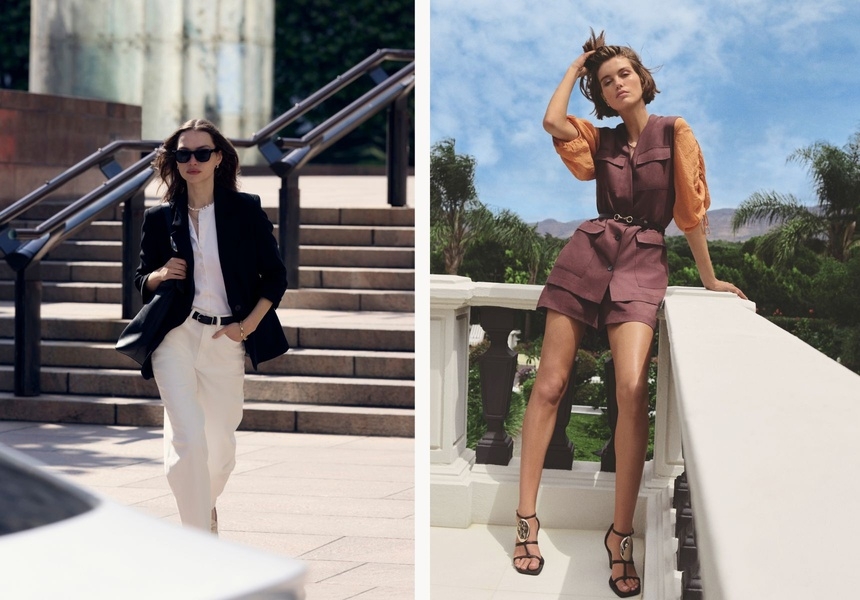
While these new brand partnerships signify a play to position M&S at the forefront of UK fashion, none of the hype would be possible without excellent product. The womenswear design team has, in recent seasons, achieved the surprising: make M&S a genuine competitor for more trend-driven brands like Zara and Mango, without alienating its existing customers, of which there are 12 million for womenswear alone.
Lisa Illis, the head of womenswear design at M&S, says the team has worked hard to build a versatile fashion offer that feels contemporary and relevant. “Over the last few years, we’ve seen a real shift in how customers and the wider fashion industry perceive M&S,” she says. “Customers are increasingly looking to us for style, as well as quality and value.
“Our approach has been to focus on creating genuinely desirable pieces that reflect how style-conscious men and women want to dress today,” she continues. “Whether that’s a sell-out utility jacket, the perfect wide-leg jeans or an on-trend rope sandal, we're constantly balancing great design with wearability, quality and value.”
Social media has been instrumental in positioning M&S as a fashion player. The roster of influencers the brand works with has become broader, and without doubt more fashion-forward. Plus, its playful Love That campaign starring Gillian Anderson as “chief compliments officer” has been its most viewed ever. “Social media has undoubtedly accelerated the conversation around M&S fashion,” Illis says. “We’ve been delighted to see so many of our pieces become talking points among editors, content creators and customers alike.”
It’s all part of the turnaround vision of CEO Stuart Machin, who took the reins of the 142-year-old retail group in 2022. Together with retail veteran chairman Archie Norman, he has already added more than £3 billion to the stock market value of the company in his tenure. Machin’s focus is on investing for growth rather than focusing on profit, and he describes his strategy as “protect the magic, modernise the rest”.
Part of this modernisation mission has focused on overhauling the brand’s older flagships. The art deco black granite Pantheon store on Oxford Street revealed a revamped top two floors in the first week of July that Machin says will be the blueprint for future stores. The Pantheon now has M&S’s first bespoke suiting service, dedicated lingerie and babywear rooms and a homeware area showcasing its collaboration with interior designer Kelly Hoppen. The Oxford Street flagship is one of six M&S stores being renewed across London during the current financial year, alongside four new openings in the capital. The tired Marble Arch flagship will be knocked down next year and replaced with a 10-storey mega building topped with offices and a gym.
“Our debut at London Fashion Week isn't about changing who we are,” Illis says. “It’s a reflection of how far M&S has come over the last 100 years – and demonstrating our growing confidence as a fashion destination.”