In 2016, Warwick Smith opened an urban winery called Renegade, with a view to making wines that encapsulated the spirit of London. Based in a Bethnal Green railway arch, the winery’s grapes came from all over the world. Its “terroir”, for Smith, was its local yeasts and its people: those who made, served and drank their wines. In place of line-drawn illustrations of vineyards, their labels feature photos of Londoner’s eyes. “For many, terroir is land. It’s soil, wind, temperature, altitude – but I believe 50 per cent of terroir should be about people,” Smith says. “Grapes are grown, but wines, like restaurants and bars, are made.”
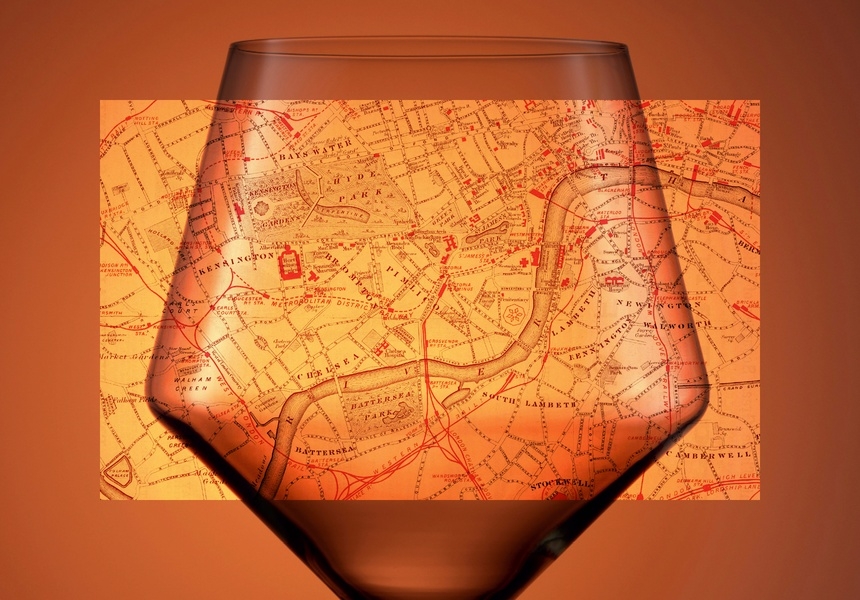
It’s an unusual claim that suggests London has terroir as much as, say, a storied vineyard in Saint-Émilion. Its defining characteristics don’t come from soil or aspect but from a place’s architecture, people and character, which – when distilled into something tangible, like a batch of wine or even a bar – create a distinctive sense of place.
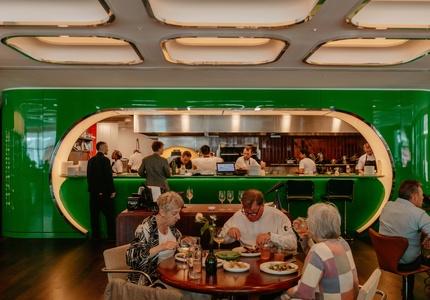
When Dan Keeling opened his second Noble Rot, he did so in the Soho building that was once the Gay Hussar, with the help of the journalists and politicians who had spent decades drinking there. He asked an old regular, Guardian cartoonist Martin Rowson, to do a mural, but otherwise left it as it is. “We like old buildings, and we don’t look to rip them apart. The imperfections are what we love, just as with wine,” Keeling says. “We’re sensitive to the community that comes with a place.”
This approach is more important than ever, observes Jon Spiteri, the restaurateur behind such institutions as St John and The French House, on the eve of opening The Latimer in west London. “People stay more in their area, for many reasons, and they want neighbourhood restaurants they love.” Like winemaking in the Old World, opening a restaurant in London invariably means inheriting a pre-existing building and its local clientele. “When we opened St John, we had ideas which included purple flooring – but we had no money, so we did what we could with what we had.”
The resulting whitewashed minimalism proved defining. Just as winemakers must work with their land, so there is merit in a restaurateur “letting go and working with a space”, according to Spiteri.
Of course, not all winemakers work with the land. Industrial, interventionist winemakers can make something deeply average even with a great vineyard. “Just because you own somewhere in [hallowed Burgundy plot] Romanée-Conti doesn’t necessarily mean you make the best wines. There are many underperforming restaurants in this city in great buildings,” Keeling observes. It’s why he believes a restaurateur's greatest assets are their staff and their building over their wine and food. He doesn’t overtly decorate, or even play music, in Noble Rot because he feels the atmosphere derives from the staff and the century-old walls. Adding a playlist, he says, would “be like over-processing grapes”.
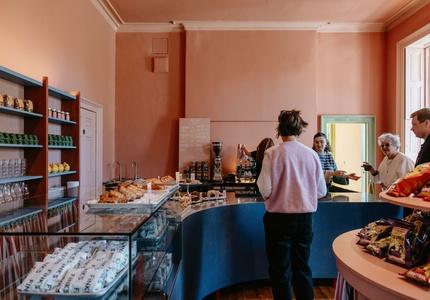
It’s why the people behind Yard Sale Pizza, London’s ever-expanding independent pizza chain, are so mindful of adapting to an area when they open. They are consciously “anti-brand”, says co-founder Nick Buckland. They employ locally, and each site has a different mural and sign, designed by a local artist. “It’s not cheap, but we are a neighbourhood pizza restaurant. We want to embed ourselves in the local community – and that goes beyond the glossy bits.” They help with local events, and are beloved for their collaborations with local restaurants and suppliers. “We aren’t coming to an area to take from it,” he says. “We want people to feel proud of their Yard Sale.”
Again, the parallels with winemaking are clear: working with an area, distilling its sense of place, creating something that locals can feel proud of. Oenophiles like Keeling and Smith might laugh at such a hypothesis but, in fact, they agree. “There are environmental aspects [to Renegade’s terroir],” says Smith. “But it’s the skill of the winemaker and the philosophy of the winery that dictates wine, just as it’s the skill of chefs and front-of-house staff and the philosophy of a restaurant that dictates the experience.”
“Our terroir is our people,’” Keeling concludes. “As important as our old buildings are, it is their decisions – and our diners – which make our restaurants.” It is London’s diversity, communities and what Smith calls our “endlessly innovative open-mindedness toward tasting, trying and doing new things”.
This article originally appeared in issue 4 of the Broadsheet London magazine. Find a copy here.