Can you feel it? It feels different this year, doesn’t it? Better, perhaps. More alive. More fun. A sense the shackles have been shaken. A sense that, just maybe, we are so back.
It’s there in the, ahem, vibes. Big, splashy, loud restaurants have returned with gusto. We have “it” pubs again. Karaoke is everywhere. Niche club nights have got people talking. Members’ clubs are in rude health (a record 130 and counting). The Fashion Week-London Film Festival-Frieze juggernaut arrived with more star power than ever.
It’s there in the figures, too. Our resurgent nightlife economy was valued at £153.91 billion last year versus a pre-pandemic high of £112 billion according to the Night Time Industries Association’s Night Time Economy Market Monitor. But that hasn’t been the narrative. There’s no denying the obvious – the triple-threat of Brexit, Covid and a cost-of-living crisis wrought unprecedented damage. Icons were lost along the way. London felt deflated. No one goes out anymore, we’re told. (The same Night Time Industries Association pumps out alarmist projections that we’ll have no clubs left by December 2029.) Pessimism prevails.
But that’s no way to mark the first party season in a while to arrive with an air of genuine excitement. So we asked a few of those who have thrown, supplied, soundtracked, photographed, designed, shaped and reported on some of the city’s best parties to survey the scene at the source, to take its temperature, to see how its fundamentals might have changed. The upshot? In this city, the party always carries on.
Katrina Mirpuri, writer and Diwali party host:
London-based journalist by day, co-host of what Vogue called this year’s “vibiest Diwali party” by night.
From exclusive members’ clubs to sweaty warehouse raves and everything in between, the city thrives on spontaneity and it doesn’t discriminate. Yes, the big clubs and iconic venues are cool, but the real magic happens at the tucked-away parties, the pub lock-ins, the impromptu nights.
The reaction to our October Diwali party was unreal. The room was packed, and people from every background danced to desi bangers all night. There were cigarettes, cocktails and food flying everywhere. The Tamil Prince catered, and guests went wild because it’s nearly impossible to get a table there. Afterwards, we were getting messages from people all over the world asking, “How do we get on the list for the next one?” That’s the real London; you need to sniff out where the party is at.
James D Kelly, photographer:
London’s go-to party documenter, Kelly has snapped every event worth attending since the days of indie sleaze. His work appears regularly in Vogue, GQ, the Sunday Times and now Broadsheet.
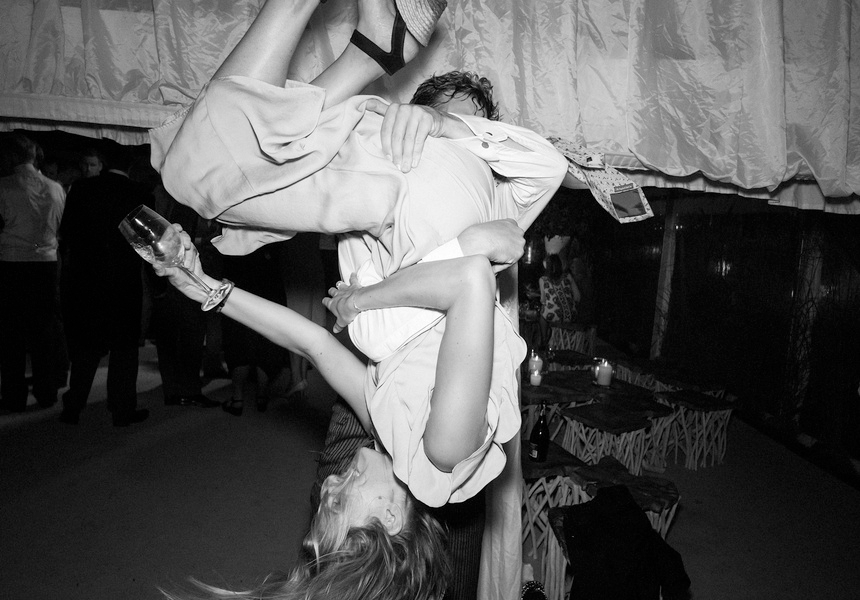
I started photographing parties back in 2009, when a friend of mine [Faris Badwan from the Horrors] asked me if I’d document a new night he was starting at a club called Bungalow 8. Its black-and-white striped walls were the perfect backdrop for the black-and-white film photography which I would develop in my bathroom after the party. It was a much looser time.
I think that they’re generally much more curated these days. The best parties are often more private, where the music and conversation is good enough that people forget about their phones. Maybe it’s the culture we have here of letting go to unwind, and the rich diversity of offerings – but somehow it just works. There’s always something exciting around the corner.
Oliver Keens, nightlife reporter and DJ:
A longstanding nightlife editor, columnist, author and DJ, Keens is a regular commentator on the industry for BBC News, Radio 4, This Morning and more.
I’ve worked as a DJ and a nightlife reporter for more than 15 years. Most weekends, I’m out for work or out out for fun. Hand on heart, I honestly don’t think London nightlife – however you define that – has ever been better.
Of course venues close. We lost Hackney’s much admired 200-person party spot Pickle Factory at the beginning of the year, while Elephant and Castle’s influential no-frills railway arch Corsica Studios currently stands on the precipice. But if you only judge the health of nightlife via the prism of venues shutting, you’re getting a very blinkered view indeed. Take Soho’s G-A-Y Bar, which closed in October, as an example. It had long stopped serving London’s gay community. Does its closing mean LGBTQ+ London is in decline? Hell no.
Queer London nightlife is in a boom period. Parties like Howl, Riposte and Unfold have become hugely popular with a more gender-fluid, queer-not-gay crowd – and anyone with a relentless thirst for techno. Venues that work hard to adapt constantly to be inclusive, such as Dalston Superstore, continue to thrive. And perhaps the greatest rise has been in nightlife prioritising women and femme-presenting Londoners.
And until very recently, bad sound quality was accepted as a given, wherever you chose to dance. But two people in particular – Paul Noble, owner of pioneering King’s Cross listening bar Spiritland, and DJ Colleen “Cosmo” Murphy, whose Classic Album Sundays events made use of her feted sound system – changed the way Londoners think about sound.
The trend for all things audiophile can be a little worthy at times, but its impact can’t be ignored. Places like 17 Little Portland Street, a clandestine spot with a reported £1 million sound system, are truly works of aural art. This passion for quality audio continues to trickle down to listening bars and even restaurants across the city.
Andrea Gelardin, creative director, Broadwick Soho:
Gelardin worked across fashion and music, collaborating with the likes of Louis Vuitton, Gucci, and Lady Gaga, before channeling her creative energy into one of London’s most exciting hotels.
London is a saturated, opinionated, fast-moving city. You have one shot to get it right. What made Broadwick Soho land so quickly was that we built it with real intention and a lot of love – a space where design, music, art and hospitality could all mix in unexpected and joyful ways. Everything is considered but never overthought. People respond to that kind of sincerity.
A good party makes you feel slightly suspended from reality, like anything could happen. That requires curation, of course, but also space for spontaneity. The best parties have a bit of chaos in them. Do the ingredients change? Maybe the medium does. But connection and atmosphere are a must. The party scene right now reflects the diversity of the city. And there’s this very British irreverence, a sense of humour that cuts through even the fanciest event. I love that the most.
Martin Brudnizki, interior designer:
Brudnizki is one of London’s most sought-after designers, crafting decadent spaces from Annabel’s to The Dorchester’s Vesper Bar.
The fundamentals here haven’t changed. A great party space has always been about atmosphere, that gentle sense of stepping into a world that’s familiar but ever so slightly heightened. A touch of escapism is essential; people want to feel transported. You can be bolder in these environments: the layers, the patterns, the colours can all be dialled up, but they still need coherence. The fantasy only works when there’s a narrative holding it together. You’re really designing a sequence of moments. And a project must feel as though it truly belongs to its place.
[Currently] London has this marvellous confidence; it’s eclectic, a little irreverent, and open to ideas. That energy encourages us to be bolder, to mix references and to enjoy ourselves.
Xandice, co-founder and resident DJ, Gal Pals:
As well as helming buzzy nights in London and Brighton, Xandice and the Gal Pals crew have played Glastonbury, Primavera Sound Barcelona and Mighty Hoopla.
When we started 10 years ago, dyke nightlife was in dire straits. Now we're in the height of the lesbian renaissance and the London scene is flourishing.
Lou Hayter, DJ and musician:
Former New Young Pony Club keyboardist turned solo artist, Hayter also became the style set’s go-to DJ, playing for brands like Chloe and Chanel and serving as musical director for Paul & Joe’s London runway shows.
When I was about 20 I looked for places to DJ at and started promoting parties, and I haven’t stopped since. By the time I was in my mid-twenties I was DJing at Fabric, Turnmills and The End. It was so much fun. I was resident at Chiltern Firehouse for 10 years until it closed down. But in this city venues come and go. It changes a lot, but there’s also a vibe that stays the same. I think the bar is just set really high here. We have the best of the best and it’s so multicultural so there’s always this melting pot of genres, which I love.
Cameron Malik-Flynn, co-founder Malik Acid World:
Malik-Flynn founded his beverage and hospitality design agency last year, with sister Missy Flynn of Soho restaurant Rita’s, and quickly became the go-to name for inventive event-specific drinks and more for brands like Burberry, JW Anderson and Gagosian.
[We] grew up all over London living above pubs, which must have had some effect on our work. But I think friends and the community is ultimately what really influences us. For me, it’s delicious agave spirits that really make a party. Plus a box of Ferrero Rocher and some good late-night chat.
If you look hard enough there are exciting, experimental projects and events across all zones. Shout-out to Mina Galan, the founder of Club Stamina, and Riya Mistry, the music and cultural programmer at The Standard, for their contributions to the city's nightlife. London is lucky to have you.
Yu Su, DJ and composer:
The Kaifeng-born, London-based Yu Su is a musician, label owner, sound artist, occasional chef and genre-bending DJ.
Om [from the team behind Hackney’s Giant Steps and Brilliant Corners] is proof that something can be designed with the right mindset from the start. It’s shaping up to be the best small club north of the river. Every time I come back to DJ, I see upgrades: from the sound system to the lighting to the separate bar area. It’s built to drop long sets without interruptions, while still having that captain-of-a-spaceship point of view to watch, observe and interact with the dance floor.
Right now, it’s not about the quantity but the quality of what’s going on. We’re experiencing intentional, reflective, supportive and fruitful exchanges between those all across the [nightlife] industry.