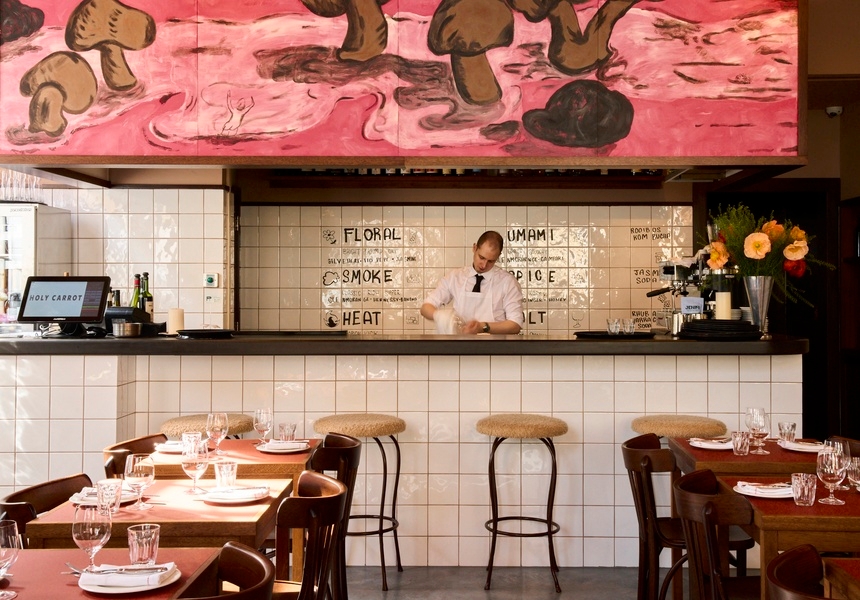
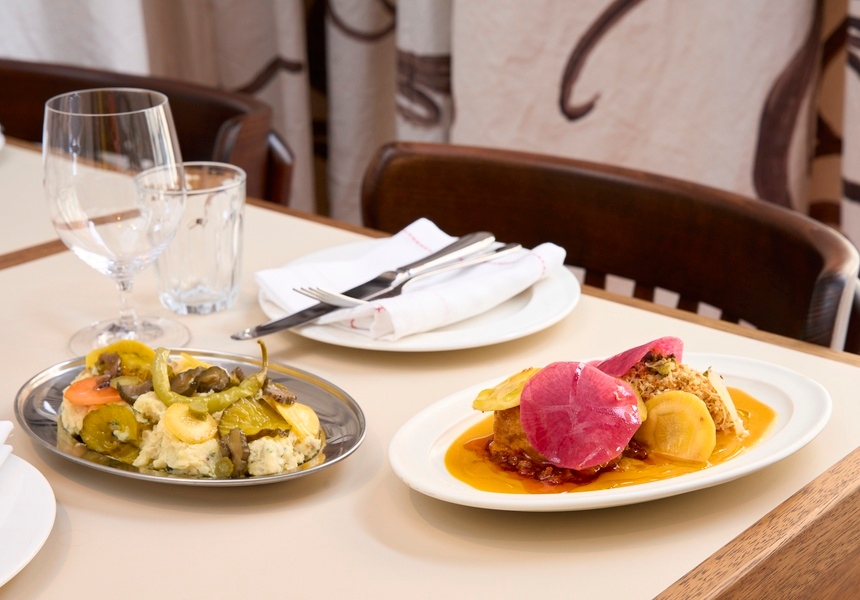
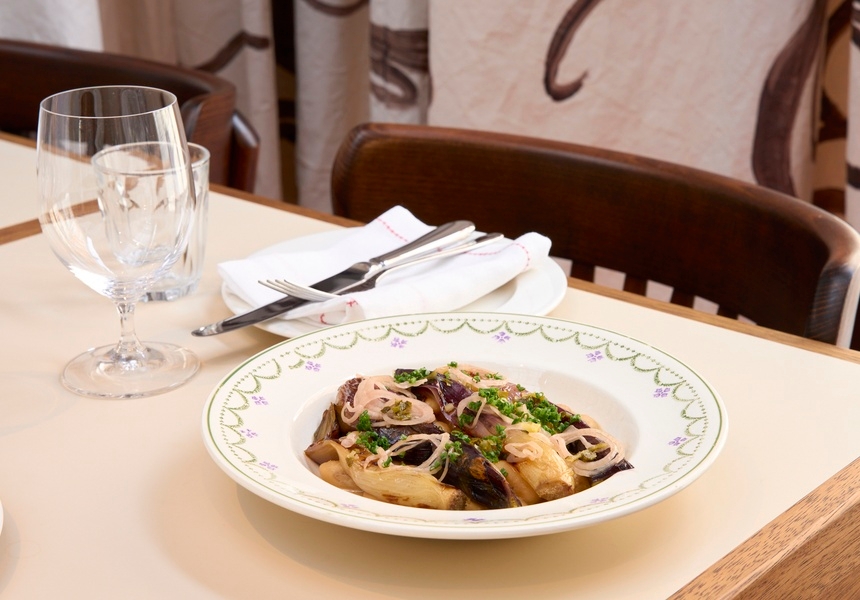
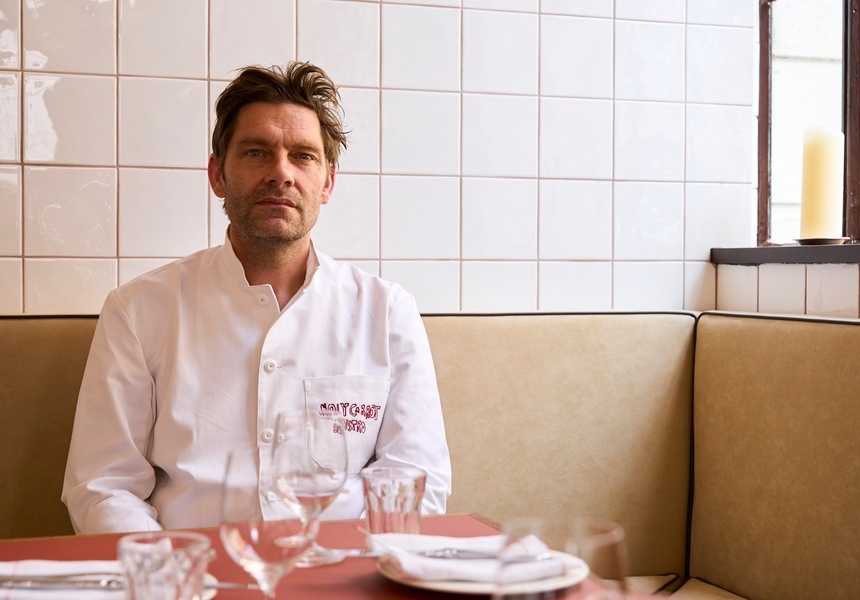
“If in doubt … dry it out,” chef Daniel Watkins tells Broadsheet at the launch of the new bistro-style Holy Carrot in Spitalfields Market. We’re in the restaurant’s underbelly and he gestures towards jars filled with a rainbow of pickles and traditional Japanese kioke barrels, which are used to ferment soy and miso. Up above, a custom-built British grill crackles and spits, ready for vegetables to meet their blistered fate. Fermentation below, flame above – the foundations of Holy Carrot.
Founded by Irina Linovich as a pop-up in 2021, Holy Carrot settled in a permanent home in Notting Hill in 2024, with executive chef Watkins – who co-founded Acme Fire Cult – bringing a style of cooking that prioritises craft and produce. It quickly established itself as one of London’s most compelling plant-based kitchens, earning a place in the Michelin Guide in 2025. Now, Holy Carrot number two has just opened, and its menu is no longer strictly vegan, with eggs and dairy making their way into the fold. “At Portobello, the narrative was always plant-based, celebrating vegetables, fermentation, and good produce,” Watkins says. “That hasn’t changed. It’s just that now there’s a bit more flexibility in how we do it.”
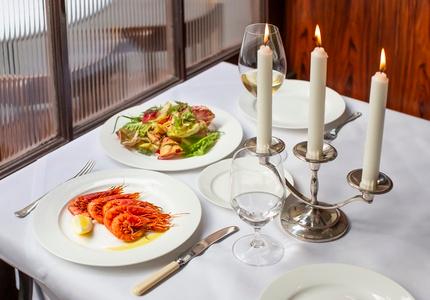
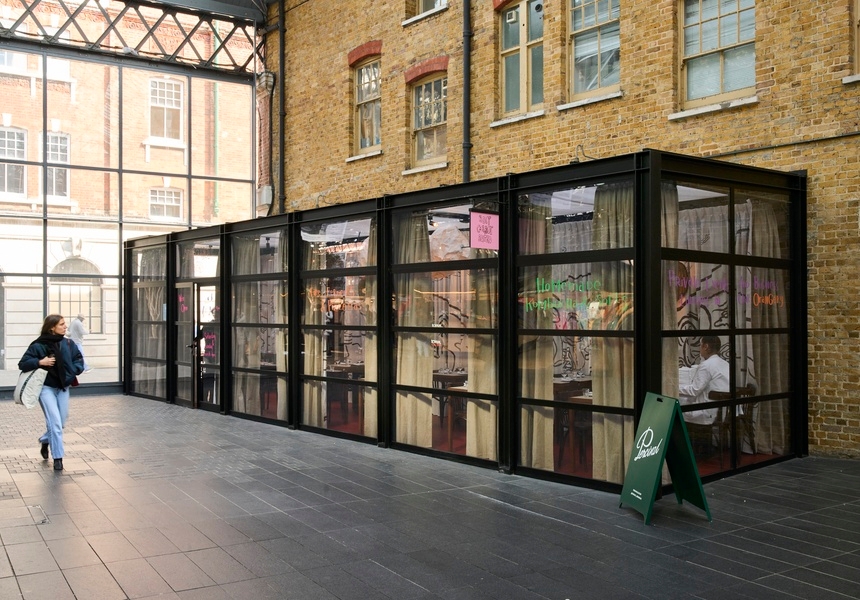
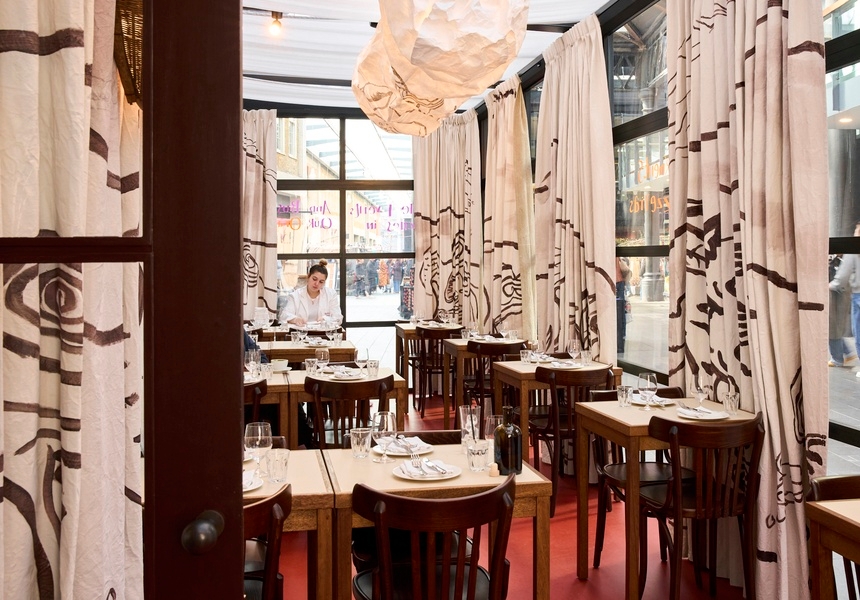
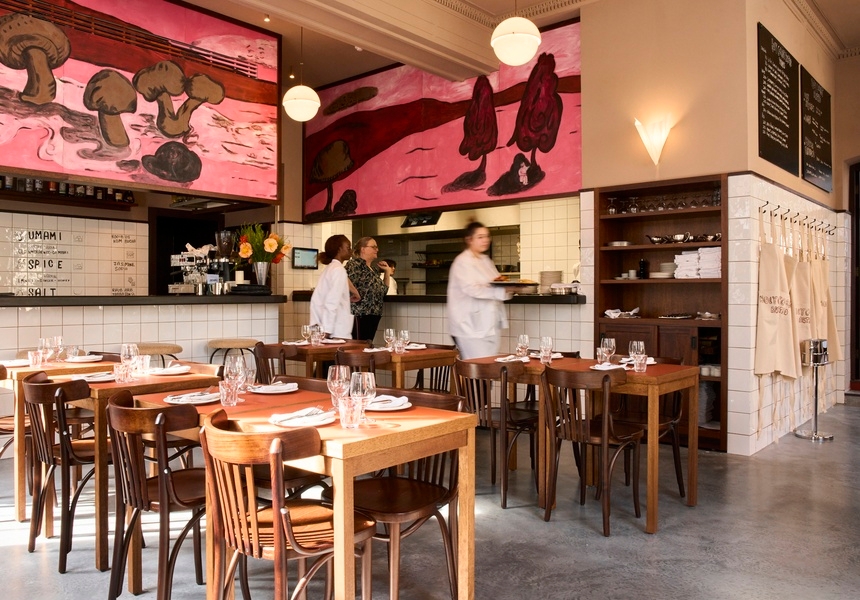
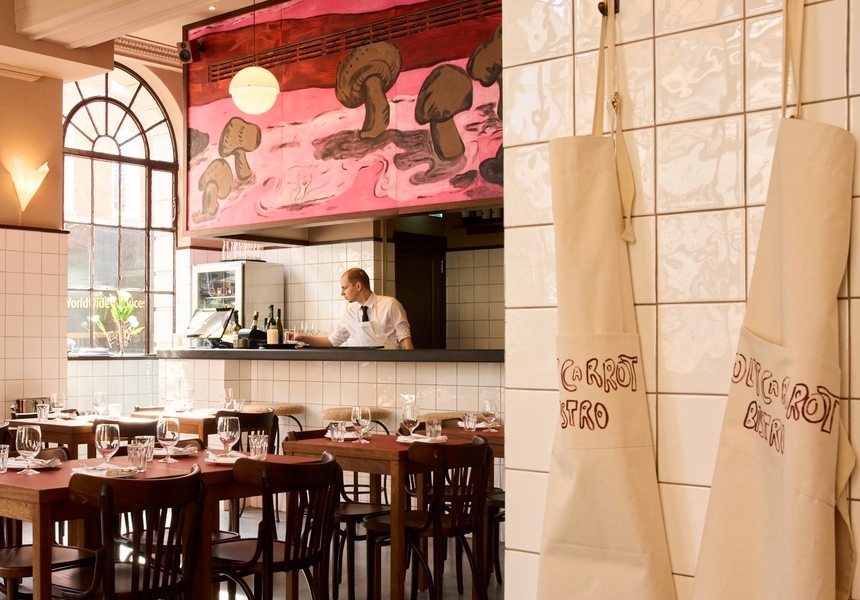
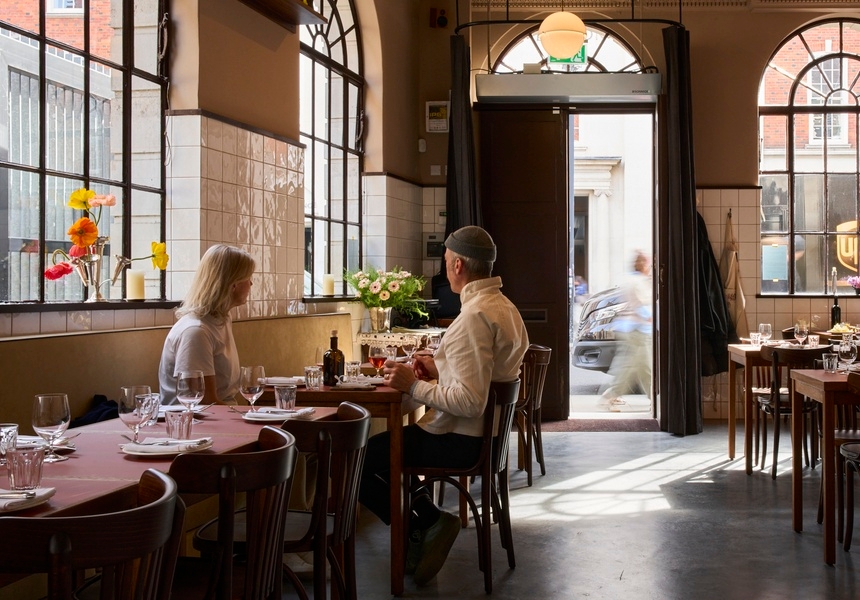
The new space has been designed by Studio Toogood and features all-white tablecloths, candlelight and billowing curtains printed with line drawings of vegetables. It has the feel of a classic Parisian bistro – but unlike traditional French bistros, vegetables aren’t an afterthought, but the showstopper.
“It’s always been about where the stuff comes from for me,” Watkins says. “I grew up vegetarian, went fully plant-based about 10 years ago, and at home I still eat like that. But if I go somewhere really good, I’ll eat anything. For me, it’s always been about where it comes from and how it’s produced.”
Watkins uses fire and fermentation to intensify and elevate flavour: cabbages are blackened to the point of collapse, leeks blistered and smoked, herb stalks pickled, peelings dehydrated and ground into powders, offcuts reworked into ferments.
“Fermentation’s been around forever,” Watkins says. “It’s good for you, it doesn’t need loads of skill, and it’s a great way to reuse things as you’re taking what would normally go to waste and turning it into something with flavour.” And then there is the fire. “It just changes everything. You can roast a carrot, and it’s nice, but put it on the grill and let it catch – the flavour is completely different.”
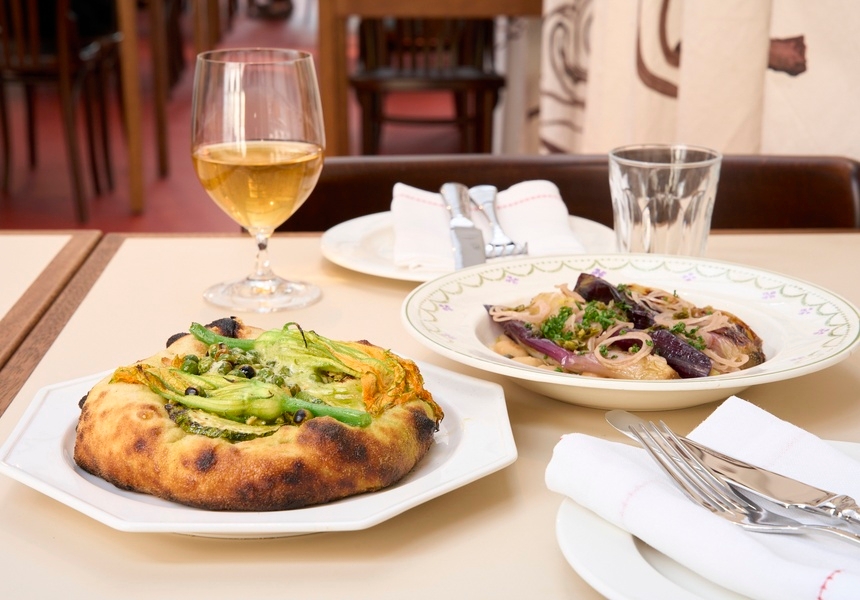
The menu at Holy Carrot will shift with the seasons. There are pizzette rooted in Neapolitan technique but shaped by Japanese fermentation – miso-marmite versions finished with grated pecorino (a nod to Watkins’s days at Acme Fire Cult) or topped with slow-cooked mushroom ragù. The pizzette are fermented with koji rather than traditional sourdough and are made with regenerative Wildfarmed grains. A take on Georgian khachapuri (flatbread) leans into the restaurant’s more flexible approach with egg and cheese, while masala borlotti beans come with grilled tomato and mustard greens. Elsewhere, fire-grilled leeks are served with smoked hot sauce and hazelnuts, and tiramisu is sharpened with a coffee kombucha syrup. In the kitchen, trays of blood orange ice-cream currently sit frozen inside their hollowed-out skins, but these will give way to peaches and mandarins as the months change.
Watkins talks about vegetables in the language usually reserved for meat – “texture”, “depth” – treating them not as substitutes, but as centrepieces in their own right. That same care extends to the kitchen itself. “A big thing for me now is focusing on the staff, how we train people, how we look after them. I came from a world that didn’t really do that, so I’m trying to build something different here.”
But what Watkins is ultimately aiming for with the new Holy Carrot is simple: that people come here and just “have a good time”.
Holy Carrot
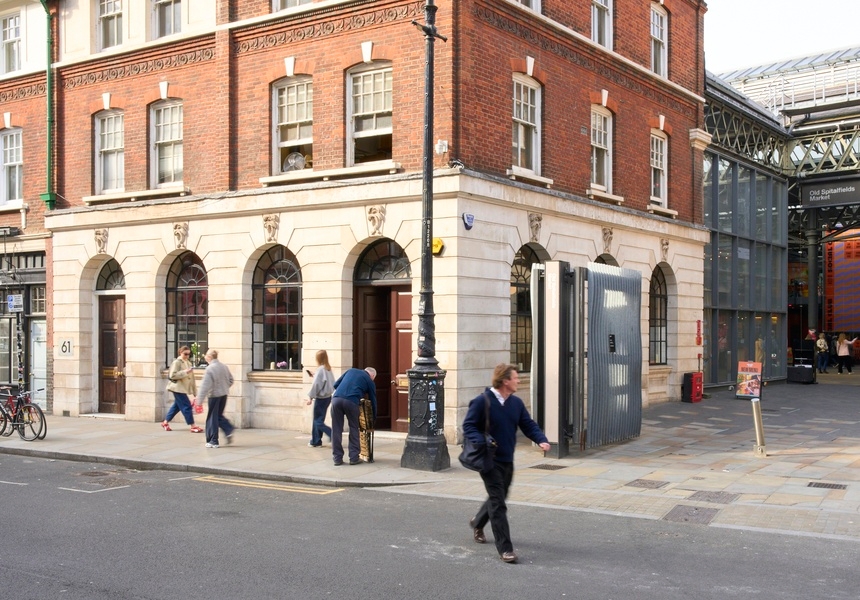
61–63 Brushfield Street, E1 6AA
Hours:
Mon to Fri, midday–11pm
Sat 10:30am–11pm