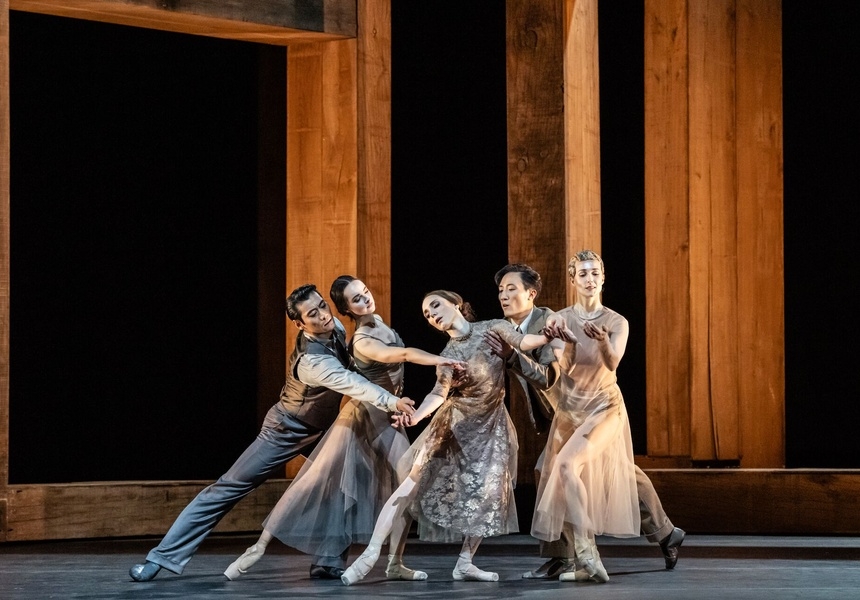
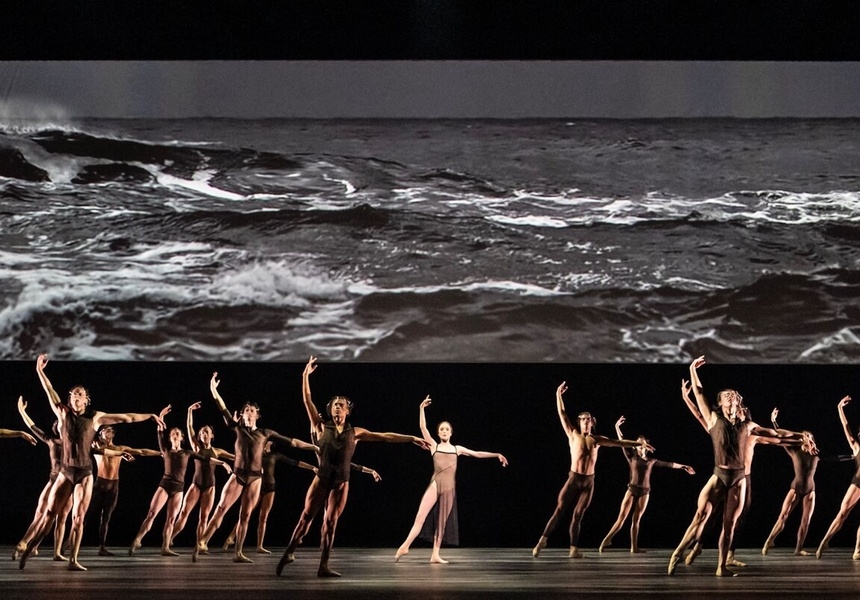
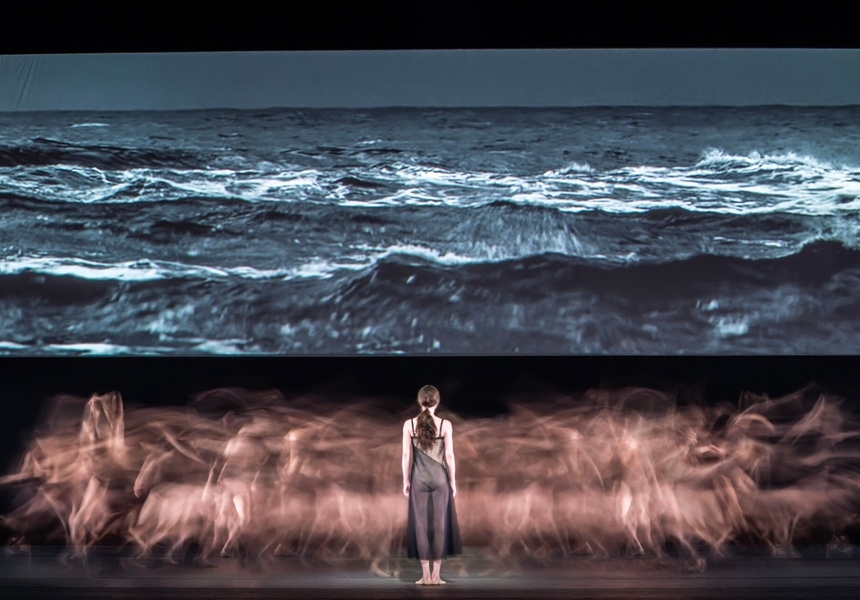
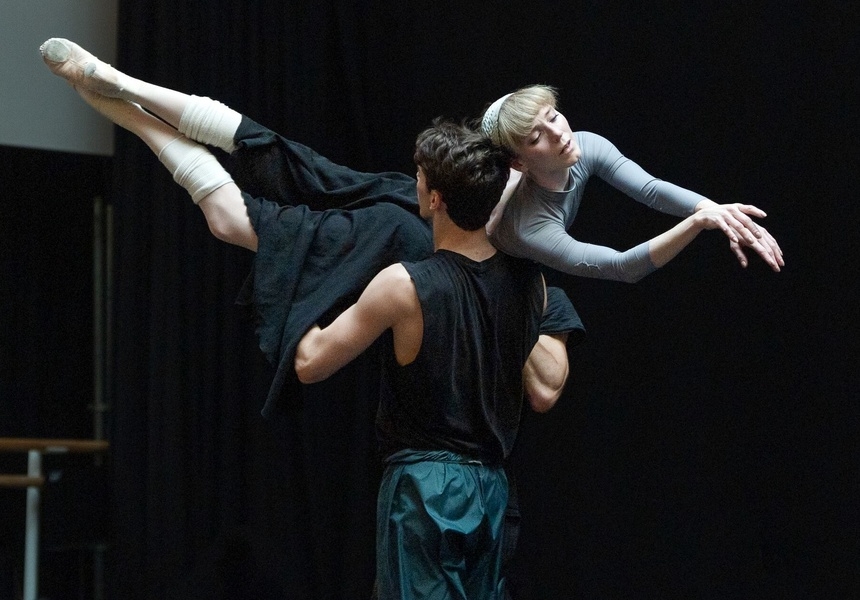
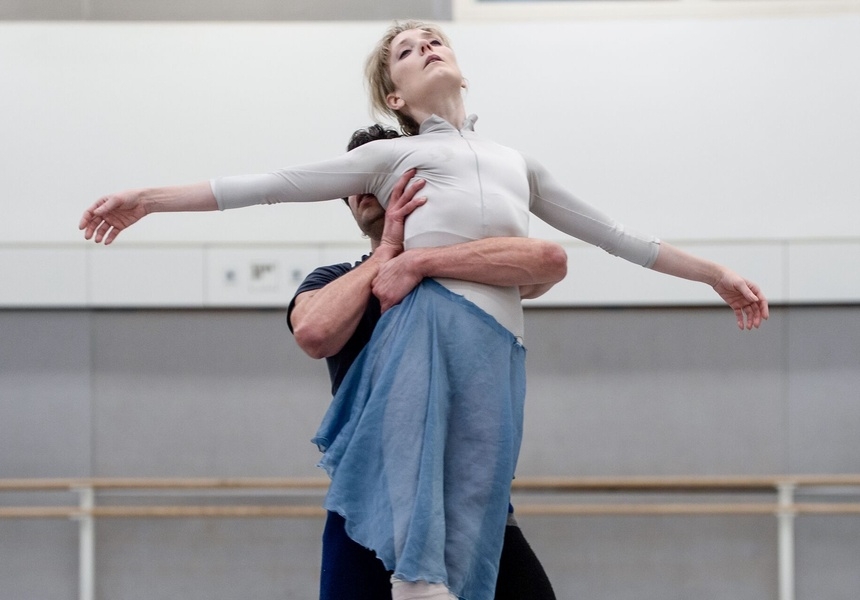
Picture the literary titan Virginia Woolf and you might see the sombre, monochrome portrait that glares out from the inside cover of her books. Or perhaps you’ll imagine Nicole Kidman peering down her prosthetic nose in the 2001 movie The Hours, its sharp line softened by her trailing floral tea gown. What you’re probably not visualising is 45-year-old ballet dancer Sarah Lamb’s depiction of the storied author in Woolf Works, choreographer Wayne McGregor’s Olivier Award-winning experimental ballet. Dressed in a simple, transparent black slip, she’s tossed gracefully in the arms of male dancers, rising and falling in front of a greyscale video frieze of tumbling waves, while German-British composer Max Richter blends Woolf’s words into a fluid, emotive score.
Literature fans might be surprised to see their icon dressed in skimpy tulle instead of her signature tweeds. But for lovers of ballet, Woolf Works is striking for other reasons. When it first premiered more than a decade ago, the title role was played by then-52-year-old Alessandra Ferri – an almost unheard of feat in ballet, where most dancers traditionally retire in their thirties. “Seeing an older dancer getting to create a role was so rare and inspiring to me,” Lamb, who played Virginia’s sister Vanessa in the original 2015 production, tells Broadsheet.
Now, Lamb is stepping into her co-star’s role. And her preparation has involved nearly as much time hunched over books as it has sweating in the rehearsal studio. “I’ve been reading more about Virginia’s life, as well as quite a few of her works,” Lamb says, “and there’s a quote that I love: ‘I am made and remade continually.’ That really encapsulates a dancer’s life.”
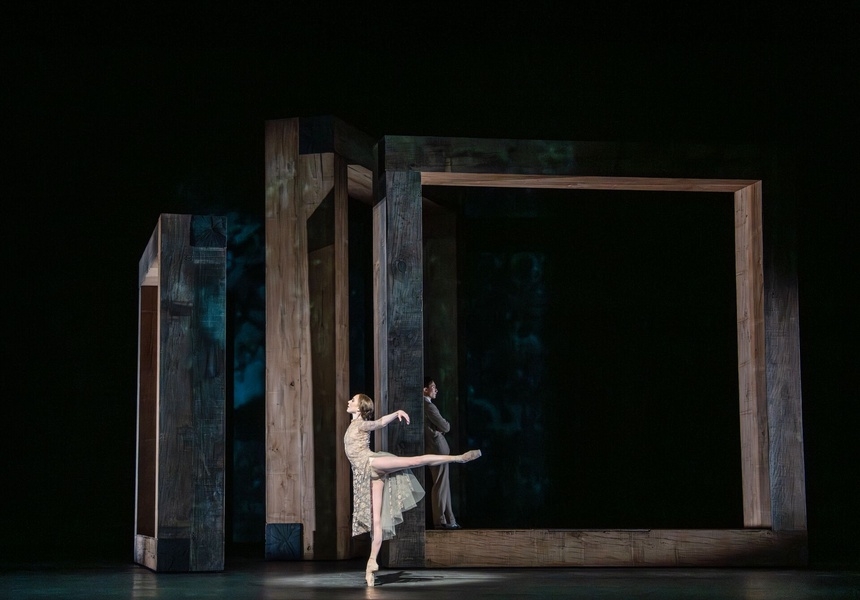
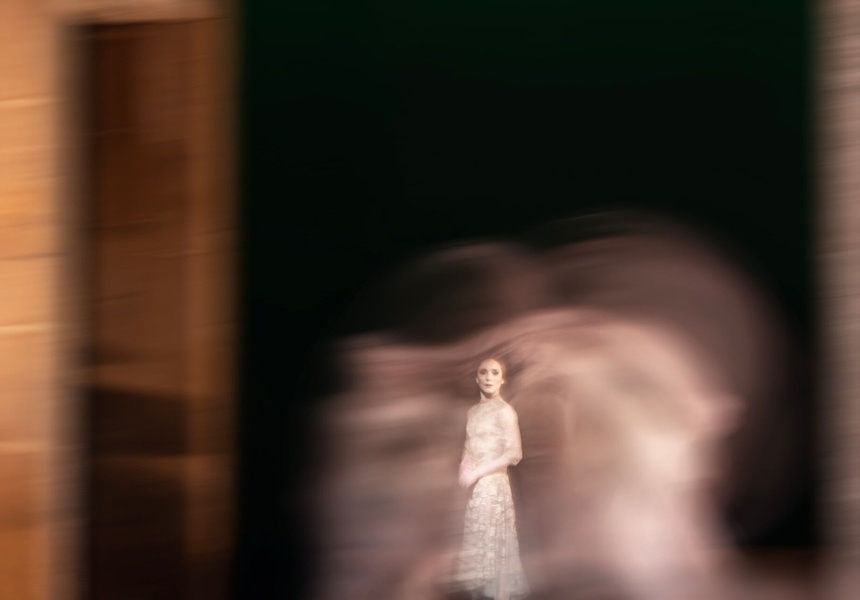
McGregor started his career with muscular choreography that pushed dancers to their limits, and Woolf Works was a kind of reinvention for him. The first act begins with the only known recording of Woolf’s voice, before the author merges with her most famous literary creation, Clarissa Dalloway, who whirls and romances her way across the stage in a glittering white gown. Laser beams sweep the stage in the punchier second act, while McGregor's signature contortions bring more gravitas and heft to the middle portion of the production. Then, the final act hones in on Woolf’s death, with Richter’s score assuming an unbearable heaviness as the author sinks into a maelstrom of wave-like bodies.
“I feel a kinship with Virginia Woolf in a lot of ways,” says Lamb. “She had this mix of confidence and self-doubt that I think a lot of artists have. She had incredibly high standards for herself, like me, and she was kind of a difficult person – I think I’m probably a difficult person as well. But she always kept going, and putting in so much hard work, even in dark times.”
Being a ballet dancer is hugely physically taxing. “We see marathon runners blistered and grimacing, but as dancers our discipline is all about illusion, so you don’t see the difficult, strenuous parts,” Lamb explains. And the exhausting training only gets harder with age. “Who knows how long it will be?” she says, when asked about her plans for the rest of her career.
What Lamb is surprisingly certain of is that Woolf would smile upon her unlikely afterlife at The Royal Ballet. “I do think she would have been fascinated by it,” she says. “She was quick to judge when she encountered new things, like [James] Joyce’s books. But she’d persevere, and give it time to convince her.”
Sarah Lamb performs the part of Virginia Woolf/older Clarissa Dalloway on Saturday February 7.
Woolf Works runs until February 13 at the Royal Opera House.