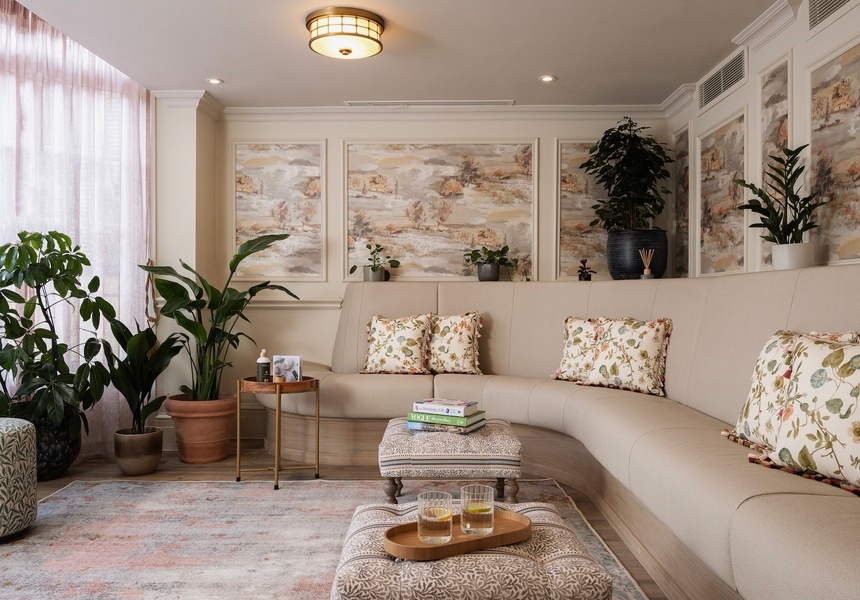
The Francis Hotel isn’t just located in Bath; it is a key part of Bath’s history. And while you’ll be tempted to spend your time here thumbing through coffee table books in the hotel’s cosy snug, relaxing on Egyptian cotton sheets in your room or ensconced in a private thermal suite, the staff will ensure that you’ll have all the knowledge you need to get out there and discover the city that the hotel helped to shape.
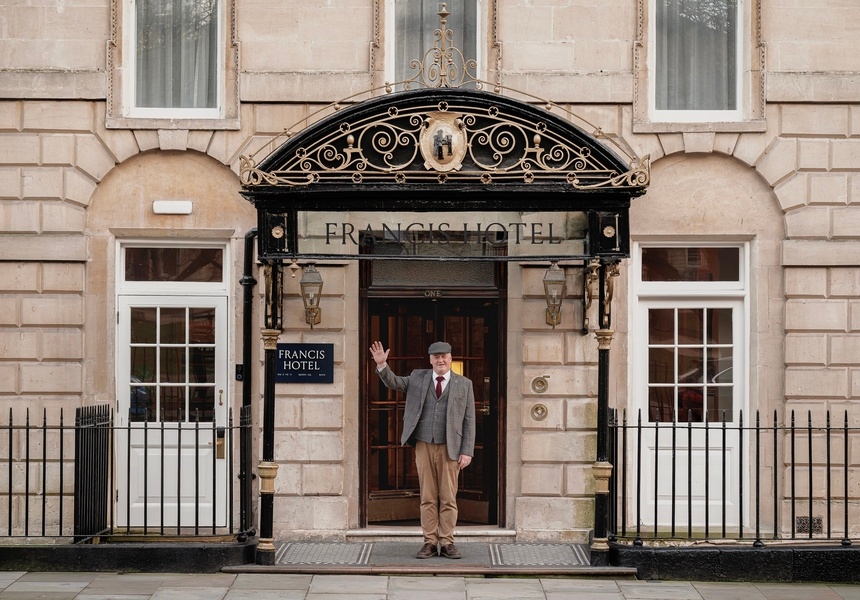
Particularly, Alex the doorman. Dressed in a sharp tweed flat cap and waistcoat, he’s a constant presence in the hotel’s reception, greeting guests ready to explore with a “So what’s the plan?” in a cheerful West Country accent.
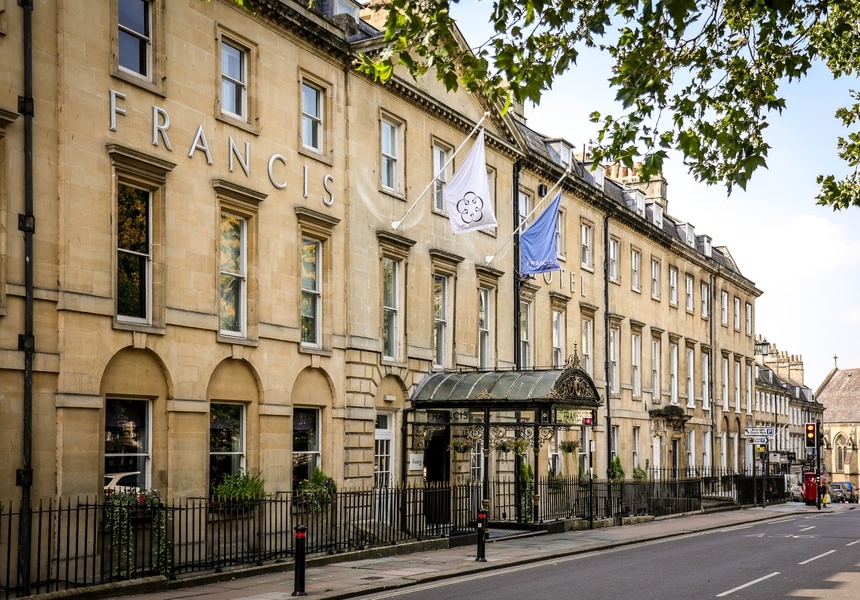
If your plan is to soak up the magnificent Georgian architecture of Bath, then a good place to begin is on your doorstep. The Francis Hotel is part of Queen Square, the city’s first Georgian square. It was designed in the early 17th century by pioneering architect John Wood the Elder, responsible for shaping Bath’s unmistakable visual identity. The square is flanked by Bath’s signature honey-coloured stone townhouses – seven of which are now interconnected, making up The Francis Hotel. John Wood’s original home, No 9 Queen Square, is the hotel’s entrance.
Over the centuries, the hotel expanded, went through numerous restorations, and was even bombed by the Nazis in the Second World War. In 2017, it was bought by Sir Richard Sutton Ltd and recently, it unveiled a major £14 million transformation.
The challenge for the recent renovation, according to Shaun Bowles, cluster general manager, was maintaining the hotel’s character while bringing things up to contemporary standards. “We wanted to celebrate the Georgian architecture without creating something that felt like a museum,” Bowles tells Broadsheet.
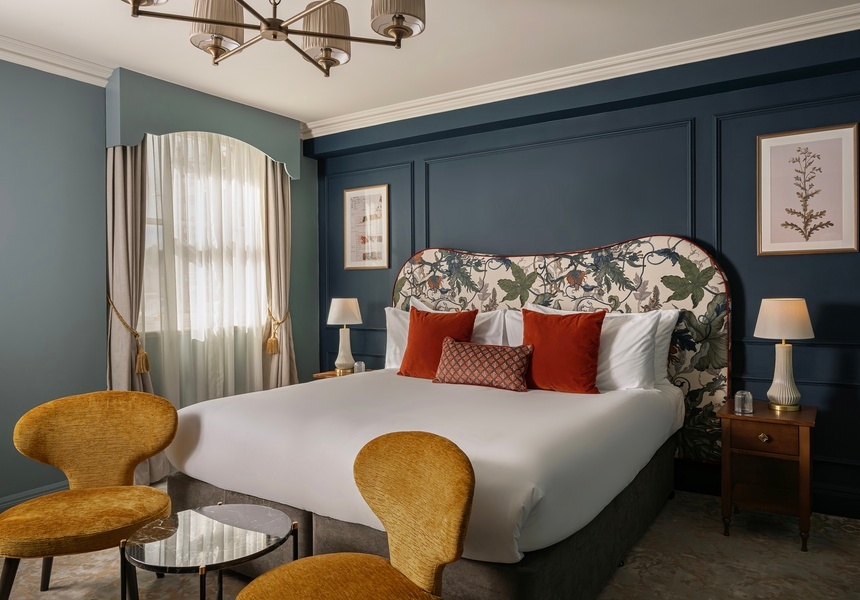
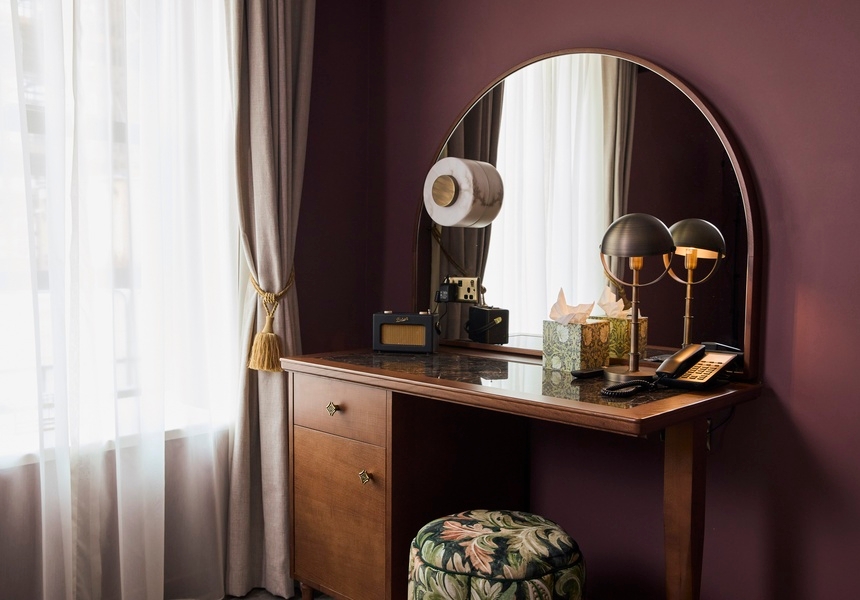
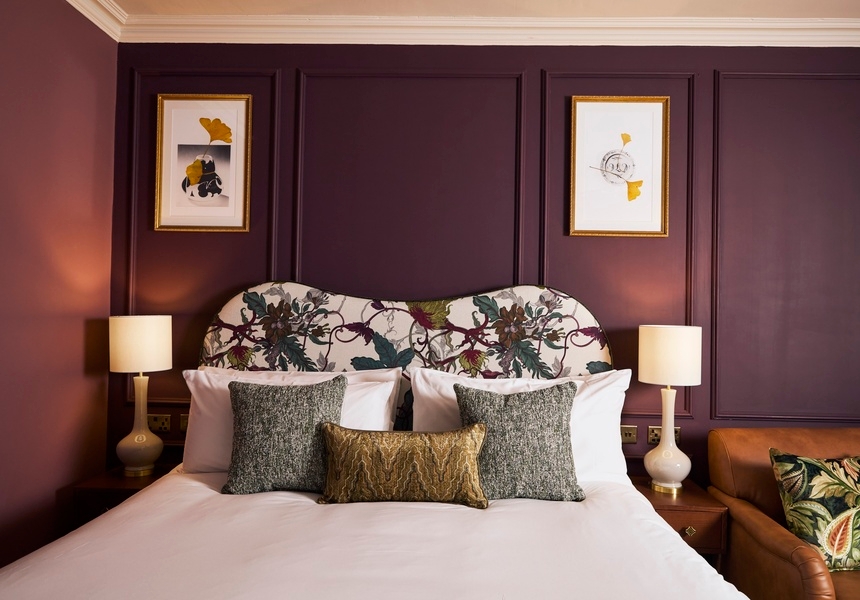
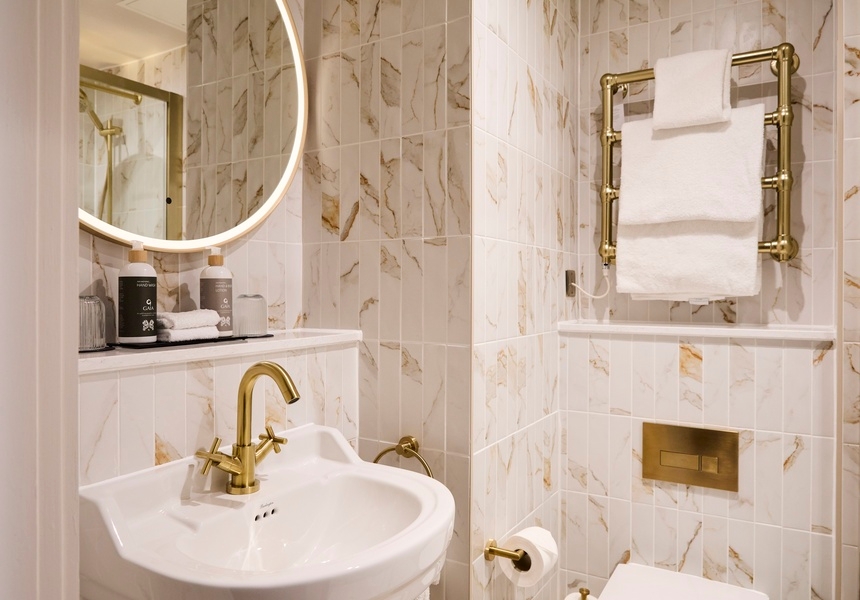
Working with London design studio 3DReid (Scotland’s Gleneagles Townhouse and Cameron House Hotel), the team set to work modernising the interiors of the Grade I-listed townhouses. That meant practical work, like upgrading pipes, bathrooms and air conditioning (while adhering to “very strict” heritage requirements) – and then it meant transforming the public spaces to become “lighter, brighter, and much more inviting”. Its 98 rooms feature Georgian touches such as intricate wood panelling and headboards with floral wallpaper designs, but with bolder colours of dark green, blue or purple, luxurious rainfall showers, Hypnos mattresses and handmade toiletries by local company Gaia. Traditional wallpaper in the corridors is punctuated by modern art prints curated by art agency Artiq, and the long marble bar sparkles with light from the chandeliers.
Look closer, and there are more references to the building’s history. “Our former residents included doctors, apothecaries, inventors and manufacturers, and you’ll find nods to their lives and professions throughout the bedroom artwork and design,” Bowles says.
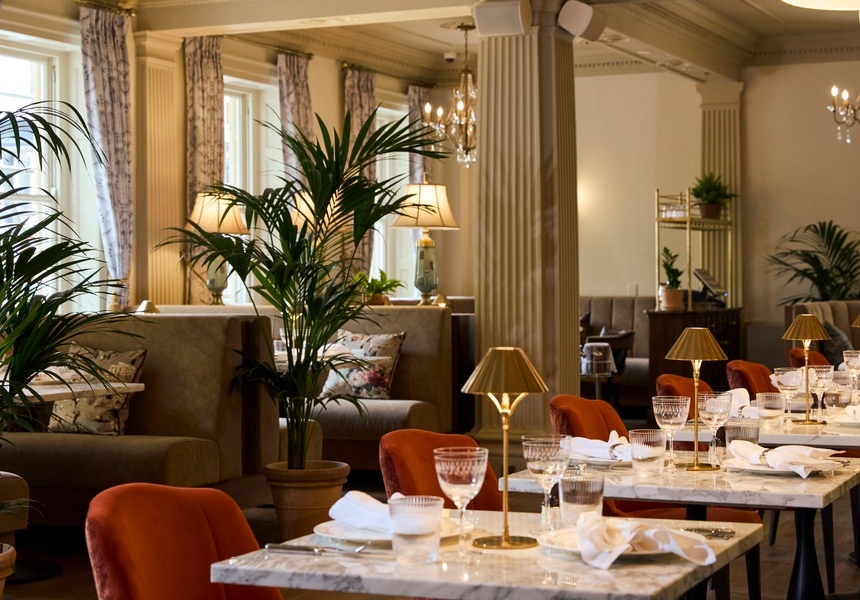
One of Bowles’s favourite connections with the past is Emberwood, the hotel’s slick British brasserie focusing on open-fire cooking. “A match manufacturer once lived at No 5 Queen Square, where the restaurant now sits. That story of fire and flame helped inspire Emberwood. I love that something very contemporary has grown out of stories that were already here.”
It’s well worth reserving a table at Emberwood; it’s a Bath favourite of locals and guests alike. Its menu lets local ingredients shine: coal-roasted Cornish scallops are served simply in garlic butter and gremolata; ex-dairy côte de boeuf from south-west England comes with Koffman fries. The cocktail list features drinks dedicated to Bath’s history, one going way back to the Romans with the Sulis Sour (the name being a reference to the local goddess of thermal springs, which the Romans incorporated into their name for Bath, Aquae Sulis): a blend of Lyme Bay mead, EW blended whisky, cherry wine, honey syrup and lemon.
Another major addition to the hotel is its spa – a calming subterranean facility that, given Bath’s history as a place for relaxation and restoration, feels natural. What is less expected is its signature treatment: a private thermal experience suite offering a rare-for-the-UK Klafs Espuro foam steam bath, a German-invented treatment during which scented foam fills the room.
But that’s part of The Francis Hotel’s charm: contemporary hospitality in a historic setting. “The buildings have changed enormously, but they have always been about people and hospitality,” Bowles says. “We haven’t ignored the past and we haven’t tried to recreate it either. We’ve taken the stories that were already here and used them to help shape what comes next.”