The Counter is a weekly column from award-winning restaurant writer and broadcaster Jimi Famurewa. Sign up to get The Counter first, sent to your inbox every Tuesday.
Hello hello.
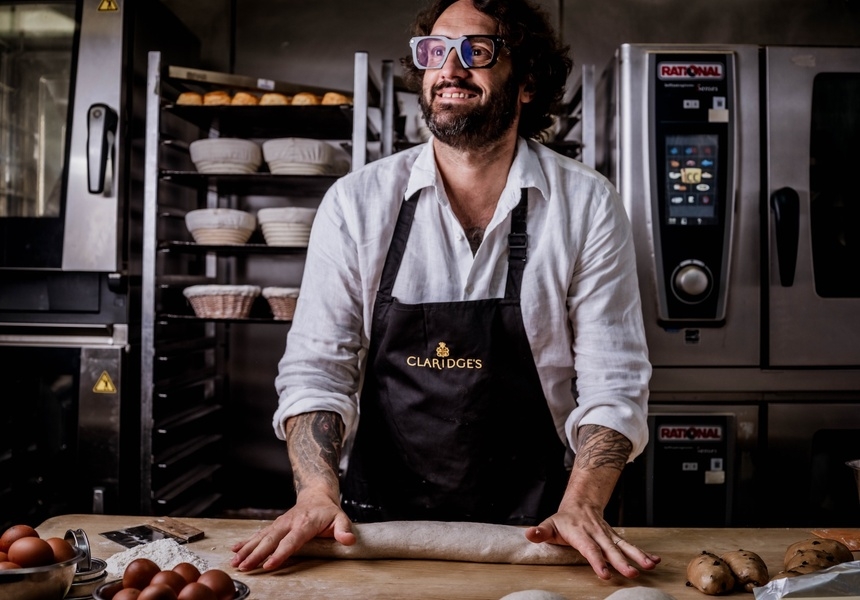
What do you get if you combine the atmosphere of a prohibitively expensive Bond Street boutique with the imagined sensibility and spirit of Mr Kipling? Last week, an answer of sorts arrived in the form of Claridge’s Bakery: a long-awaited, big-ticket opening from Richard Hart, the London-raised baking visionary best known for San Francisco's Tartine, Copenhagen's Hart Bageri and, more recently, hurriedly rowed-back pronouncements on Mexican food culture. Located at the rear of the grand Mayfair hotel, in the warm, creamy light of a John Pawson-designed space, it is a kind of pastry atelier where the speciality is a precise, exuberant mode of high-low British baking nostalgia. Gourmet French fancies spurt piercing, yuzu cream. Jammy dodger tarts are stamped with ravey smiley faces. There is lardy cake, a hulking tart inspired by malted milk biscuits and forearm-length cheese straws that are swirled with Marmite and the fragrant crunch of fennel seeds.
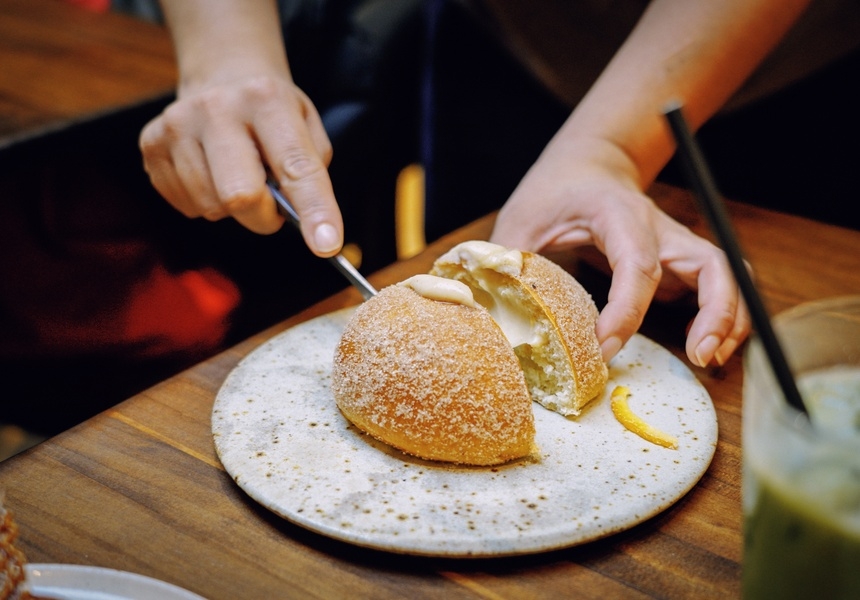
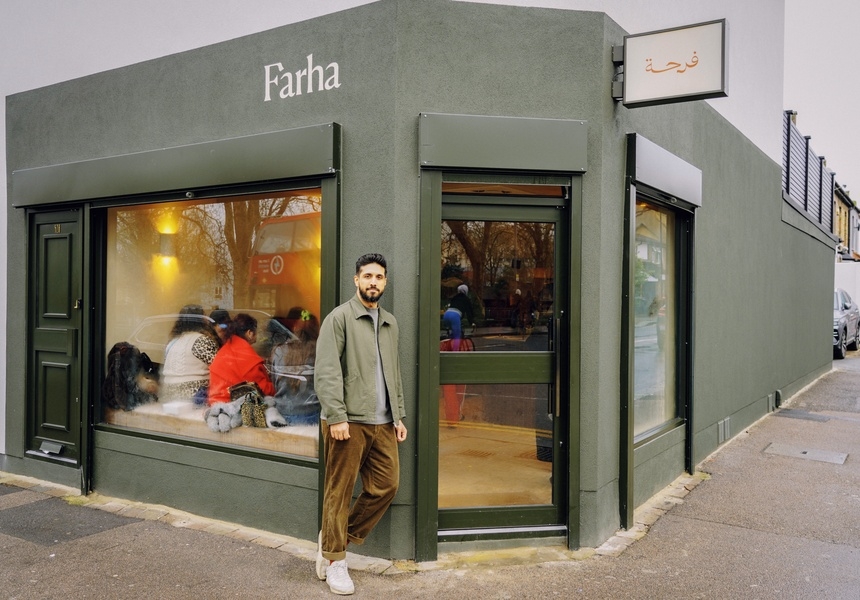
Claridge’s Bakery – the biggest current baking story in London – is irreverent and joyous; a timely reimagining of sweet-scented lost high street businesses like Percy Ingle. (Even Big John has given it the dutiful 'Bosh!' of approval.) But it is not, to my mind, the most unexpected or exciting. Head to Mahali in Battersea and you’ll find classically trained Sydney natives Miguel Jocson and Ru-Yan Foong proffering exquisite Milo pastries and pandan almond croissants that showcase traditional viennoiserie as refracted through a blend of Filipino, Malaysian Chinese and Australian flavour principles. Pop out to Leyton, at the edge of a Lime bike no-go zone beyond the Olympic Park, and you’ll find Farha, a brand new, Middle Eastern-inspired baking fantasia, turning out limited-run must-haves – think za’atar and whipped feta cruffins or sugar-dusted chai orange buns – from a chicly reconfigured former garage. And then, in Soho, there is Onsu: last week’s other blockbuster bakery launch. It’s the instantly mobbed, futurist home for former Dorchester executive pastry chef Michael Kwan’s glimmering, Asian-inspired confections and luridly colourful, Star Wars cantina-level specialty drinks.
Are they third culture bakeries? Diaspora pastry counters? Global new wave viennoiseries? Whatever you call them, these businesses reflect the enmeshed cultures and freewheeling influences of London dining at its most urgent and distinct. And their emergence – which, from the West African-accented Suba and Ealing's exemplary, Japanese-inspired (and sadly soon to close) Tetote Factory to the proudly Palestinian Bunhead in Herne Hill, has grown in recent years from a trickle to a torrent – has never felt more vital or worthy of loud celebration. So, why here? Why now? And why does it matter?
For Florence Mae Magnaloc, the creative dynamo behind both Donia and acclaimed Filipino bakery Panadera, her journey began with the non-negotiable Saturday morning baking sessions that punctuated her childhood. “My mum always told me that if I did it then I could watch telly,” she says, with a laugh. “But she was such a traditionalist that she’d also say the only way I’d find a good husband was if I could make good bread.” I’ll leave you to imagine the exact magnitude of side-eye that Magnaloc serves up alongside that particular memory. But those 6am wake-up calls gave her the time-honoured skills – for making pandesal loaves, cassava cake and more – that were swirled together with her acutely British fondness for after school sausage rolls, iced fingers and enjoyably claggy chicken pies.
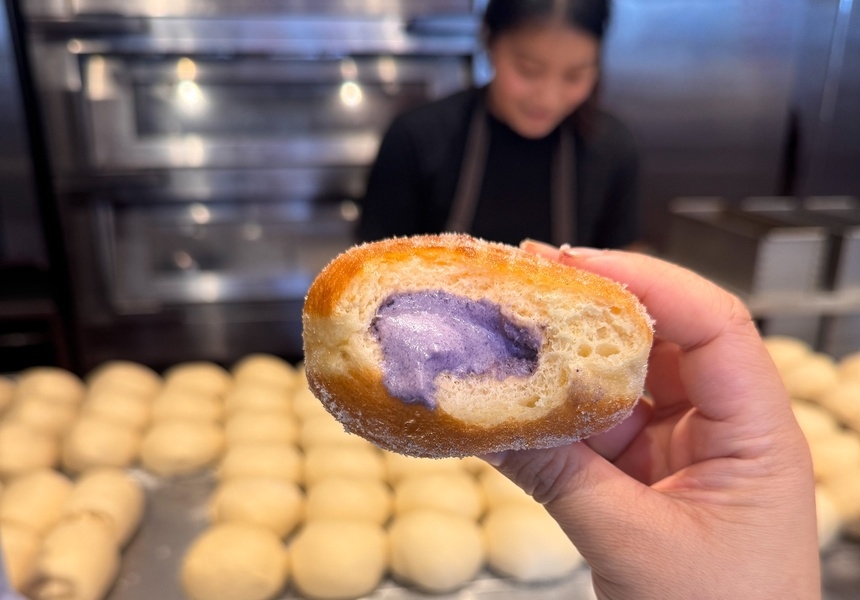
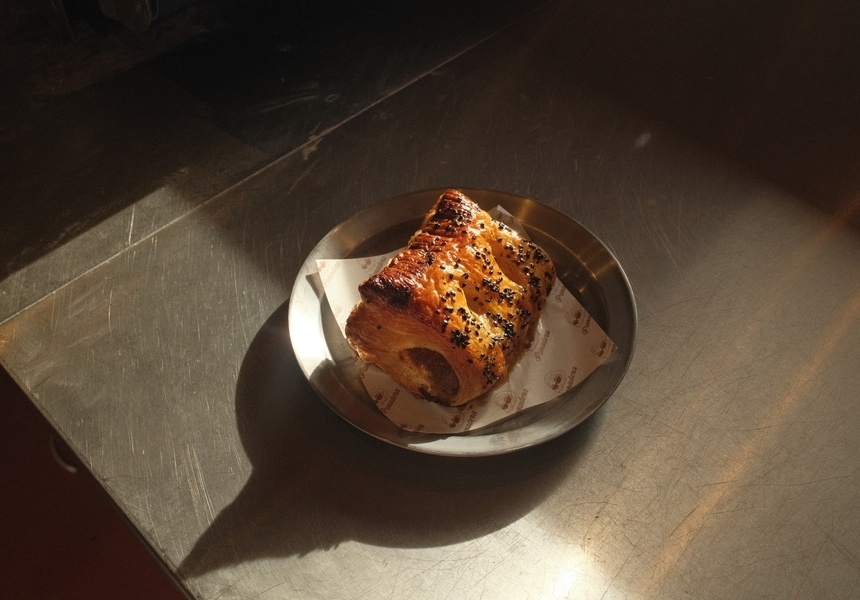
The result, following its more traditionally Filipino launch guise in 2021, is the business that Panadera has evolved into: a pair of bustling bakery cafes in Marylebone and Soho where thickly sugared doughnuts erupt with purple ube custard, profoundly buttery pastry envelops the glazed, garlicky hit of salty-sweet longanisa sausage, and a chicken adobo pocket gives a latticed Greggs hand pie an exhilarating, almost preposterously delicious Pinoy overhaul. “At the start, I was conscious [of highlighting] Filipino flavours so that everyone knew I wasn’t hiding or muting my identity,” says Magnaloc. “But now I feel like, well, I grew up in the UK eating far too many sausage rolls, so that’s the other half of my life. Incorporating both those things matches both my style of cooking and who I am.”
This cultural duality is well-suited to London’s modern food landscape; a hypey, hybridised terrain of Dubai chocolate everything, unslakeable matcha thirst, algorithm-tapping “spicy, crispy, creamy” baked gochujang pasta videos, and voracious hunger for untapped ingredients and from beyond Europe. Yet it’s also worth noting that lots of popular baked goods – Cantonese egg tarts, Filipino pandesal, Jamaican patties – are often legacies of colonialism and migration that are especially conducive to modes of culture-mashing self-expression. Mahali’s curry puffs made with croissant dough. Onsu’s salted egg yolk mille feuille. Bunhead’s sumac and chocolate brownies. Third culture bakeries provide both an alluring creative canvas and an edible representation of the multifaceted identity that many feel but cannot always adequately articulate. It’s a truth that will be a part of the Caribbean bakery and after-hours rum shop concept that Marie Mitchell, acclaimed chef and food writer, has been plotting for a while. “When you’re from a global majority diaspora but you’ve also grown up in the UK or elsewhere in Europe, you’re drawn to your heritage and trying to find ways to bring that out,” she says. “I think a bakery, which has lots of room for play and experimentation without some of the jeopardy of a restaurant setting, is a really fun way to do that.”
Add in the relatively gentle on-ramp towards setting up a wholesale or direct-to-consumer bakery business (Mahali began life in a flat; qualified doctor Hai Lin Leung still runs her beloved, Cantonese-inspired bakery Lucky Yu from her Walthamstow home) and you maybe get more of a sense of what’s causing the current explosion. Fundamentally, London’s third culture bakeries and Richard Hart’s nostalgic new blockbuster are expressions of the same instinct. Both reflect a desire to push beyond the deferent, continental parade of classically flavoured croissants, pain au chocolat and cardamom buns; both are about traditional technique deployed in service of results that are more subversive and culturally relevant. Both write fondly remembered personal and cultural histories out with laminated dough, sugar and icing.
Consider this your reminder, then, to broaden your statement pastry horizons and celebrate a scene-within-a-scene that doesn’t always get its specific due. London’s bakery hype jamboree rumbles on. Let’s remember to treasure those who are bringing something truly original, and hugely meaningful, to the flour-dusted table.
For Jimi Famurewa’s dish of the week, sign up to get The Counter first, sent to your inbox every Tuesday.