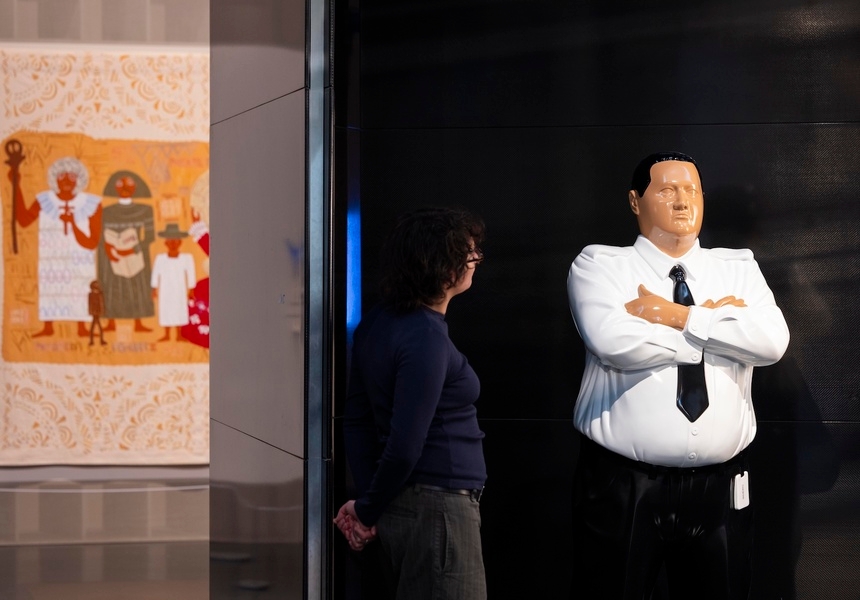
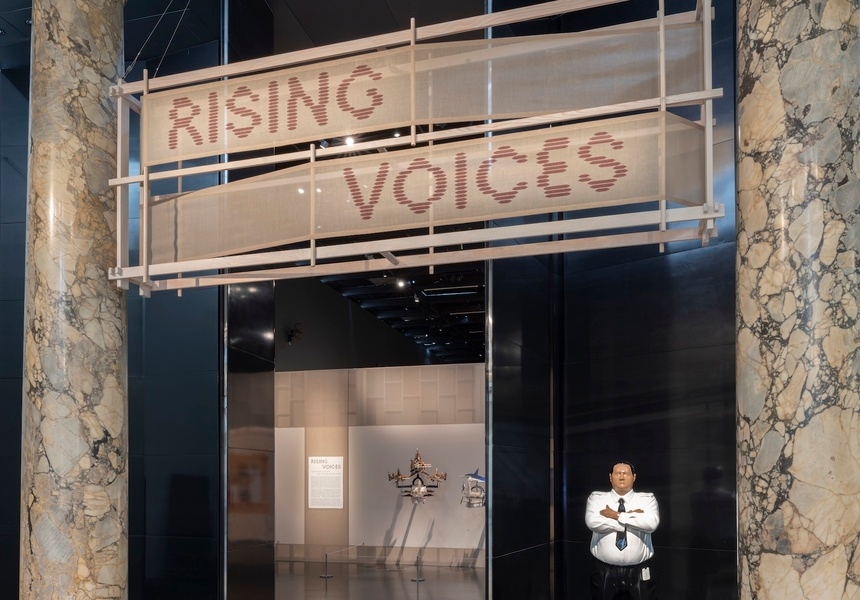
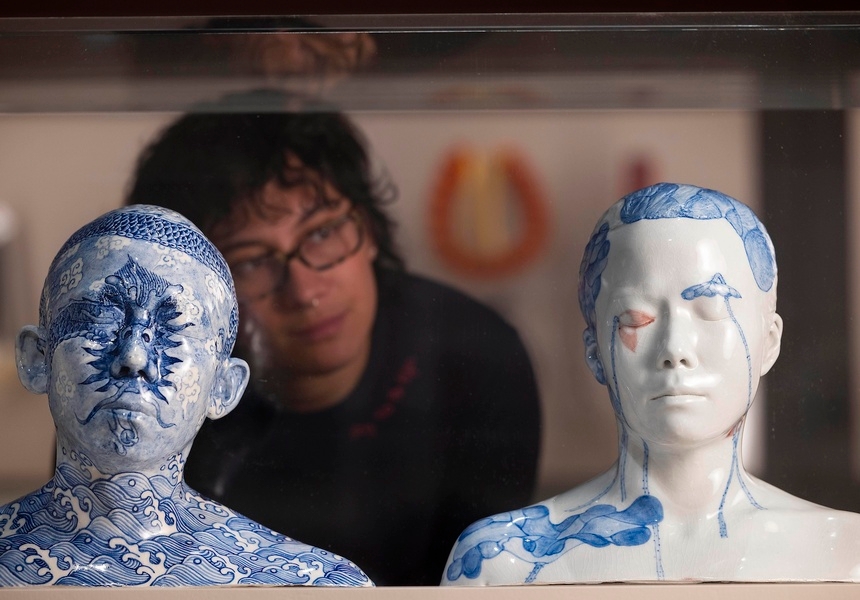
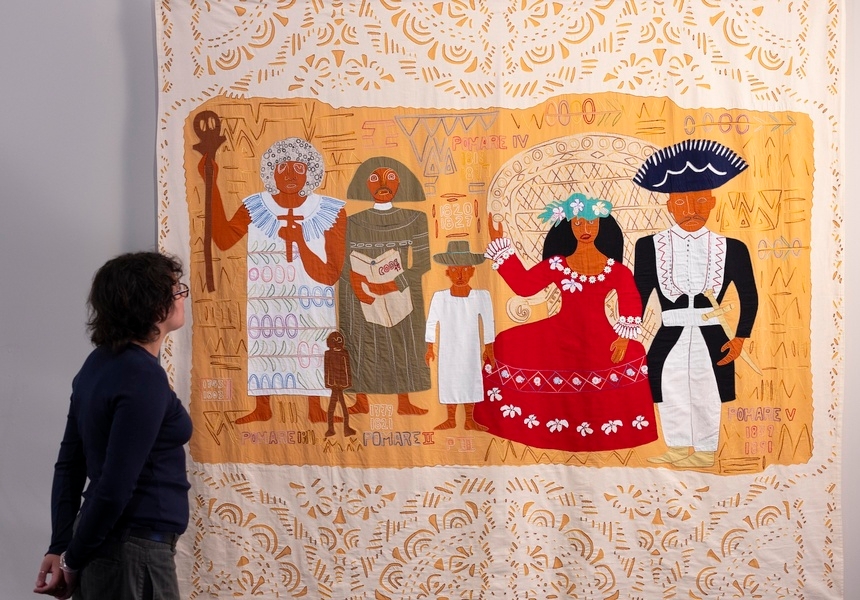
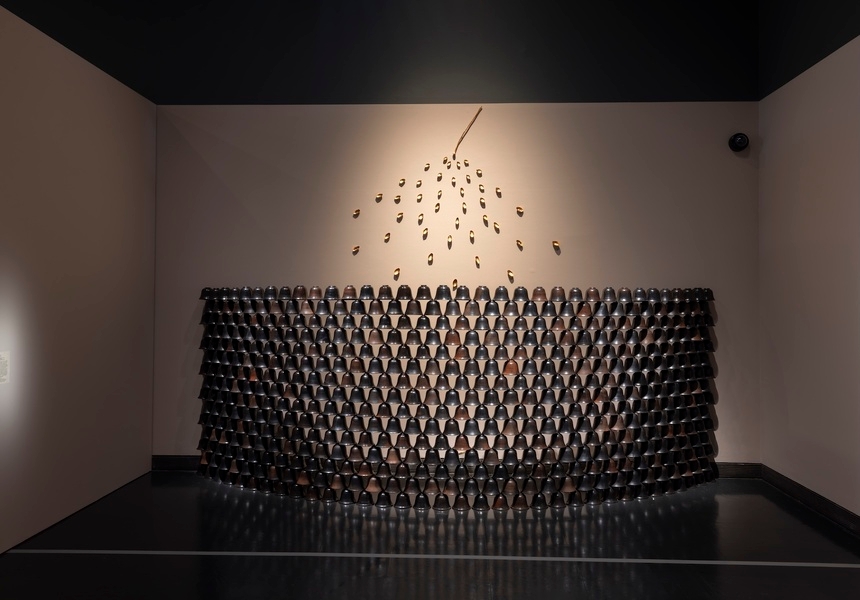
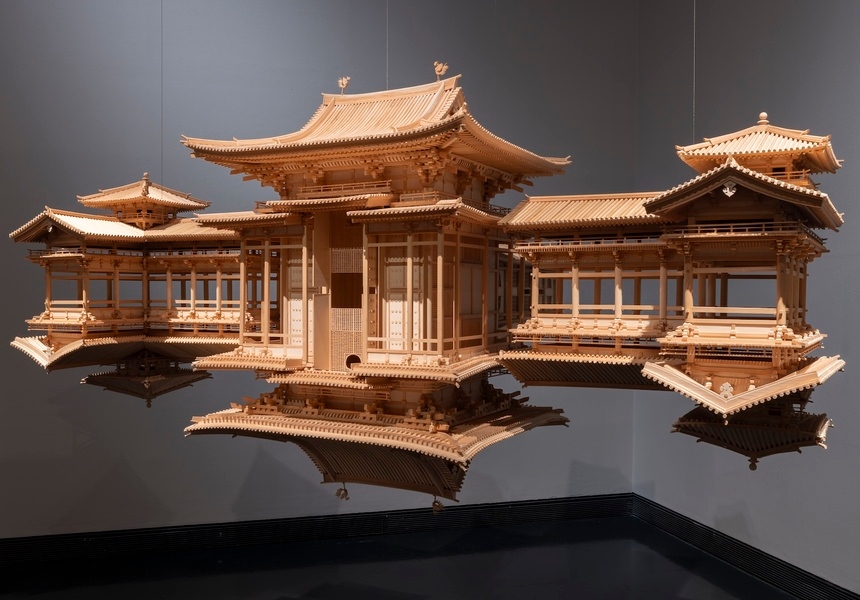
A stern-faced Māori security guard stands, arms crossed, in the entrance to the V&A’s Rising Voices exhibition. You’d be forgiven for thinking, just for a moment, that he’s a museum invigilator – before realising he’s a life-sized fibreglass statue. It’s a work by prominent New Zealand sculptor Michael Parekōwhai, who is one of more than 40 artists featured in this exhibition showcasing the work of artists from the Asia-Pacific region.
It’s a playful, provocative way to welcome visitors – and one that Daniel Slater, its curator and director of exhibitions at the V&A, hopes will instantly spark questions. “It’s a beautiful work of art … but then you want to understand why he’s chosen the image of a security guard … and why a Māori person,” Slater tells Broadsheet. “What does that mean within New Zealand? It’s a tongue-in-cheek approach to treatment of Māori within New Zealand, and prompts you to ask what is lying below the surface.”
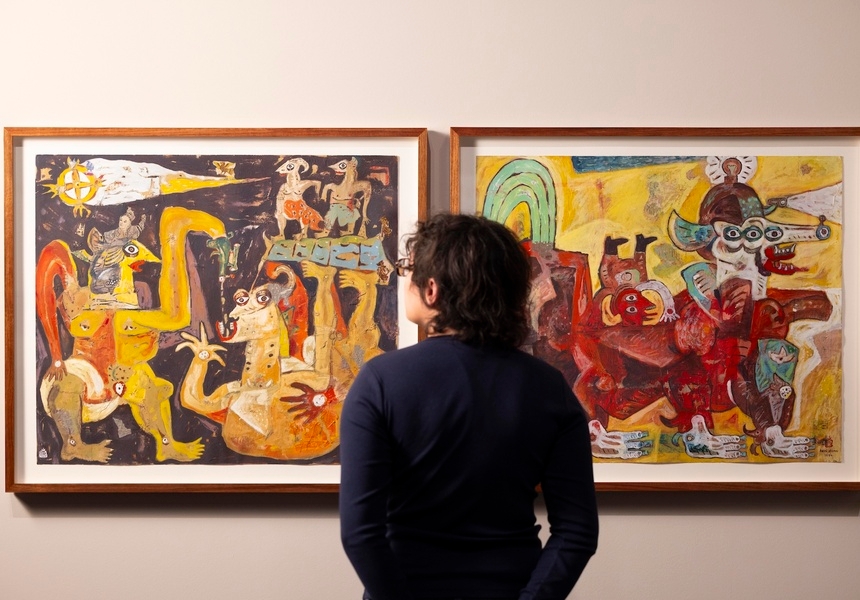
What follows is a highly varied showcase of artists from 25 countries. It’s the first-ever partnership between the V&A and Brisbane’s Queensland Art Gallery | Gallery of Modern Art (QAGOMA), drawing on 30 years of the gallery’s Asia Pacific Triennial of Contemporary Art.
The idea began to grow in Slater’s mind when he went to his first Asia Pacific Triennial at QAGOMA in 2018. At the time, he was head of international collections exhibitions at the Tate, travelling extensively to see art from across the globe. “And yet, what I saw at QAGOMA felt completely new, completely fresh,” he says. “I was really moved by it. I wanted to give other people the chance to have the same kind of reaction to all these works that I had.”
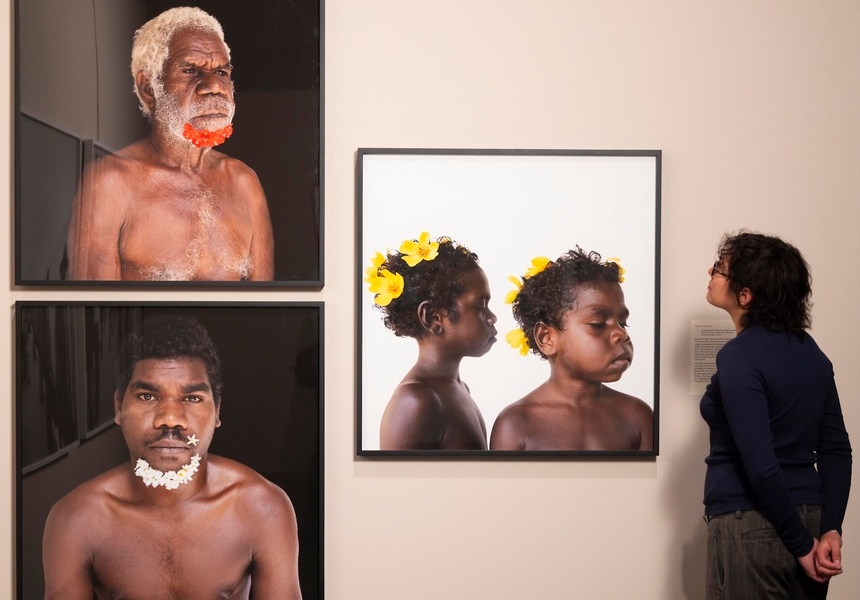
The result? Three rooms, each with its own theme, foregrounding First Nations perspectives. The first, Re-Visioning History, shows artists commenting on the impact of colonisation and conflict. Sometimes, in an overt way: one of Slater’s favourite works in the exhibition is John Siune’s striking 1995 painting, There is still a war going on in Bougainville, depicting Papua New Guinea’s decade-long civil war. Other times, resistance occurs more subtly: photographs by north Queensland artist Naomi Hobson show Indigenous Australian children decorating themselves with flowers in a way that was once prohibited by Christian missionaries. “It’s a really confident celebration of it being beautiful to be Indigenous,” Slater says.
The second room, Enduring Knowledge, foregrounds artistic practices with deep connections to culture and community. There are “the most precious, beautiful” iridescent shell necklaces by Indigenous Tasmanian artist Lola Greeno, that she makes using a method that was passed down by generations of women, and that can take up to a year to make because the shells are so difficult to find. For Slater, placing them in the V&A, which recently had a Cartier exhibition, feels like a statement of intent: “They’re made of precious materials, but not precious materials that you would normally have in art galleries. But I know the public will be blown away from Lola’s works.”
The final section, Evolving Faith, delves into the influence of spirituality and religion on art in the region; visitors will be drawn to celebrated Thai artist Montien Boonma’s large and intricate 2012 sculpture, Lotus sound, inspired by the temple Wat Phra That Doi Suthep in Chiang Mai.
Three rooms hardly feels like enough in conveying the centuries – even millennia – of culture and conflict that continue to influence artists across a region that is home to 60 per cent of the global population. But, Slater intends for it to send a strong message. “I was keen that the title, Rising Voices, implies a growing: both in power, but also confidence within the artists from this region,” he says. “Over the past three decades, from when the Triennial started, they’ve gone from what was seen as on the periphery of what contemporary art was, to being rightly much more understood as being part of a global story about contemporary art.”
Rising Voices: Contemporary Art from Asia, Australia and the Pacific runs at the V&A South Kensington from May 16, 2026–January 10, 2027.