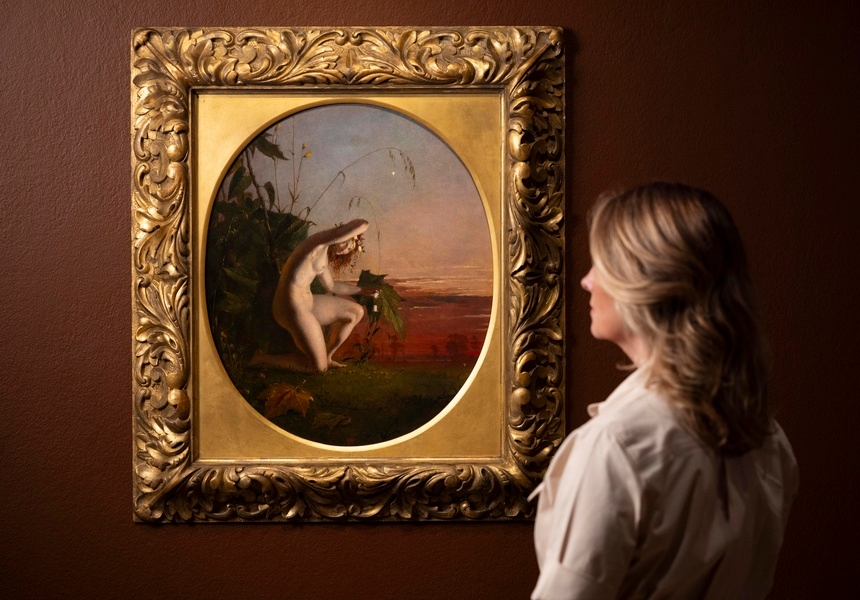
When Richard Dadd exhibited Titania Sleeping at the Royal Academy in 1841, his highly intricate fairy painting received a thunderous reception, and the ambitious young painter was launched as a major talent. Inspired by A Midsummer Night’s Dream, the painting unfolds like a miniature stage set, with bat-like wings framing the scene while mischievous fairies arch their way around their queen, lulling her to sleep. Dadd was destined for an illustrious career – until it all went catastrophically wrong.
While touring the Eastern Mediterranean the following year, Dadd began experiencing severe delusions and hallucinations. Back in England in 1843, he killed his father, believing him to be the devil incarnate. Dadd was subsequently confined at Bethlem Hospital and later Broadmoor, where he remained until his death in 1886.
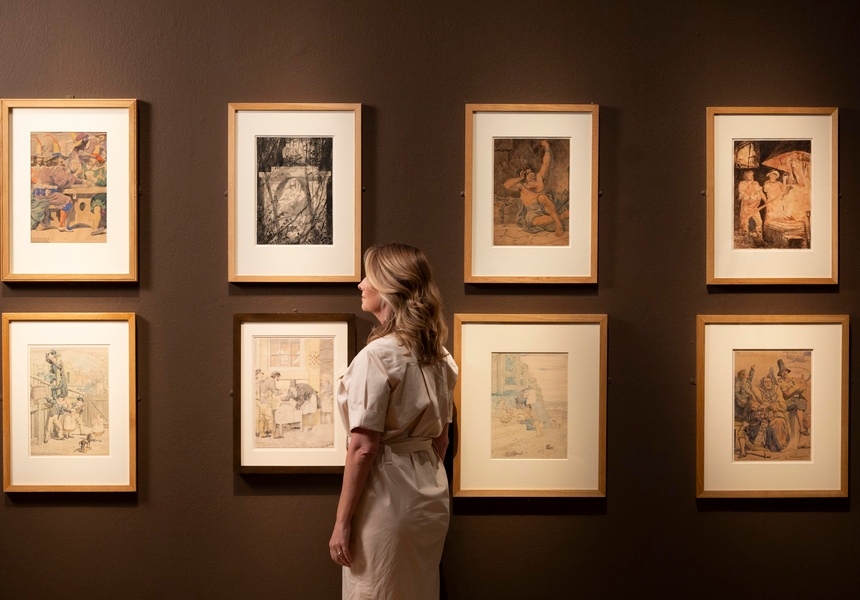
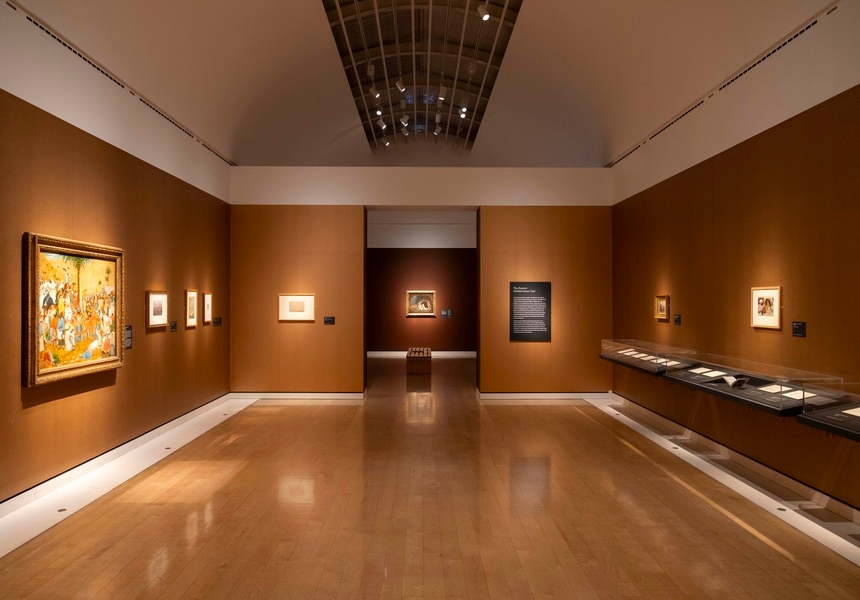
Richard Dadd: Beyond Bedlam is the first major retrospective devoted to Dadd in more than 50 years, bringing around 100 paintings, watercolours and drawings back to the institution where his career began. It is a grand homecoming and one that refuses to let his illness and crime eclipse the extraordinary art he continued to create from the confines of a lunatic asylum.
“He was totally erased from the history books and from the dictionaries of British artists,” curator Nicholas Tromans tells Broadsheet when explaining how Dadd’s dark past has long eclipsed his outstanding technical ability. “It was as if he’d never existed – he just vanished.”
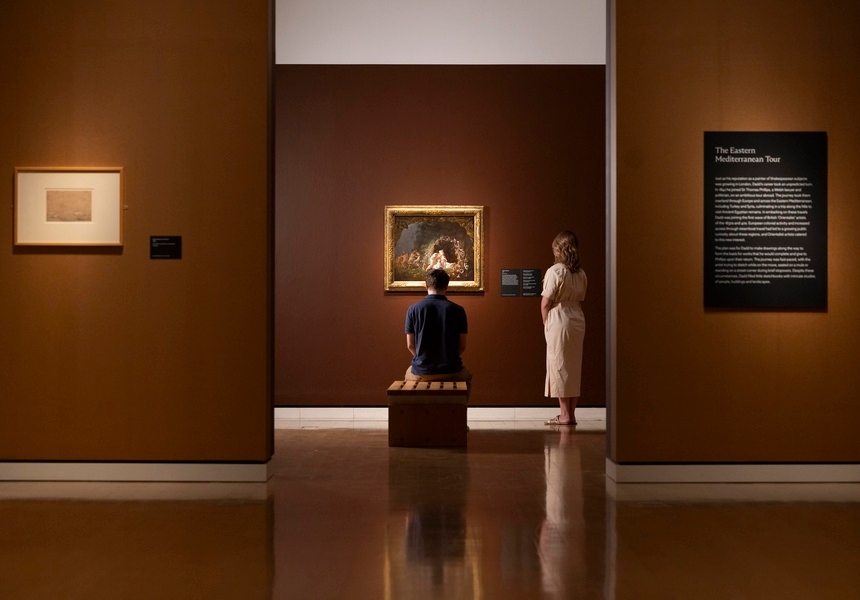
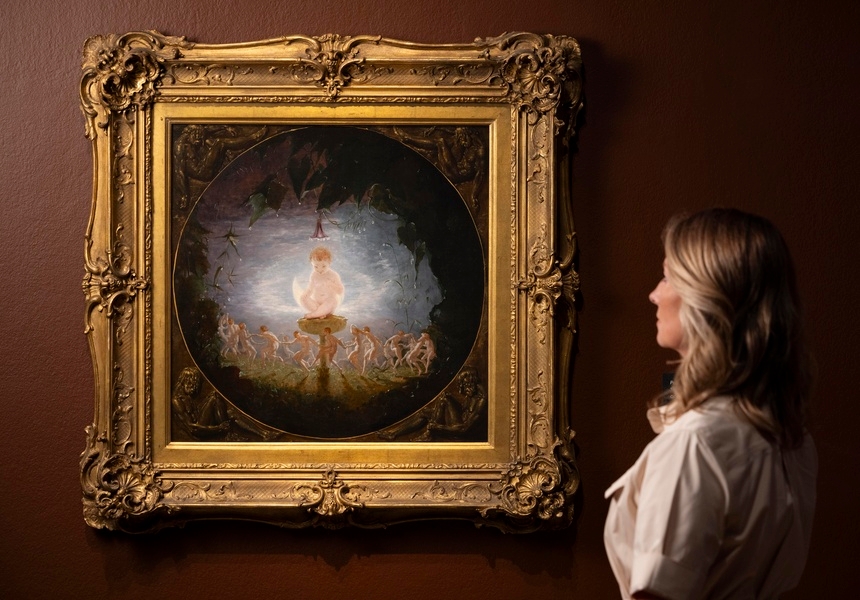
The RA exhibition unfolds chronologically, beginning with Dadd’s academic training, seen in tender family portraits and a theatrical scene from Hamlet – the former made all the more poignant by knowledge of the family’s fate. But it is among his fairy paintings that Dadd clearly feels most at home, harnessing the technical discipline to the wildest reaches of his imagination, seen in paintings like Puck, where the baby-sized sprite perches on a mushroom as nymphs dance around him like a daisy chain in the moonlight.
Sketchbooks on display from Dadd’s Eastern Mediterranean journey further reveal his dexterity in his delicate studies of buildings, landscapes and figures from Istanbul to Cairo. Later, at Bethlem, he would mine his memory for the characters and colours from his travels while returning to the Shakespearean and fairy subjects that had launched his career. “He was stuck in these extremely claustrophobic environments and yet had all this stuff coming out of his brain,” Tromans says. “And not in an explosive, uncontrollable way: it’s very minutely controlled, precise and elegant.”
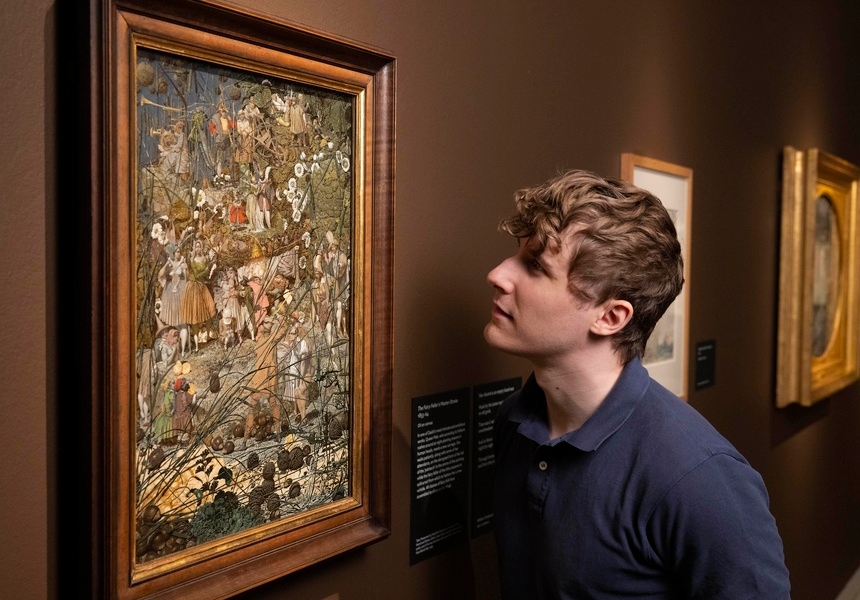
His masterpiece, The Fairy Feller’s Master-Stroke, is a dizzying and eerie gathering of fairy faces, studded with daisies and winding vines. Painted over almost a decade, it later inspired Freddie Mercury to write the Queen song of the same name. Smaller than an A3 sheet of paper, its scale compels you to lean closer and try to make sense of Dadd’s strange, chaotic, almost psychedelic fairy world.
The same is true of Port Stragglin, an almost hallucinatory landscape of towering rocks, distant ships and a castle above the water. “You feel that you’re in this huge, epic landscape, like a cinematic blockbuster scene,” Tromans says, “but the object you’re looking at is the size of a postcard.” It appears in the final room alongside works from Dadd’s later years at Broadmoor, where he increasingly turned to pastoral scenes, seascapes and still lifes.
Beyond the sensational details of his life, Dadd emerges from the exhibition as a technically astonishing, thoroughly inventive and unexpectedly playful artist – one capable of filling the smallest of frames with the widest of worlds. Nearly two centuries after his career was first launched at the RA with Titania Sleeping, Dadd finally receives his due.
Richard Dadd: Beyond Bedlam runs at the Royal Academy of Arts from July 25–October 25. royalacademy.org.uk