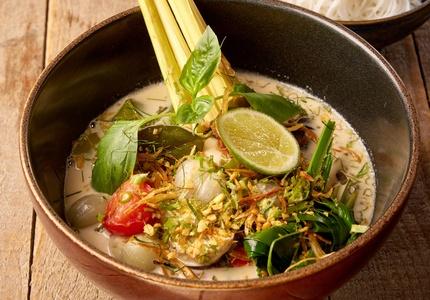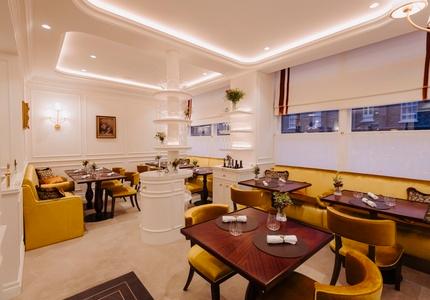
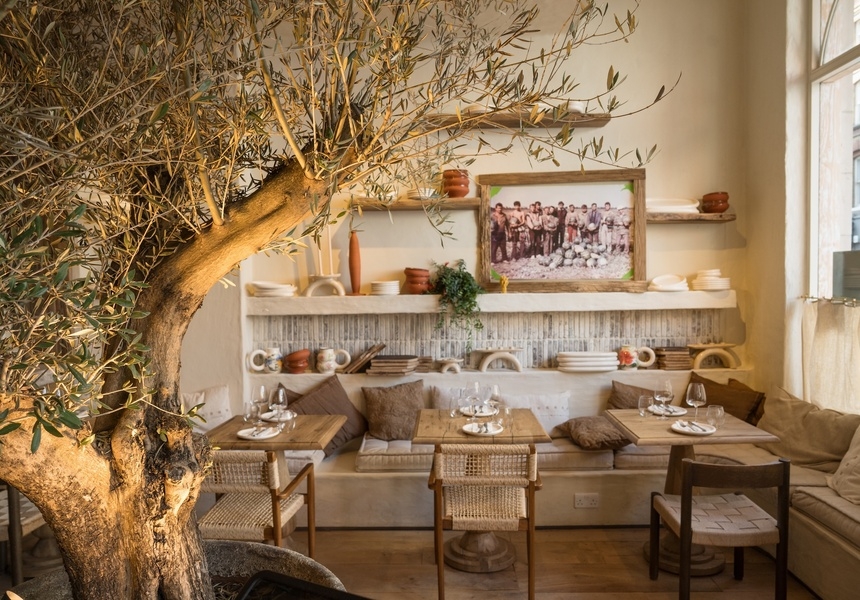
What is Ukrainian food? At Tatar Bunar in Shoreditch, the answer feels at once familiar, yet strikingly unfamiliar. At the rustic-chic restaurant – which opened in early 2025 – there are Kilim tapestries, sepia-toned photographs of rural life, and a menu dotted with Ukrainian breads, dumplings and other dishes that feel like distant cousins of things you’ve eaten before.
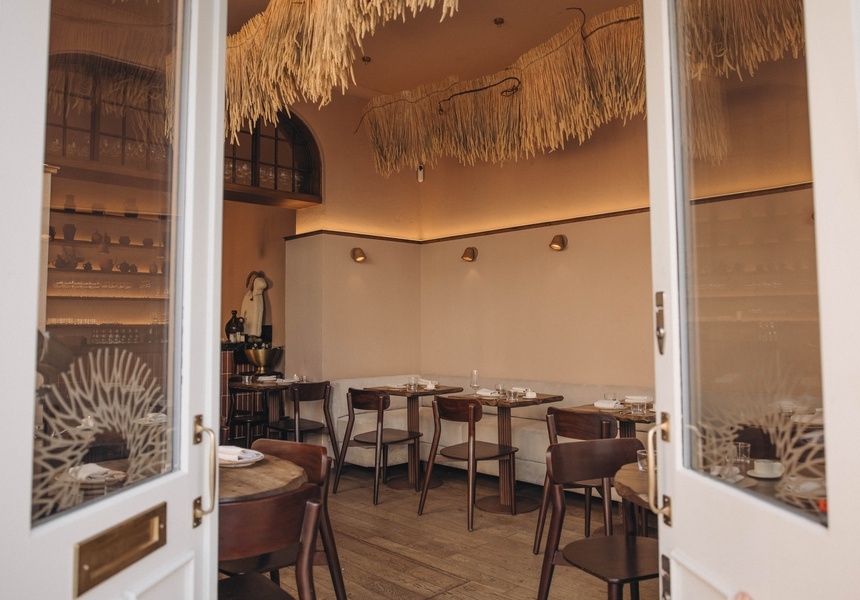
Meanwhile, in Notting Hill, another newcomer shows a different face of modern Ukrainian food. Sino, which opened in May 2025, is elegant and smooth-surfaced, the fare a much more “inspired by” take on modern Ukrainian food.
Before last year, London already had traditional Ukrainian restaurants, such as Dnister in Forest Gate, and more contemporary takes on the cuisine at spots like Ukrainian neo-bistro Mriya, which opened in 2022. But with the coming of Tatar Bunar and Sino, award-winning Ukrainian food writer Olia Hercules senses something in the air. “Even though both restaurants are unique,” she says, “they are definitely part of an emerging zeitgeist.”
It’s a reflection of a new energy that has emerged since Russia’s 2022 invasion of Ukraine. “I’d noticed a big shift in the restaurant scene in Ukraine, shifting from the homely Ukrainian fare we are used to from childhood to something different," Hercules explains. “Chefs started digging into the past and reinterpreting the old dishes. It’s great to see this now spill out of Ukraine and into London and other places.”
Tatar Bunar is named after Tatarbunary, a city in southern Ukraine where founder Alex Cooper is from, and it builds on his heritage. “We are telling his family story at the restaurant,” says Anna Andriienko, who manages the restaurant in London. As the war currently prevents him from leaving the country, “Alex is developing the menu, vision, concept – all from Ukraine,” she adds. Cooper has also opened multiple restaurants in Ukraine since 2022.
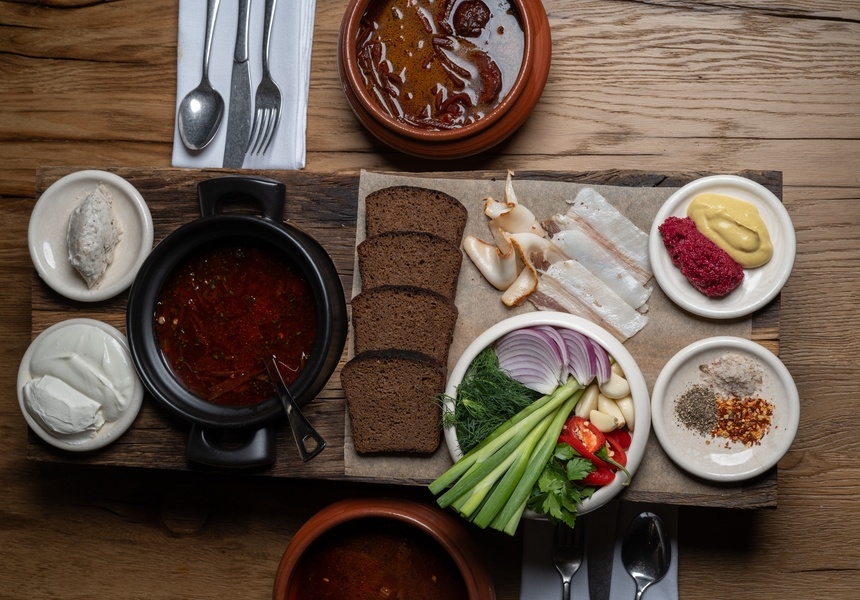
The vast menu at Tatar Bunar lends itself to sharing. Guests might start with cold plates of zippy pickled tomatoes or unctuous lardo, before turning to latkes or a fried flatbread called plachinda, which is filled with salty bryndza cheese. There are also varenyky – Ukrainian boiled dumplings filled with minced meat, potatoes and black pudding, or cabbage – which are familiar yet distinctive when served with velvety sour cream and spicy, tomato-based adjika.
“Some of our dishes are very traditional,” explains Andriienko, “the others are Alex’s view on the cuisine” – such as in the grill section, where gossamer-thin slices of layered beef, lamb and aubergine are layered before grilling. There's an all-Ukrainian wine-list and house-made soft drinks including uzvar, a smoky yet fresh concoction made from dried fruits.
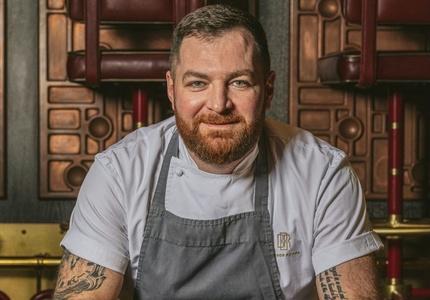
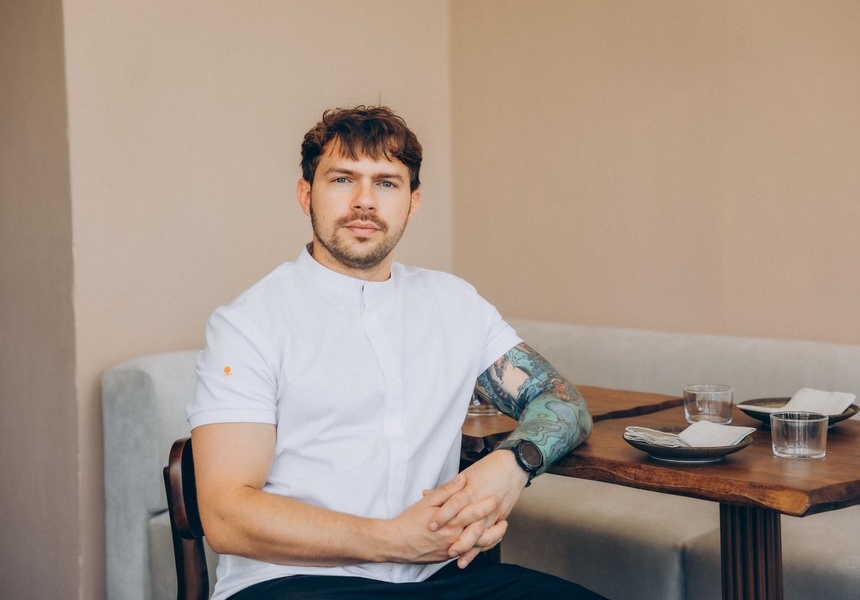
At Sino, the menu is much more of a chef’s interpretation of the cuisine. “Tradition is always the starting point,” says chef-owner Eugene Korolev, who had to give up his restaurant in Dnipro, Ukraine, to fight in the war. “Ukrainian food has incredible depth and soul, and I don’t want to lose that.” Classic flavours are reinterpreted through modern techniques and seasonal ingredients.
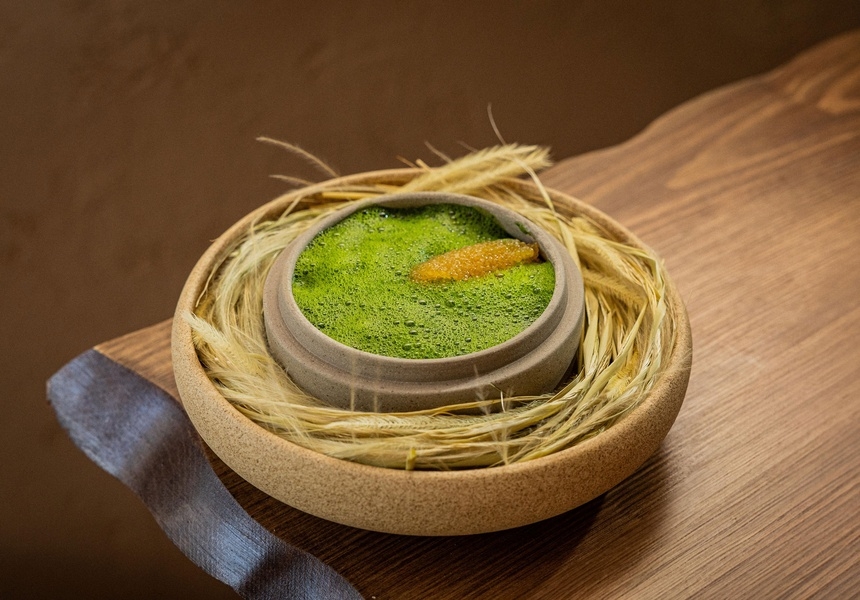
This means taking something as simple as fried potatoes with mushrooms and sour cream, and turning it into a dish in which smoked potato cubes with aged onion arrive hiding under a wild garlic and parsley foam and smoked pike roe. For dessert, honey cake – traditionally very sweet – is given extra depth through earthy buckwheat sponge and house-made buckwheat chocolate.
“I don’t want Sino to feel like a textbook introduction [to Ukrainian food], nor just a reimagining for its own sake,” Korolev says. “I want diners – whether they know Ukrainian food or not – to experience the spirit of it … [but], at the same time, it’s about breaking the stereotype that Ukrainian cuisine is something heavy or only for once in a while.”
With more than 250,000 Ukrainians having arrived in the UK since Russia's invasion, these restaurants are spaces of hope and resilience. They also present two different visions of what contemporary Ukrainian food might mean in London today.
“I hate the idea of silver linings – I’d rather the war never happened,” Hercules says, “but Ukrainian culture is on the rise, including Ukraine’s cuisine. The scene is diverse and expanding, and I hope that it keeps both diversifying and expanding further.”