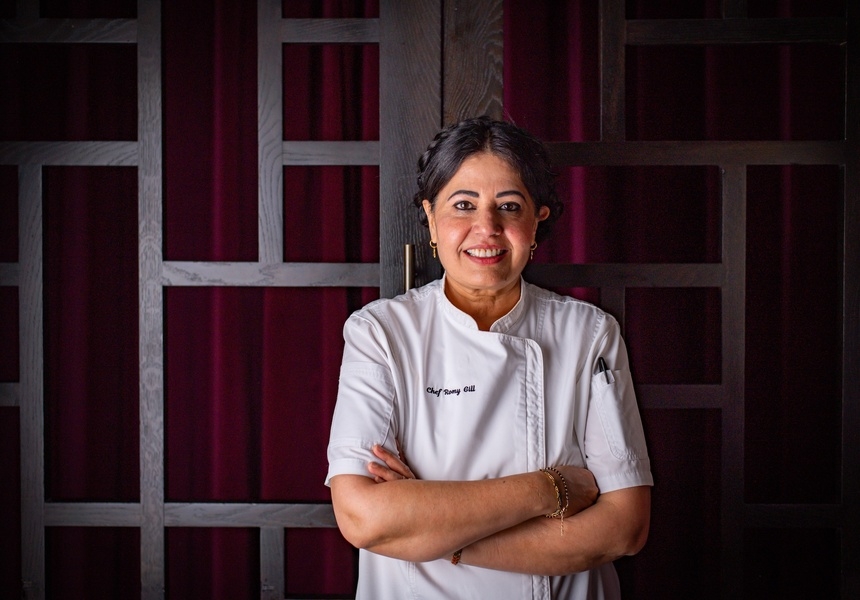
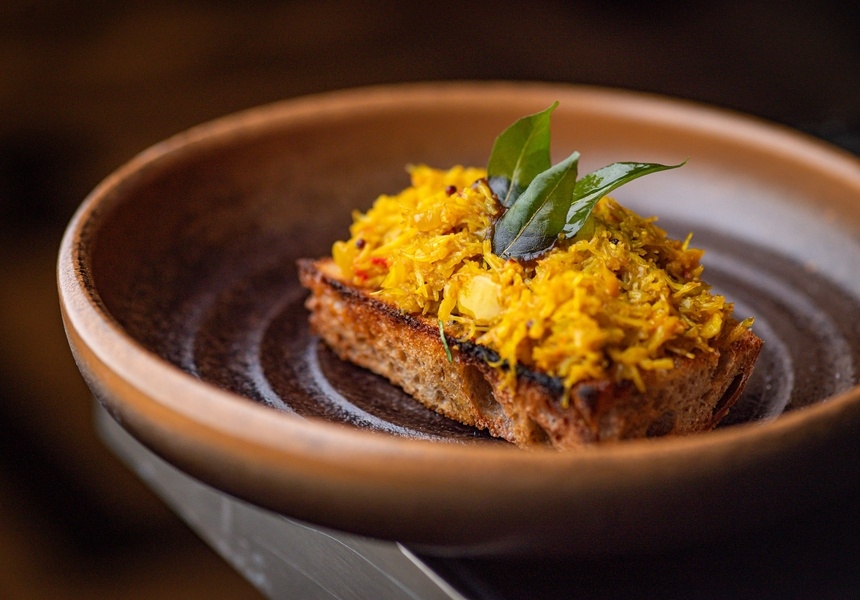
It’s been six years since Romy Gill has had a permanent restaurant kitchen. But from September, the influential chef will settle down once again, this time at The Pem in the Conrad London St James, which was originally opened by Sally Abé in 2021. It takes its name from the suffragette Emily Wilding Davison, whose nickname was Pem.
Over the past three decades, Gill has helped progress Britain’s understanding of Indian cuisine, from her cooking at her South Gloucestershire restaurant Romy’s Kitchen (which closed in 2019) to her food, recipe and travel writing, and appearances on shows like Ready, Steady, Cook and Celebrity Masterchef. It’s an approach she’s determined to continue when she takes up the pans at The Pem. “Cooking has always been about memory, generosity, and connection,” she tells Broadsheet. “I felt I could bring something very personal to The Pem: my food, my heritage and the stories of the people who have shaped the way I cook.”
Here, Gill tells Broadsheet about why The Pem is the right home for her, what to expect when she’s embedded in its kitchen and what’s she’s most looking forward to in her new role.
** Hi, Romy! Tell us about your new job.**
This is a very special new chapter. It has been six years since I last had a permanent kitchen. I have spent that time cooking through residencies, collaborations and events around the world, but come September, I will have a kitchen of my own again. I am the new executive chef of Romy Gill at The Pem, at Conrad London St James, developing the menu and leading the kitchen.
The menu is called Neemat, meaning blessing, bounty and generosity. It felt like the right name for this next chapter because those are the values that sit behind the food and the way I cook.
It is rooted in regional Indian flavours, seasonality and the producers we are excited to work with. Everything I have learnt over the years goes into it. My own restaurant, my travels across India and the many kitchens I have cooked in around the world have all shaped a menu that feels thoughtful, generous and true to who I am as a chef.
What appealed about leading The Pem?
I was not looking to return to a permanent kitchen just anywhere. I wanted somewhere that understood food as something more than what is on the plate.
The Pem has real character, but also the space to tell stories through food. There is history in the building, a sense of occasion in the room. It felt like the right home for my food.
Cooking has always been about memory, generosity and connection. I felt I could bring something very personal to The Pem: my food, my heritage, and the stories of the people who have shaped the way I cook.
This is your first full-time restaurant role in a while. Why did you want to return to a restaurant kitchen?
I call it my second innings. Not because I ever really stepped away from cooking. Guest chef residencies and collaborations kept me in kitchens and kept me growing. But there is something very different about being part of a kitchen full-time again.
A restaurant gives you a home. It gives you a team, a rhythm, and a place where you can build something slowly and with real intention.
At The Pem, I can bring the flavours of Punjab and Bengal that I grew up with into a beautiful London restaurant. It feels like the right moment to be back.
Can you tell us any fun plans or ideas you’ll be bringing along when you relaunch The Pem?
I want The Pem to feel vibrant, welcoming and somewhere people genuinely enjoy spending time. The idea of “neemat” runs through everything we are creating. It’s about generosity, abundance and making people feel looked after from the moment they arrive.
I want people to come in and feel excited by the food, whether that’s a dish they recognise in a new way, an ingredient they haven't tried before, or a flavour that brings back a memory.
I’d love to introduce storytelling dinners that celebrate different regions of India, so there’s always something new to experience. I want The Pem to keep evolving, giving people a reason to come back again and again. The food will be refined, but it should always have soul.
Can you please tell us more about the menu?
A menu should feel alive. It should change with the seasons, with the produce and with the stories we want to tell.
We are working with brilliant producers like Jess’s Ladies Organic Farm in Gloucestershire and Anandini for our teas, which come from the foothills of the Himalayas in Dharamshala. I will also create my own spice blends for the kitchen. When you have beautiful ingredients, you want to respect them and let them shine, and that care runs through everything. Indian flavours, spices and techniques, but always connected to the seasons here and the guests sitting in the restaurant.
What else will you be bringing to The Pem from other kitchens you have cooked in?
Every kitchen I have cooked in has taught me something different. The discipline, the creativity, the respect for ingredients, and over time, the confidence to trust my own voice. Cooking in different places has shown me how food can connect people, even when the ingredients, languages and cultures are different.
At The Pem, I want to bring all of that together with my own style of cooking. Regional Indian flavours, personal memories and a menu that is deeply rooted in story.
** What dishes are you most excited for diners to try?**
It is very hard to choose, because so many of the dishes carry a story.
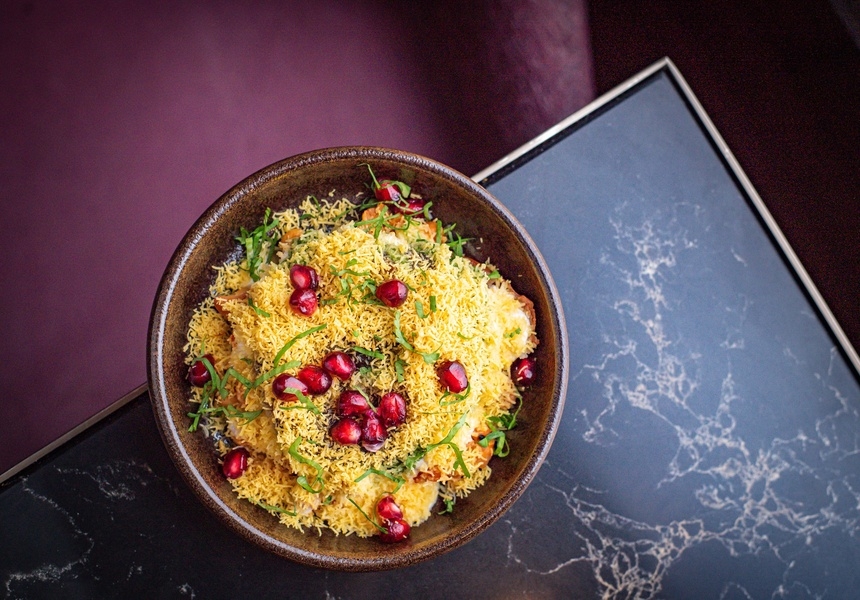
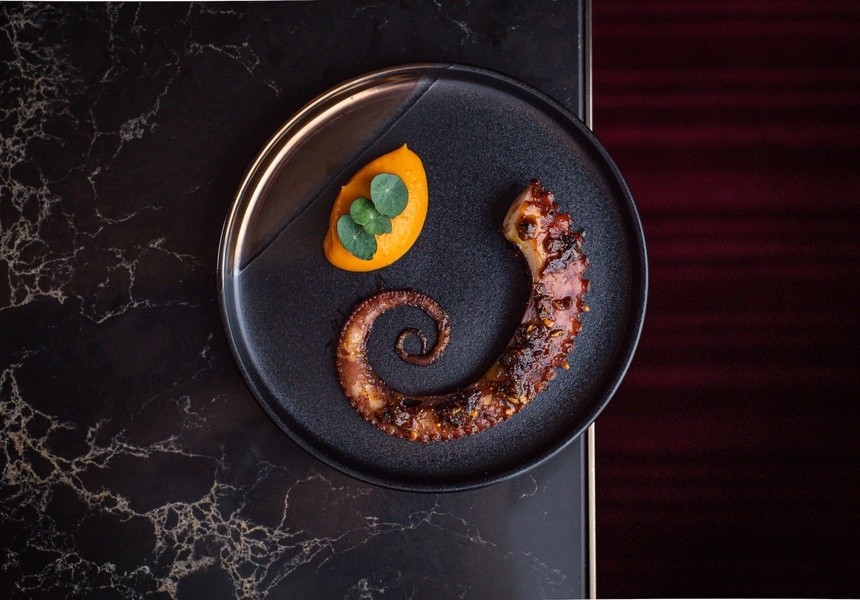
I am excited about the seafood. Hand-dived scallops with raw mango and sweet date-tamarind. Crab, octopus, prawns. Indian flavours in a way that feels elegant and unexpected. Then the samosa chaat, inspired by the street food I grew up eating, and the lamb chops, which are always one of my favourite dishes to cook and share.
Then the heartier mains. The butter chicken, slow-cooked and silky. Slow-braised lamb with dark Kashmiri morels. Haryali murgh [chicken with fenugreek, ginger, garlic and green chilli]. Generous and comforting, but still thoughtful.
Each dish has its own reason for being on the menu. Some are about memory, some are about travel, some are about produce, and some are simply about the pleasure of eating something delicious.