The Counter is a weekly column from award-winning restaurant writer and broadcaster Jimi Famurewa. Sign up to get The Counter first, sent to your inbox every Wednesday.
Hello again.
Up until this week, it had been hard to shake the sense that London’s transition to autumn had been buffering somewhat. Yes, in the wilds of social media, there had been many weeks of cosy season discourse and Sunday roast announcements content. But to visit the city’s bars, restaurants and parks in these last few unseasonably sunny weeks – the hordes of T-shirted pavement drinkers, the terrace diners downing crudo plates and frozen palomas, the ice cream van chimes ringing out in early October – was to live the enjoyable though disquieting reality of a summer with no end.
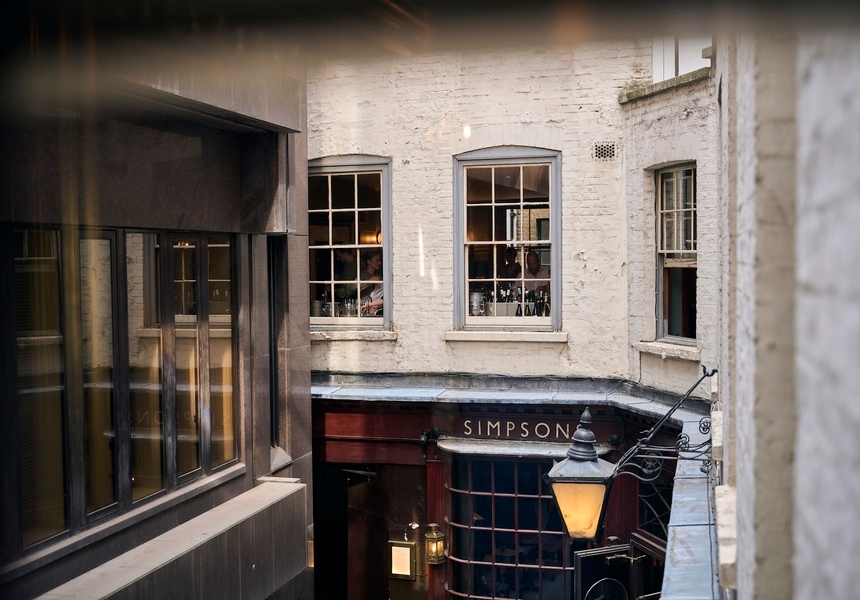
That all ended this week, with a sudden turn towards the cold, soggy and grim. So where should the city’s stodge-loving autumn enthusiasts head to truly fast-track the feeling? Well, if two separate early visits are anything to go by, then one of the most compelling answers to this question over the coming months is going to be Cloth Cornhill, the expensively defibrillated new guise of 269-year-old historic chophouse, Simpson’s Tavern.
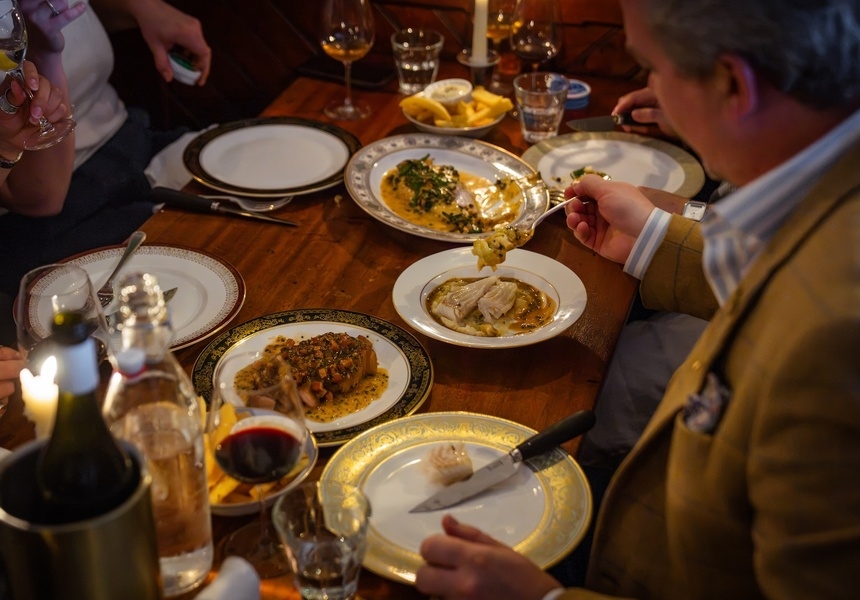
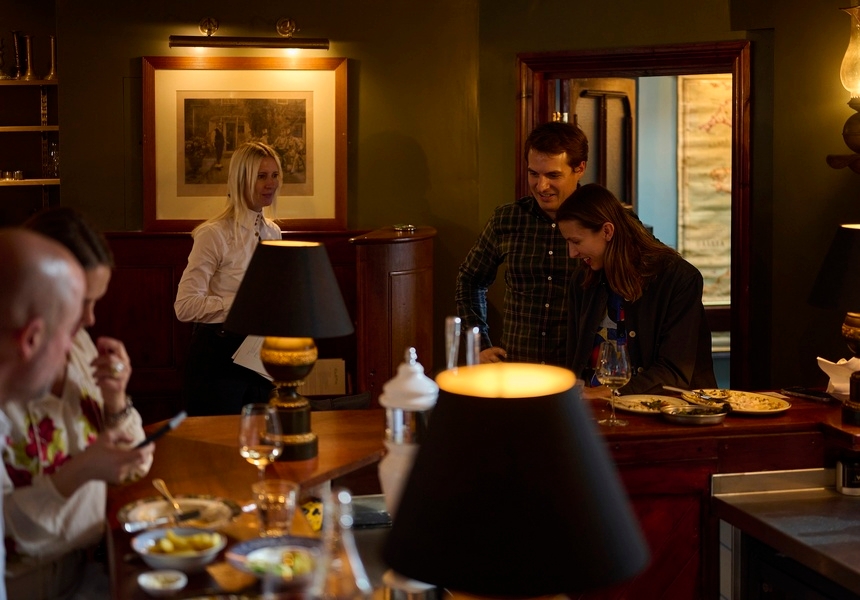
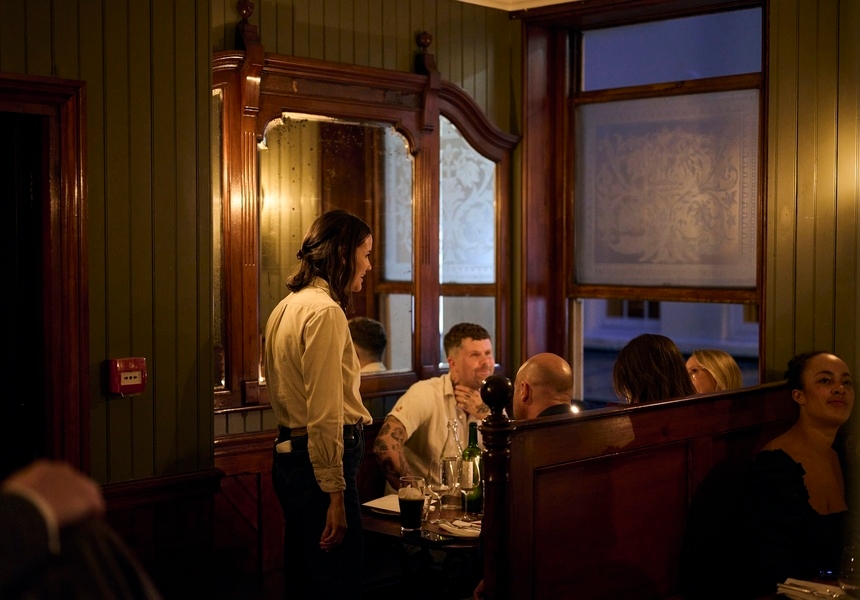
Last Friday, in pummelling afternoon sunshine, I stepped beyond the ornate, ancient lantern sign for Simpson’s (copyright laws may have forbidden the new owners using the old name but there are architectural ghosts everywhere), and into a crammed first floor dining room, cast in a kind of perpetual wintry twilight, and already beating with life. Lamps and guttering candles illuminated the reams of warm wood-panelling and high-backed mahogany banquettes. Plates of Dorset crab cocktail, blushing Hereford sirloin, Welsh rarebit and fat chips with peppercorn mayo were ferried from the double-capacity dumbwaiter out into the clamorous gloom. And a steady surge of veteran captains of industry poured in and out of the booths, hanging their jackets on the original brass rails, looking admiringly at the sensitively restored space and eyeing the cocktail menu with intent.
The vibe, if I had to name it, was that of a sort of turbocharged Devonshire of the east (right down to the plush, glistening dinner rolls and beermat snack menu in the bar area) crossed with a nocturnal Sweetings. It’s a restaurant opening that is going to prompt a steady stream of take and counter-take right up until Christmas (barely a week into its life, at least one national newspaper critic has already been in once and booked a second visit). As a reworking of a tavern and chophouse founded in 1757 it unites many of the year’s prevailing dining trends – posh pubs, culinary Victoriana, old school generosity – into one labyrinthine, lamp-lit package. But, perhaps more than any of that, Cloth Cornhill most interests me as a reboot and rehabilitation of an occasionally maligned dining genre: the City canteen.
What can we divine from the fact that one of the year’s biggest restaurant launches lies smack bang in the middle of the country’s cash-hosed, historic centre of trade and commerce? Or the fact that, in the likes of The Albatross, Penhale’s and The Horses, it is geography ically proximate to other, similarly splashy openings? And, finally, how have Cloth Cornhill founders Ben Butterworth, Joe Haynes and Tom Hurst – relatively green operators who mounted the stormingly successful Cloth Fair in Farringdon in 2024, and supposedly beat the likes of Blacklock and Public House to this unique site’s lease in late 2025 – gone about both honouring and subverting this unreconstructed, claret-soaked mode of eating?
Fundamentally, and perhaps fittingly, the current shift is about restaurants following the money and the trade. Or, in other words: the returning, post-Covid tide of deep-pocketed business lunchers that flow into the grill rooms, pubs and pan-Asian skyscraper eyries of Bank, St Paul’s, Smithfield, Moorgate and beyond. “Our first restaurant was in a space that just happened to be in the City,” Butterworth says, when I grab the trio for a chat. “But we rapidly realised that lunches were going to be the thing that was going to make the difference to the business.”
In this sense, the City’s resurgence is another expression of a wider drift from volatile neighbourhood postcodes to steadier central ones (think Kudu trading Peckham for Marylebone and Kid’s Sertaç Dirik effectively swapping Dalston for Soho). But another lure is the Square Mile’s attitude to socialising – nightlife and pavements clogged with the Guinness-supping gilet set. “Westminster council is suddenly sounding quite restrictive about vertical drinking, whereas, in the City they’re encouraging it because they know it supports local businesses, puts money back in the area and that people are cutting deals outside pubs,” Butterworth adds.
That notion of the macho cutting of deals – women were not permitted to dine at the original Simpson’s Tavern until 1916 – brings us to an interesting challenge of the Cloth team’s custodianship (and this is to say nothing of the £1.3 million refurbishment, delays and byzantine structural issues). Haynes describes the original Simpson’s as “the City’s canteen”, while Hurst admits he’s “definitely written a menu more biased towards big men”. Butterworth, meanwhile, admits to worrying “about people coming in and being like, ‘Oh, you’ve fucked around with it or you’ve changed it.’” To be frank, Simpson’s – home of a famed house-made pork banger, often ordered on the side – had always been an unrepentant sausage fest of a different kind. How did they go about balancing that hyper-masc tradition, and the protectiveness of regulars who had been going there for decades, with a desire to bring in a new demographic?
In terms of the room and environment, there have been subtle, but impactful changes – notably, better lighting in the alleyways around the building and a set of neglected women’s loos (“They were really grotty and I think [the previous operators] basically stored Christmas decorations in there,” Butterworth says) that have been turned into handsomely appointed gender-neutral toilets on the first floor. Equally, a changing daily set lunch menu and Friday steak and chips deal (£24 for two courses; £29 for three) nods to those without expense accounts and a ruinous trophy bottle habit. Yet, over the course of our conversation and my two visits, it becomes clear that, rather than modernising too much, the Cloth team is simply trying to ally a respect for Simpson’s rich lore with the confidence that they can execute at a higher level. “The [old business] had fallen into disrepair across the board and the care just wasn’t there anymore,” Butterworth says, of the guise of the tavern that closed suddenly in 2022.
Whether you are a Simpson’s lifer or not, you only need to taste a few dishes on the Cloth Cornhill menu to get a sense of the magic trick the new team have managed to pull off. A plump, gently spiced “table sausage” beside a rough-hewn splat of enlivening beer mustard. The thick, crumbed plinth of hake, cooked to judiciously seasoned soft pearlescence, and moated by a thrumming ladleful of crab bisque. A bronzed, billowy triumph of a venison, bacon and prune pie beside a thick pool of “mashed potato” – really more of an illegally moreish butter and cream sauce emulsified with a wisp of spud – that you’re going to be hearing an awful lot about.
It is food that, like its urbane, vaguely Dickensian setting, feels ancient and modern all at once. And if it is not enough to have you following some of London’s most talented restaurateurs to the City then, well, it just means there’ll be more butter-drenched mashed potato, Welsh rarebit and peppercorn mayo for the rest of us.
For Jimi Famurewa’s dish of the week, sign up to get The Counter first, sent to your inbox every Wednesday.
Got a question about London's dining scene that you'd like Jimi to answer, or a hot tip about a great place to eat or drink in London? Email jimi@broadsheet.com.